
Thousands Of Years Of Petroglyphs Are Hidden Inside This Nevada State Park
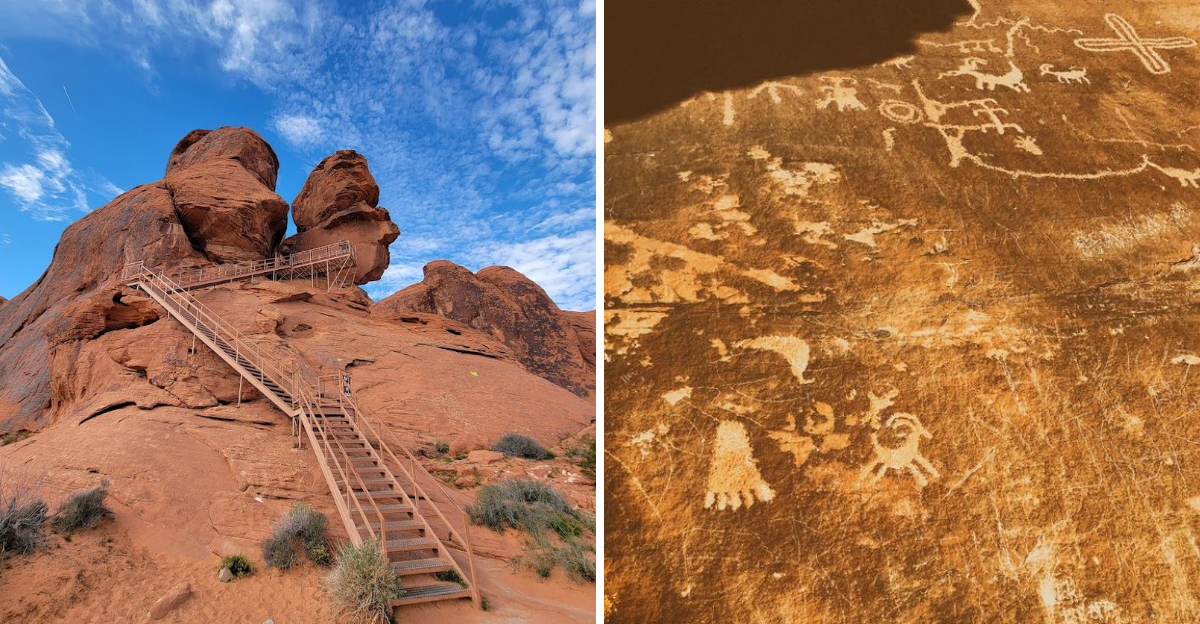
Ancient carvings cover canyon walls that most visitors rush right past. Nevada holds an entire timeline of human history stamped into rock.
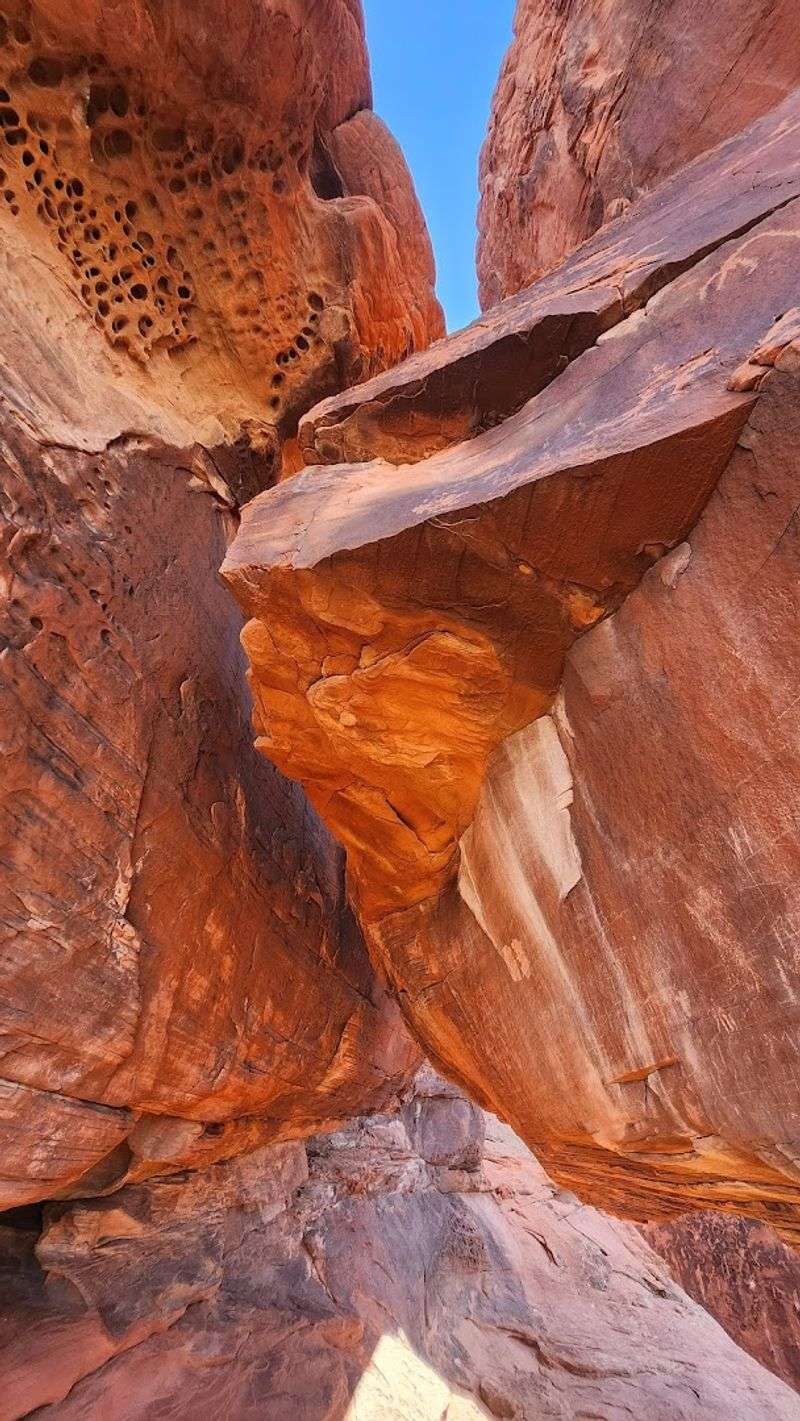
Red sandstone rises from the desert floor, glowing like fire at sunset. Wind and time carved narrow canyons packed with strange symbols.
Could a short walk actually put you face to face with art from another age? Out here in Nevada, that answer turns out to be true.
Bighorn sheep, spirals, and human figures fill the rock in mysterious patterns. Every panel holds a piece of a story time never finished telling.
What does it feel like to stand in front of art that old? It hands you a direct line to the people who carved it.
That kind of connection is worth planning a whole trip around.
Where Ancient Sandstone Tells Its Own Story
Millions of years of pressure, heat, and erosion shaped the landscape now known as Valley of Fire State Park. Ancient sand dunes slowly compacted over time, forming the brilliant Aztec sandstone that defines the park today.
Iron oxide running through the rock gives it that signature fiery red and orange glow.
Wind and water carved the formations into arches, ridges, and towering walls over countless centuries. The name “Valley of Fire” reportedly came from an AAA official in the 1920s who witnessed the valley appearing to blaze during sunset.
That image stuck, and it still rings true today.
Located in Nevada’s Mojave Desert, the park sits about an hour northeast of Las Vegas. The full address is 29450 Valley of Fire Road, Overton, Nevada 89040.
Every rock face here carries layers of geological time, and the landscape shifts in color and mood depending on the hour of day you visit.
Thousands Of Years Before Written Words
People have been moving through this part of Nevada for roughly 11,000 years. Early hunter-gatherers passed through long before permanent settlements took hold in the region.
Over time, different cultures left their marks on the landscape, quite literally etched into stone.
The Basketmaker people, who lived in the area between roughly 2,500 and 4,000 years ago, are responsible for many of the petroglyphs found throughout the park. They were followed by the Ancestral Puebloans, sometimes called the Anasazi, who farmed the nearby Moapa Valley and used this rugged terrain for hunting and ceremonies.
These ancient communities did not leave behind written language, but they left something arguably more powerful. The carvings they made on rock surfaces communicate across thousands of years without a single word.
Each symbol, animal figure, and geometric shape is a fragment of a life once lived in this desert. That kind of human connection across deep time is genuinely rare to experience in person.
What Desert Varnish Actually Is
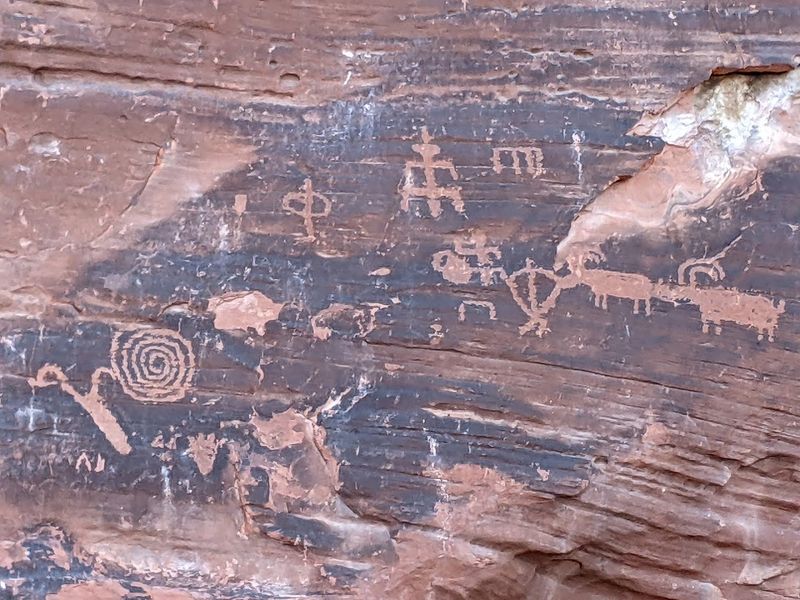
That dark, shiny coating covering many of the rocks throughout the park is called desert varnish. It forms over thousands of years as manganese and iron oxides slowly accumulate on exposed rock surfaces.
Wind-blown clay particles, along with moisture and microorganisms, help bind the coating to the stone over time.
Ancient carvers used this natural phenomenon to their advantage. By scraping or pecking away the dark varnish, they exposed the lighter sandstone underneath, creating high-contrast images that remain visible thousands of years later.
The technique required patience and precision, and the results have lasted remarkably well.
Desert varnish actually helps preserve the carvings by protecting the exposed stone from further weathering. The contrast between the dark coating and the lighter rock beneath is what makes petroglyphs so visually striking even today.
Understanding this natural process adds a whole new layer of appreciation when standing in front of the panels at Atlatl Rock. It is science and history working together in plain sight.
Atlatl Rock Rises From The Desert Floor
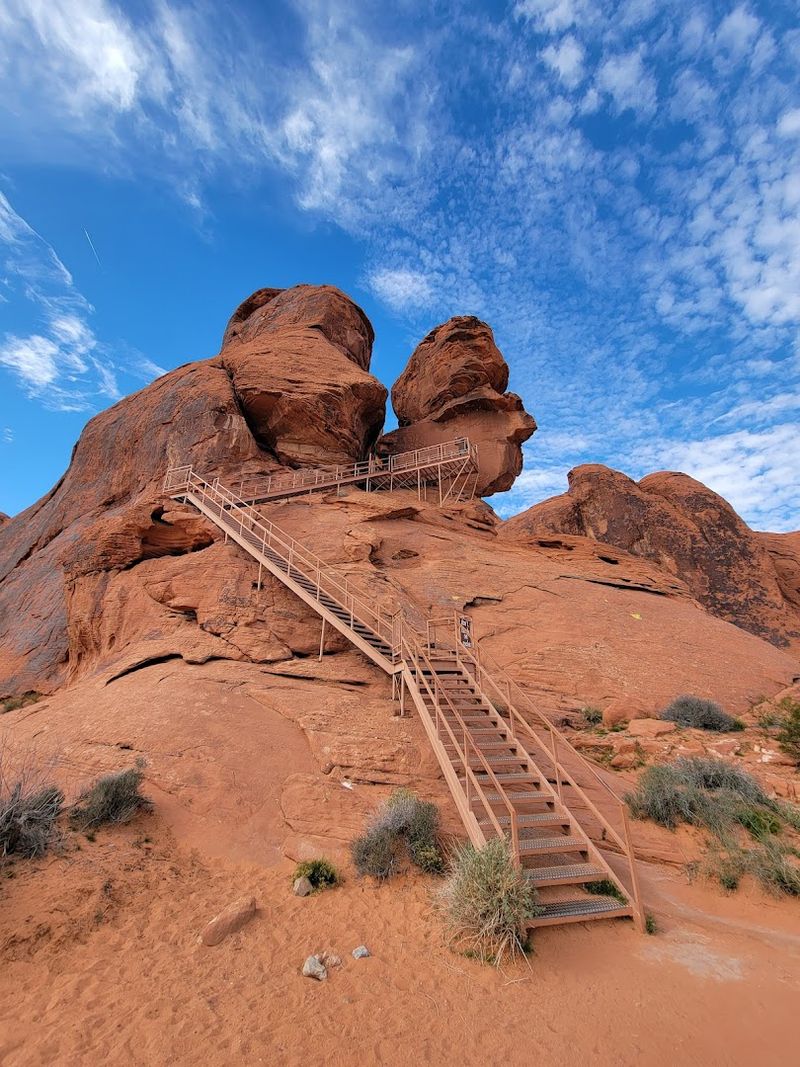
One sandstone monolith stands out among all the formations in the park. Atlatl Rock shoots up sharply from the flat desert floor, its dark surface covered in some of the most accessible ancient carvings in all of Nevada.
A sturdy metal staircase winds up the side, bringing visitors face to face with art that is over 4,000 years old.
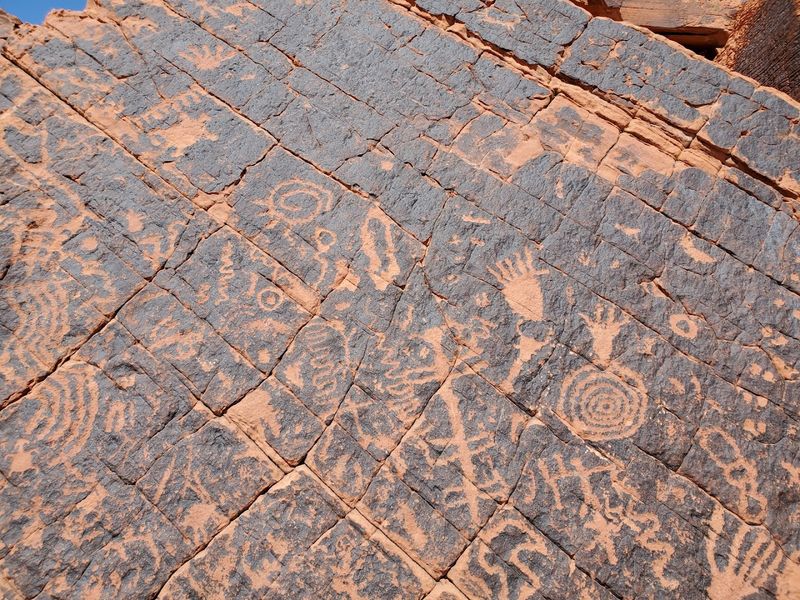
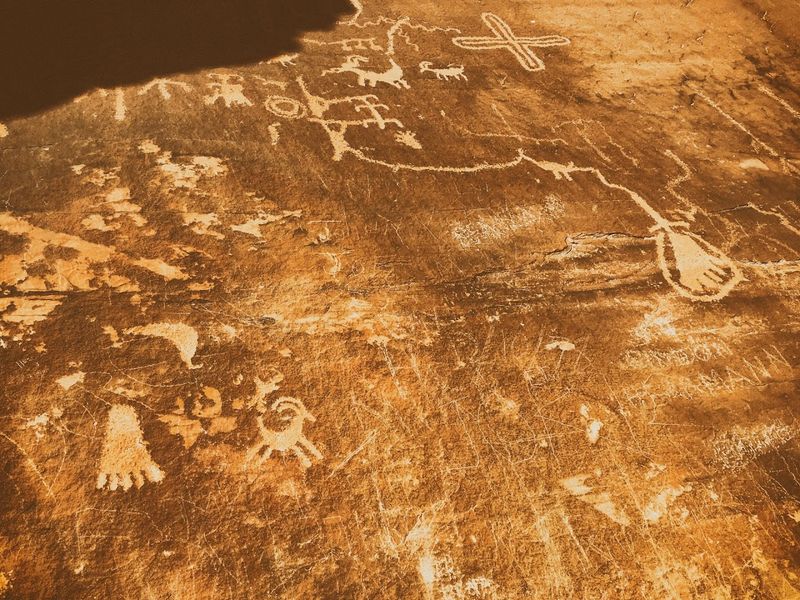
The carvings were made by chipping away the dark desert varnish on the rock surface, revealing the lighter stone beneath. Human figures, bighorn sheep, and geometric patterns cover the panels in careful detail.
Most striking of all is the depiction of an atlatl, the ancient spear-throwing device that gave this rock its name.
An atlatl worked by extending the thrower’s arm length, adding speed and force to a thrown spear. Seeing it carved here suggests this tool held real cultural importance for the people who used it.
The climb up the stairs is short and manageable, making this one of the most rewarding stops in the entire park.
Mouse’s Tank Trail Winds Through A Hidden Canyon
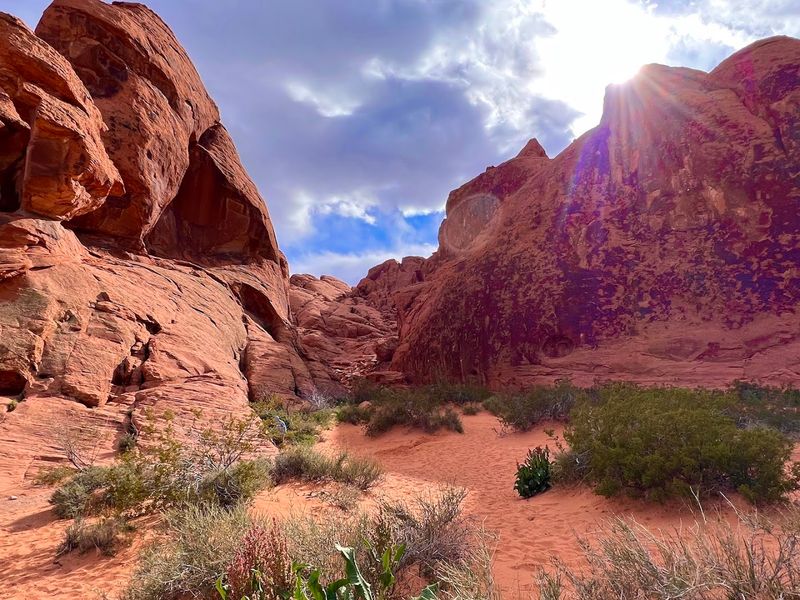
Petroglyph Canyon feels like stepping into a different world entirely. The trail, commonly known as Mouse’s Tank Trail, follows a sandy wash between walls of red sandstone that rise steeply on both sides.
Hundreds of petroglyphs line the canyon walls from ground level up to surprisingly high reaches.
The carvings here are primarily attributed to the Basketmaker and Early Pueblo peoples, dating back roughly two to three thousand years. Bighorn sheep appear frequently, alongside human figures and abstract symbols that researchers believe may relate to hunting rituals or spiritual practices.
The sheer density of carvings along this short trail is remarkable.
The trail stretches roughly three-quarters of a mile round trip, making it accessible for most visitors. At the far end sits Mouse’s Tank, a natural rock basin where rainwater collects and can persist for months in the desert climate.
The name comes from a Southern Paiute man known as “Little Mouse,” who reportedly used this hidden water source as a refuge in the 1890s. History layers on history here.
Reading The Symbols On The Walls
Not every carving at the park is easy to interpret, and that is part of what makes them so fascinating. Bighorn sheep appear more than almost any other image, which researchers link to the importance of hunting in the daily lives of the people who lived here.
Human figures appear in various poses, some appearing to hold weapons or tools.
Geometric shapes, spirals, and abstract patterns are harder to decode but may represent seasonal markers, territorial boundaries, or ceremonial meaning. Some researchers believe certain symbols tracked astronomical events like solstices.
Others suggest they served as maps or trail markers for people moving through the desert.
The honest answer is that many petroglyphs remain open to interpretation. No single translation key exists for these ancient images.
What matters most is approaching them with curiosity and respect. Touching the carvings is strictly off-limits, and for good reason.
The oils from human skin cause damage that accumulates over time and cannot be undone. Looking carefully, though, reveals details that photographs rarely capture fully.
The Best Time Of Year To Visit
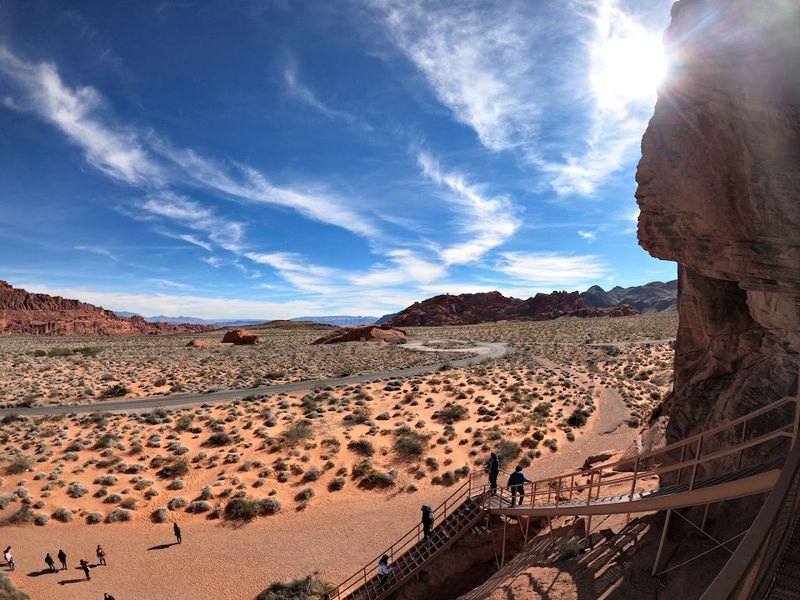
Summer in the Mojave Desert is not for the faint-hearted. Temperatures at Valley of Fire State Park regularly exceed 100 degrees Fahrenheit and can push close to 120 degrees on the hottest days.
Hiking in that kind of heat carries real risks, and most rangers strongly advise against it during peak summer months.
Spring and fall are the sweet spots for visiting. October through April brings mild daytime temperatures, typically ranging from the mid-50s to mid-70s Fahrenheit.
Trails feel manageable, colors look vivid in the softer light, and the park does not feel overwhelming with crowds.
Winter visits are surprisingly pleasant, with cool, crisp air and dramatically clear skies. Wildflower season in spring adds bursts of yellow and purple to the red rock landscape, creating a color contrast that feels almost unreal.
Early morning arrivals during any season offer the best combination of comfortable temperatures, beautiful light for photography, and a quieter, more personal experience of the park and its ancient art.
Wildlife That Calls This Desert Home
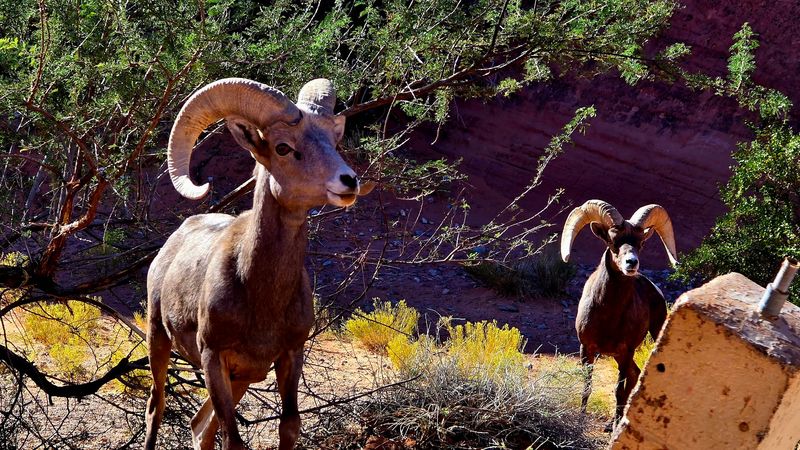
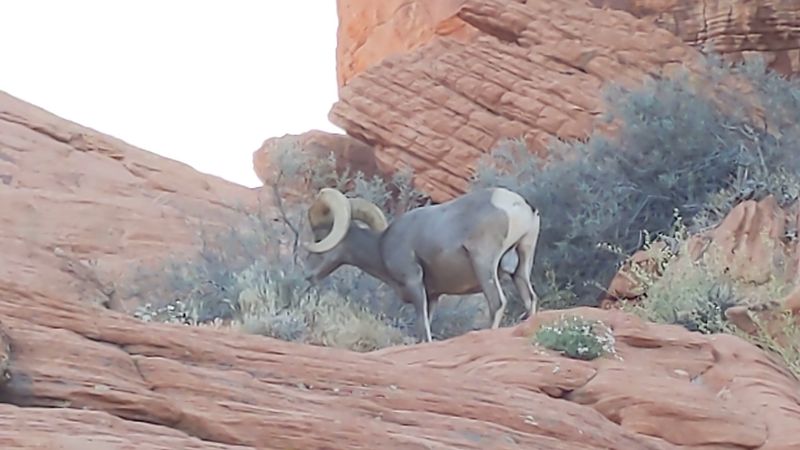
The park looks stark and lifeless at first glance, but look closer and the desert reveals itself as surprisingly full of activity. Desert bighorn sheep are among the most celebrated residents, and they show up near the visitor center area with enough regularity to make a sighting feel possible rather than lucky.
Lizards dart between rocks with impressive speed, and several snake species move quietly through the sandy washes. Coyotes are present throughout the park, though they tend to keep their distance from busier trailheads.
Black-tailed jackrabbits appear at dawn and dusk, their enormous ears catching every sound.
The desert tortoise is one of the most iconic and protected animals in this part of Nevada. Spotting one requires patience and a bit of luck, as they move slowly and blend into the rocky terrain.
Plant life supports all of this wildlife, with creosote bush, beavertail cactus, and brittlebush forming the backbone of the ecosystem. Spring brings wildflowers that attract pollinators and add unexpected color to the landscape.
Iconic Rock Formations Beyond The Petroglyphs
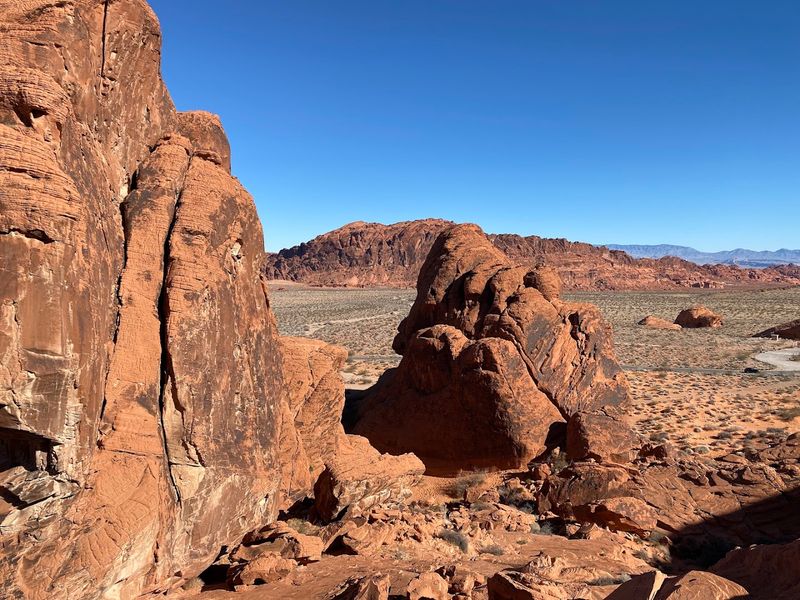
Petroglyphs get most of the attention, but the geological formations throughout the park deserve equal billing. Elephant Rock, located near the east entrance, is one of the most photographed spots in the park.
The massive sandstone structure bears an uncanny resemblance to an elephant, trunk raised and all.
The Beehives are a cluster of rounded, layered sandstone mounds that look exactly as their name suggests. The Fire Wave, found along the White Domes trail, features dramatic bands of red and white rock swirling together in a pattern that stops hikers mid-stride.
Arch Rock forms a natural sandstone arch visible from the scenic loop road.
Each formation tells part of the same geological story, shaped by the same ancient dunes and the same relentless forces of wind and water. The variety is what surprises most first-time visitors.
The park covers nearly 46,000 acres, meaning new views and formations keep appearing around every bend. Driving the scenic loop alone is worth the trip to Nevada.
Practical Tips For A Rewarding Visit
Preparation makes an enormous difference at a desert park like this one. Water is the single most important thing to bring, and more than you think you will need.
The dry air and sun drain hydration faster than most people expect, especially on exposed trails with little shade.
Closed-toe shoes protect feet on rocky and sandy terrain. Sunscreen and a wide-brimmed hat are non-negotiable during daylight hours.
The visitor center near the park entrance offers exhibits on the geology and cultural history of the area, and the staff there can answer questions about trail conditions and current park information.
Restrooms are available at major stops including Atlatl Rock, which also has covered picnic pavilions and barbecue grills. Vault toilets are more common on the outer parts of the park.
Pets are welcome on trails but are not allowed inside the visitor center. Most importantly, keep hands off the petroglyphs at all times.
Protecting these irreplaceable carvings means future generations get to experience them too.
Why This Park Stays With You Long After You Leave
Most parks offer scenery. This one offers perspective.
Standing in front of a rock panel covered in 4,000-year-old carvings tends to shift how a person thinks about time, history, and what it means to leave something behind. The petroglyphs at Valley of Fire State Park are not museum pieces behind glass.
They are out in the open air, exposed to the same sun and wind that the people who carved them once felt. That rawness makes the experience feel real in a way that a display case never could.
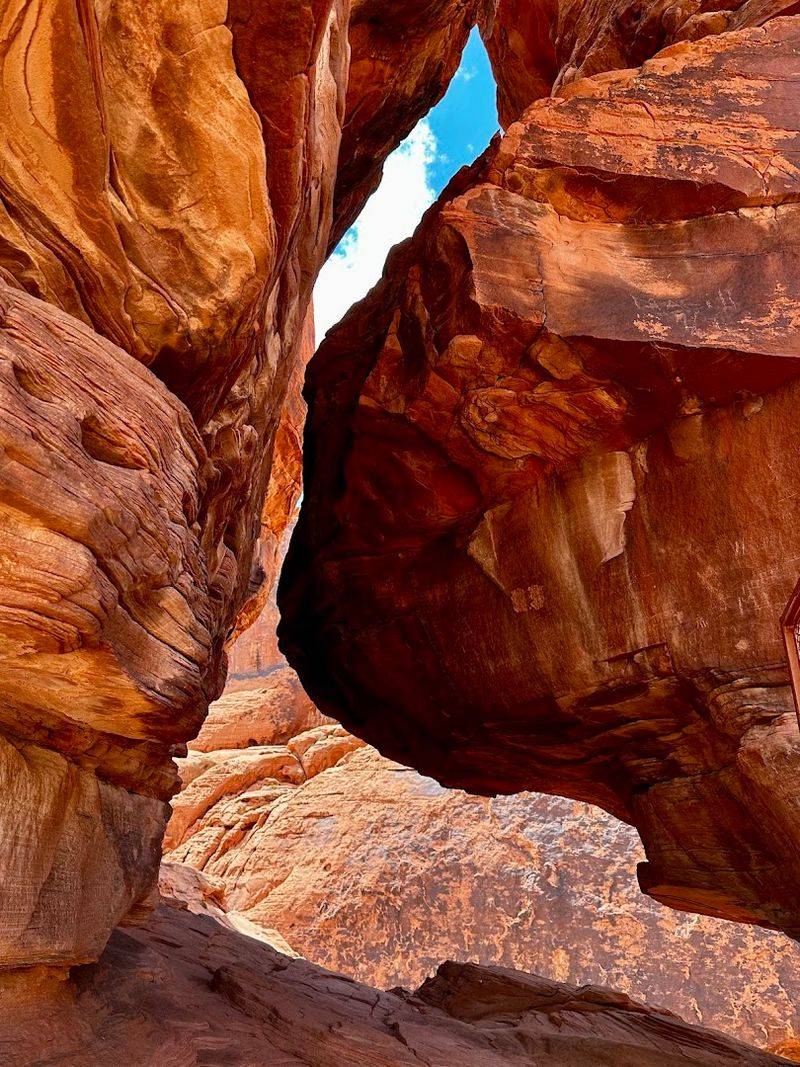
The landscape amplifies it, with its burning colors and towering walls creating a backdrop that feels almost theatrical.
Nevada holds a lot of surprises for travelers who venture beyond the Las Vegas Strip. This park is one of the most striking of all of them.
Whether it is the carvings, the formations, the wildlife, or simply the silence of the desert, something about this place tends to stay with people long after the drive home. That is the kind of travel worth seeking out.