
10 Hidden Mississippi Attractions That Will Completely Change Your Road Trip Experience
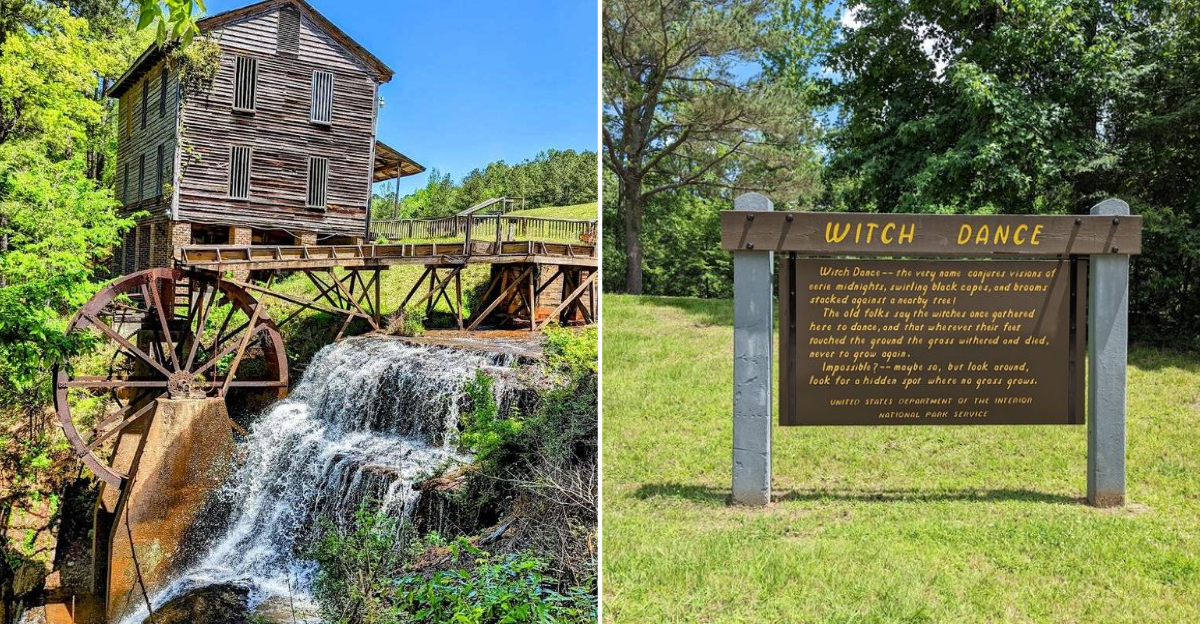
Quirky roadside markers and unexpected folk art installations wait behind ordinary highway exits. Drivers pull over at dusty gravel turnoffs to discover fascinating spots missing from standard maps.
This diverse collection of strange stops turns a boring highway drive into a genuine treasure hunt. Tourist brochures usually tell you to stay on the main interstate to save time.
Those rigid travel guides will make you miss the absolute best parts of the journey. Mississippi holds ten specific secrets that prove the detour is always worth the extra gas money.
Download offline maps onto your phone before losing cell service in the deep pine hills. You should keep a crate of empty glass jars in the trunk for collecting unique local soil samples or small vintage souvenirs.
1. Walter Anderson Museum Of Art
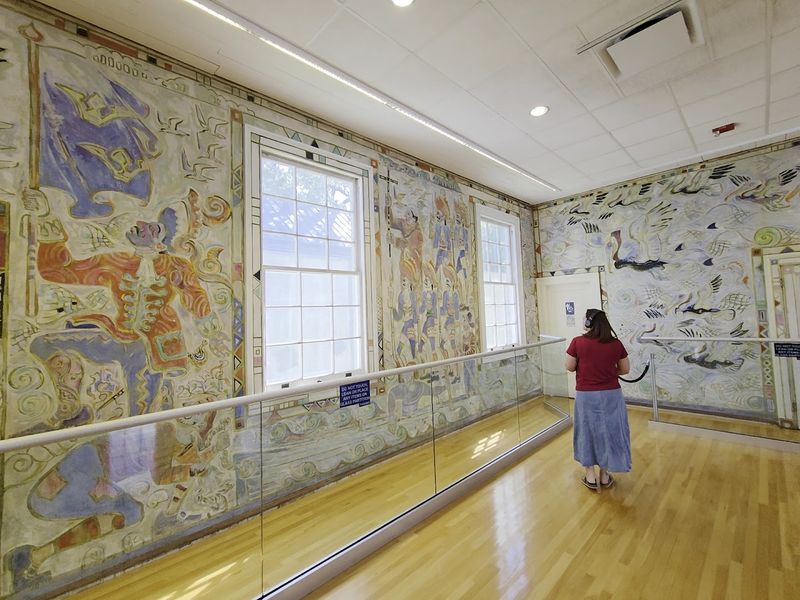
Most people walk right past this building without knowing what is waiting inside. The Walter Anderson Museum of Art in Ocean Springs is one of the most genuinely mind-blowing places I have ever visited.
It honors Walter Inglis Anderson, an American master who painted as the world depended on it.
Anderson believed deeply that humans and nature should live in harmony. His art proves it with every brushstroke.
You will find monumental murals, an evolving gallery collection, and his original bicycle and skiff on display.
The real showstopper is the Little Room. This private studio was discovered only after Anderson passed away in 1965.
Every single inch of the walls and ceiling is covered in vivid paintings he made just for himself.
Nobody outside his family knew it existed. Walking in feels like finding a secret world.
It is one of the most personal artistic spaces you will ever stand inside.
Ocean Springs itself is worth the detour, too. The downtown area has great local shops and restaurants within easy walking distance.
The water is just a few blocks away, and the whole town has this calm, creative energy.
Anderson was also known for rowing out alone to Horn Island to paint in complete solitude. His dedication to nature was almost legendary around here.
The museum captures that spirit beautifully without feeling stuffy or overly formal.
Kids, history buffs, and art lovers all leave genuinely impressed. Plan at least two hours here.
You will not regret a single minute. Walter Anderson Museum of Art is located at 510 Washington Ave, Ocean Springs, MS 39564.
2. Clark Creek Natural Area
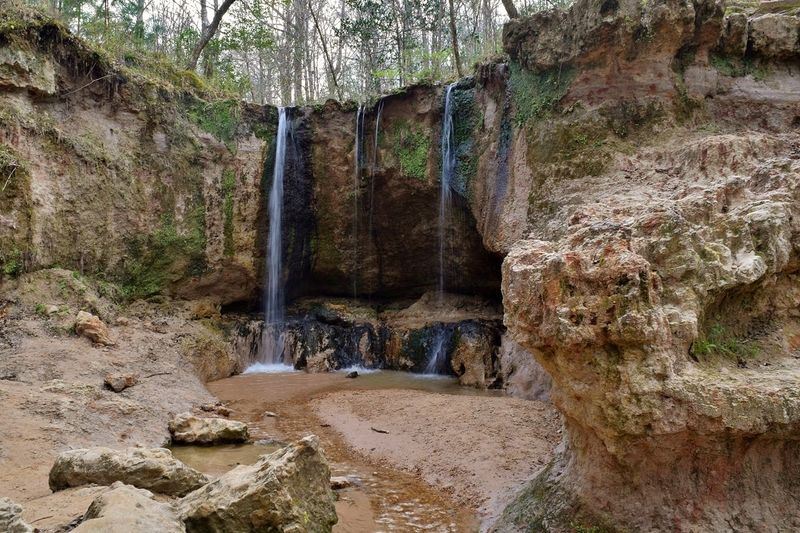
Over 50 waterfalls in one place sounds like something out of a fantasy novel. Clark Creek Natural Area in Woodville, Mississippi, is absolutely real, and it is absolutely stunning.
This rugged corner of southwestern Mississippi sits right near the Louisiana state line.
The terrain here is gloriously wild and unpolished. Trails wind through forests packed with rare plant species that most people have never even heard of.
Some of the waterfalls drop dramatically from ledges nearly 30 feet high.
The air smells like wet moss and rich earth after a rain. Sunlight pushes through the canopy in these thick golden beams that make you want to stop and just stare upward.
It is the kind of place that genuinely resets your brain.
Endangered black bears have been spotted in this area, which adds a little extra thrill to the hike. You are not in danger, but knowing wildlife like that roams nearby makes every rustle in the leaves feel exciting.
Keep your eyes open and your camera ready.
About five miles of trails loop through the property. The paths can get slippery after rain, so wear solid shoes with good grip.
This is not a flip-flop situation.
Crowds are rare here, which makes it feel like a personal discovery every single time. You might share the trail with a handful of other hikers at most.
That kind of quiet is increasingly hard to find anywhere.
If you love waterfalls, hiking, or just being somewhere that feels completely untouched, Clark Creek deserves a top spot on your Mississippi list. Clark Creek Natural Area is located at 366 Ft Adams Pond Rd, Woodville, MS 39669.
3. La Pointe Krebs Museum
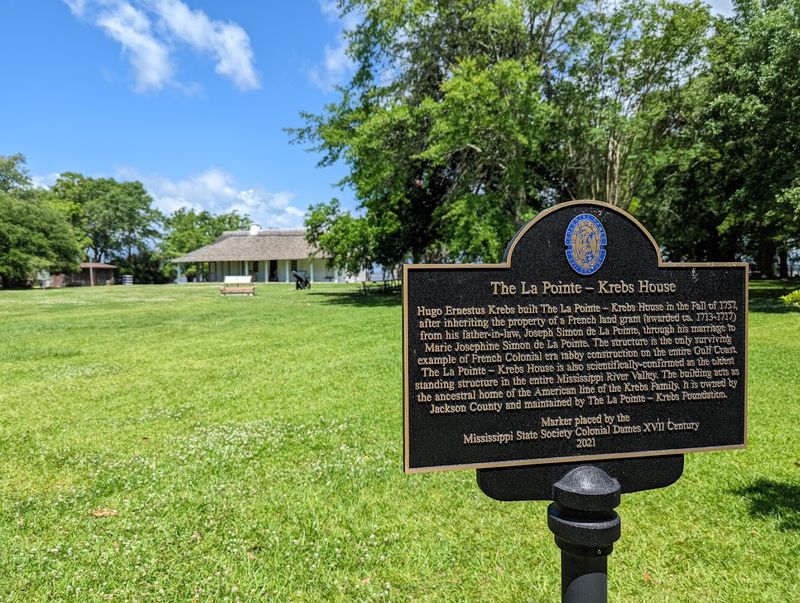
There is a building in Pascagoula that quietly holds a record most people have never heard about. The LaPointe-Krebs House was built in 1757, making it the oldest scientifically dated building in all of Mississippi.
Some historians believe it may be the oldest surviving structure between the Appalachian and Rocky Mountains.
What makes it even more fascinating is how it was built. The construction used tabby concrete, a material made from oyster shells, lime, sand, and water.
It is the only remaining example of this building method on the entire Gulf Coast.
Walking around this structure feels like touching a piece of history that most people do not even know exists. The walls have survived hurricanes, wars, and centuries of coastal weather.
That kind of durability is almost hard to believe.
The museum tells the story of the house’s early occupants and its long, layered history. Every beam and board carries a different chapter.
You come away with a completely new understanding of Gulf Coast colonial life.
The setting near Pascagoula Bay adds to the experience. The area is quiet and unhurried, which gives the visit a reflective quality.
There is no theme park energy here, just genuine history sitting right in front of you.
Families with curious kids will find plenty to talk about during and after the visit. The story of how this house survived when so much else around it did not is genuinely compelling.
It sparks real conversations about preservation and the passage of time.
History lovers should absolutely make this stop. La Pointe Krebs Museum is located at 4602 Fort St, Pascagoula, MS 39567.
4. Natchez City Cemetery
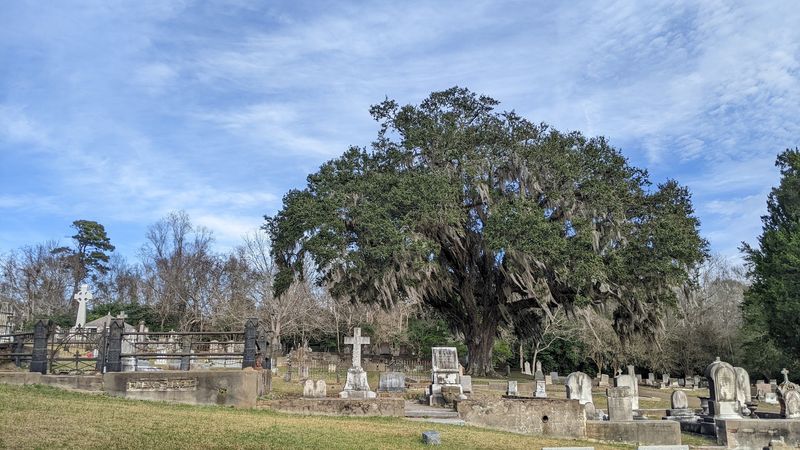
Established in 1822 on dramatic bluffs above the Mississippi River, Natchez City Cemetery is not your average burial ground. The views alone are worth the visit.
At sunset, the light hits the river in a way that feels almost cinematic.
Majestic live oaks stretch across the cemetery drives, casting long, dramatic shadows. Intricate iron fences, carved marble monuments, and sculpted benches reflect extraordinary 19th-century craftsmanship.
Every corner of this place tells a story about Natchez at the height of its grandeur.
The history here is layered with both beauty and tragedy. Confederate and Union soldiers rest here side by side.
The graves of wealthy plantation owners sit near those of ordinary citizens, all equal now beneath the ancient oaks.
Local folklore makes this place even more memorable. The grave of Louise the Unfortunate has drawn curious visitors for generations.
Nobody is entirely sure who she was, but the mystery is part of what keeps people coming back.
Some visitors claim to have seen a child’s ghost wandering among the headstones near dusk. Whether you believe that or not, the atmosphere at twilight is undeniably eerie.
It is the good kind of eerie that gives you goosebumps without being unpleasant.
Ghost tours occasionally pass through here, and for good reason. Natchez City Cemetery consistently ranks among Mississippi’s most haunted locations.
Even skeptics tend to walk out with a slightly different perspective.
This is one of those places that stays with you long after you leave. Bring a camera, wear comfortable shoes, and go near golden hour.
Natchez City Cemetery is located at 2 Cemetery Rd, Natchez, MS 39120.
5. Mississippi Petrified Forest
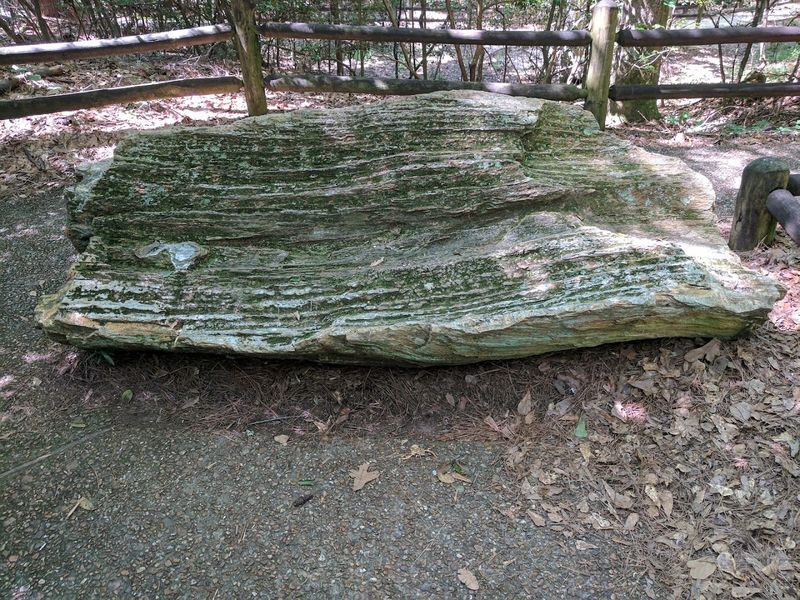
Millions of years ago, massive trees fell in what is now central Mississippi and slowly turned to stone. Today, you can walk right up and touch them.
The Mississippi Petrified Forest near Flora is the only petrified forest in the entire southeastern United States.
Petrified wood is actually the official state rock of Mississippi, which feels like a fun piece of trivia until you see it in person. Then it just feels impressive.
Some of these ancient logs were once over 100 feet tall.
The self-guided nature walk winds through natural ravines where petrified logs are scattered across the landscape like a prehistoric puzzle. Ancient maple and palm trees are among the species that turned to stone here over millions of years.
The scale of it is genuinely hard to wrap your head around.
Flora is just a short drive north of Jackson, making this an easy add to any central Mississippi road trip. The surrounding hills and ravines give the area a rugged, adventurous feel.
It does not feel like a tourist trap at all.
There is also a gem and mineral museum on site that deserves more attention than it usually gets. The collection inside is surprisingly rich and educational.
Kids especially love the hands-on element of seeing and touching different minerals up close.
Geology nerds will be in absolute heaven here. But even if rocks are not your usual thing, the sheer age and transformation of these trees is hard not to find fascinating.
It puts time in a completely different perspective.
This stop is genuinely one of Mississippi’s best-kept secrets. Mississippi Petrified Forest is located at 124 Forest Park Rd, Flora, MS 39071.
6. Dunns Falls Park
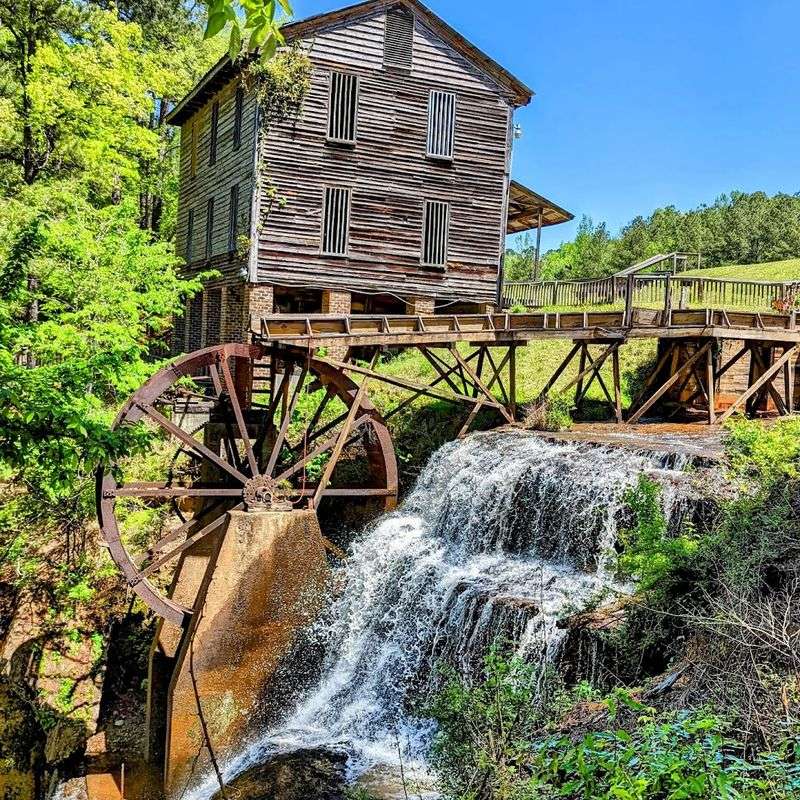
An Irish immigrant named John Dunn showed up in South Lauderdale County in the mid-1800s with a plan. He redirected the Chunky River, built a dam, and created a 65-foot waterfall to power his gristmill.
The result is one of the most charming and unexpected parks in all of Mississippi.
The historic 1857 gristmill still sits right at the top of the falls. Seeing it perched there above the rushing water is one of those images that genuinely stops you in your tracks.
It looks like something from a painting.
The waterfall itself is breathtaking up close. The sound alone is worth the drive out to Enterprise.
Standing near the base and feeling the mist on your face is one of those simple moments that just feels good.
Nature trails loop through the surrounding forest and offer different views of the falls at various angles. Picnic areas are scattered throughout the park, making it a natural choice for a slow afternoon.
Swimming is also an option in designated areas when conditions are right.
The combination of natural beauty and living history makes Dunns Falls genuinely unique. Most waterfall parks in the South do not come with a 19th-century gristmill attached.
This one does, and it makes all the difference.
Crowds are light here, especially on weekdays. You might arrive and have the whole place nearly to yourself.
That kind of peaceful solitude is increasingly rare and deeply underrated.
If you are driving through east-central Mississippi, this park is a must-stop. Skip it, and you will regret it later.
Dunns Falls Park is located at 6890 Dunns Falls Rd A, Enterprise, MS 39330.
7. Grand Village Of The Natchez Indians
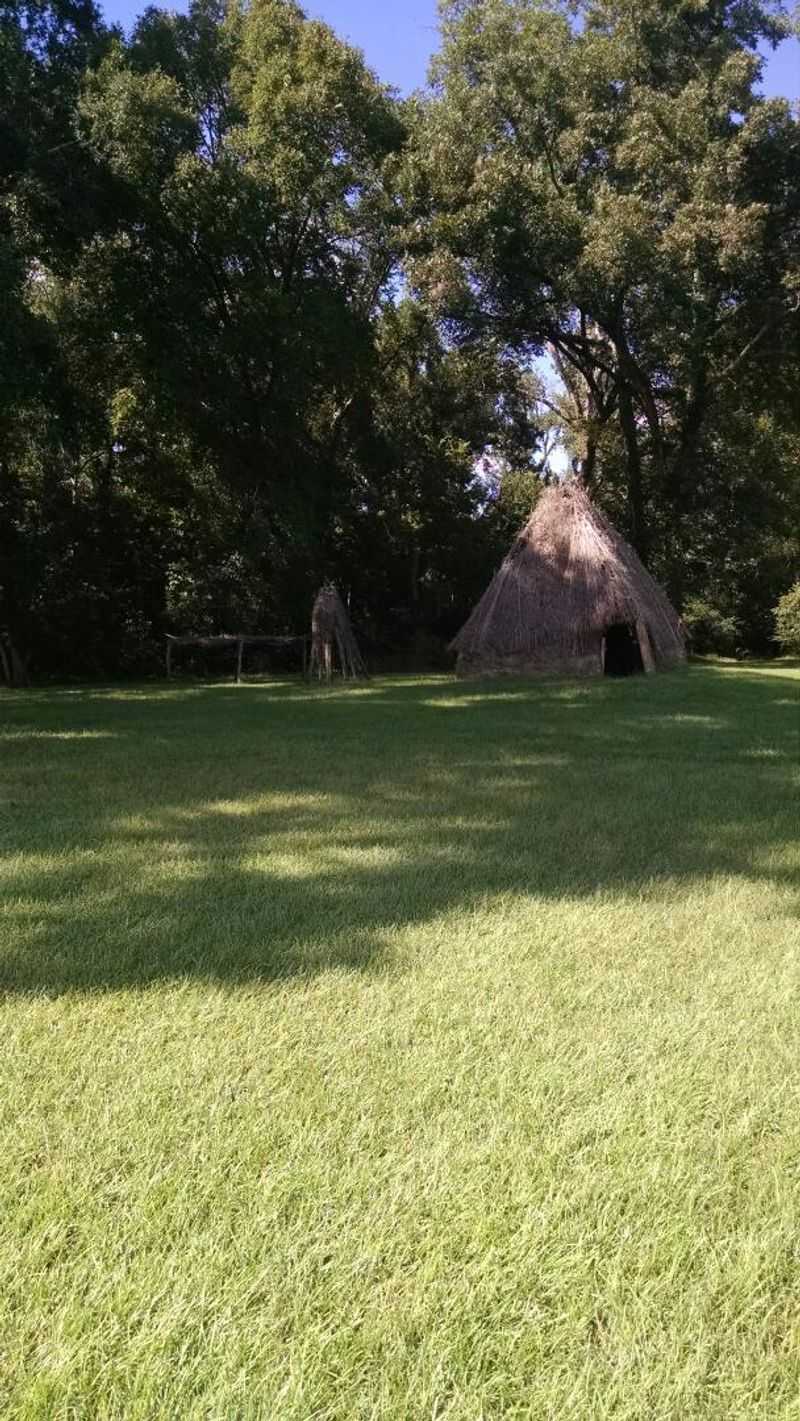
Long before European settlers arrived in Mississippi, the Natchez people built something remarkable along St. Catherine’s Creek.
The Grand Village of the Natchez Indians was the religious and political center of a sophisticated Native American civilization. This 128-acre site preserves what remains of that world.
The Natchez people lived in southwest Mississippi from approximately AD 700 to 1730. Their society was complex, hierarchical, and deeply tied to the land.
The village features three prehistoric earthen mounds that were central to its spiritual and political life.
Two of the mounds, the Great Sun’s Mound and the Temple Mound, have been carefully rebuilt. A sacred perpetual fire was once kept burning inside the Temple Mound’s inner sanctum.
That detail alone says a lot about how seriously the Natchez took their spiritual practices.
A reconstructed Natchez home gives visitors a tangible sense of what daily life looked like centuries ago. The construction methods and materials used in the replica are based on historical and archaeological research.
It is small but surprisingly informative.
A nature trail winds through the property and along the creek. The landscape is peaceful and largely unchanged from what the Natchez would have known.
Walking feels like a quiet act of respect.
The site is free to visit and open to the public, which makes it even more of a hidden spot. Most visitors to Natchez never even know it exists.
That is a genuine shame, because the story told here is one of the most important in the entire state.
Grand Village of the Natchez Indians is located at 400 Jefferson Davis Blvd, Natchez, MS 39120.
8. Mississippi Sandhill Crane National Wildlife Refuge
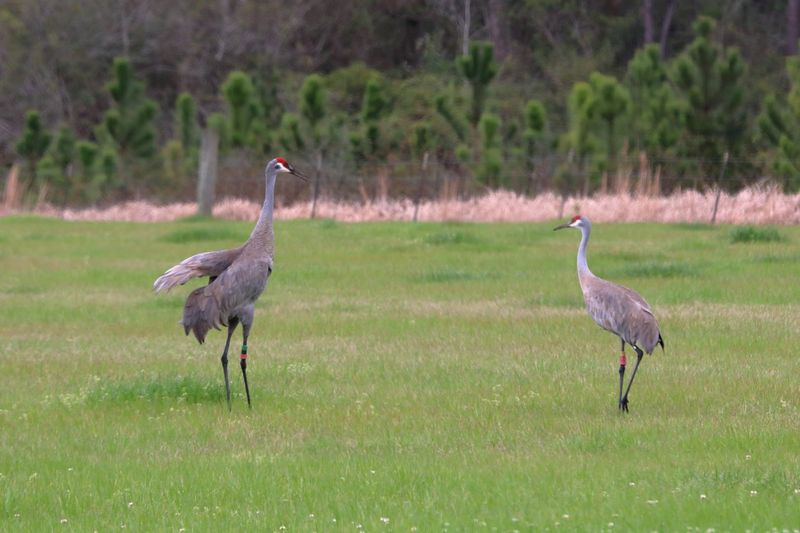
Not many people know that one of the rarest birds in North America lives in coastal Mississippi. The Mississippi Sandhill Crane is critically endangered, and this refuge in Gautier exists specifically to protect it.
Without this place, the species would likely be gone entirely.
The refuge protects the last remaining wet pine savanna ecosystem in the entire United States. That is not an overstatement.
This specific habitat type has nearly vanished everywhere else, and what survives here is genuinely irreplaceable.
The landscape looks almost like a flat, open prairie, but the soil beneath it tells a different story. It is waterlogged and highly acidic clay, which most plants cannot handle.
The ones that do thrive here are extraordinary, including rare orchids and carnivorous plants that grow wild throughout the savanna.
Carnivorous plants growing in the wild, without a greenhouse or gift shop nearby, are one of those things that feels surreal the first time you see them. Nature is just quietly doing its wild thing.
It is fantastic.
The refuge has a visitor center and two walking trails that give you a real feel for the ecosystem. Rangers and staff are knowledgeable and genuinely enthusiastic about what they protect here.
Ask them questions, and you will learn things that are not in any guidebook.
Since its establishment in 1975, the crane population has grown meaningfully thanks to conservation efforts. Seeing these birds in their natural habitat is a privilege that not enough people take advantage of.
It is one of the most quietly powerful wildlife experiences in the South.
Mississippi Sandhill Crane National Wildlife Refuge is located at 7200 Crane Ln, Gautier, MS 39553.
9. Witch Dance
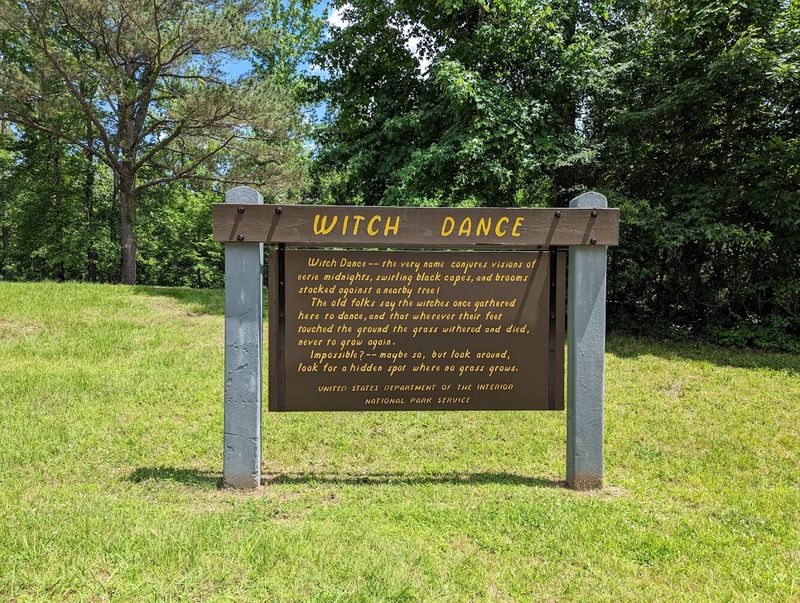
There is a spot along the Natchez Trace Parkway where the grass refuses to grow. No matter the season, no matter the rain, certain patches of earth at Witch Dance stay stubbornly bare.
Local legend says witches gathered here to dance, and wherever their feet touched the ground, nothing ever grew back.
Is that scientifically explainable? Probably. Is it still a great story? Absolutely.
Witch Dance sits at milepost 233.2 on the Natchez Trace and carries more atmosphere per square foot than most places three times its size.
Beyond the folklore, this is also a legitimate outdoor destination. Witch Dance serves as a bicycle-only campground and a trailhead for an 18-mile horse and hiking trail.
The trail winds through the Tombigbee National Forest and offers some genuinely beautiful backcountry scenery.
The Natchez Trace itself has a long, layered history as a travel corridor used by Native Americans, traders, soldiers, and settlers for centuries. Stopping at Witch Dance connects you to that history in a way that feels immediate and real.
You are standing where many generations stood before you.
The forest around this area is quiet in a way that feels slightly charged. Birds call from the treetops, the wind moves through the branches, and the bare patches of earth sit there daring you to come up with a better explanation than witchcraft.
Good luck with that.
If you are driving the Natchez Trace, do not skip this stop. It takes maybe 20 minutes and leaves a lasting impression.
Sometimes the best road trip moments are the weird, inexplicable ones.
Witch Dance is located at Natchez Trace Pkwy, Houston, MS 38851.
10. Friendship Cemetery
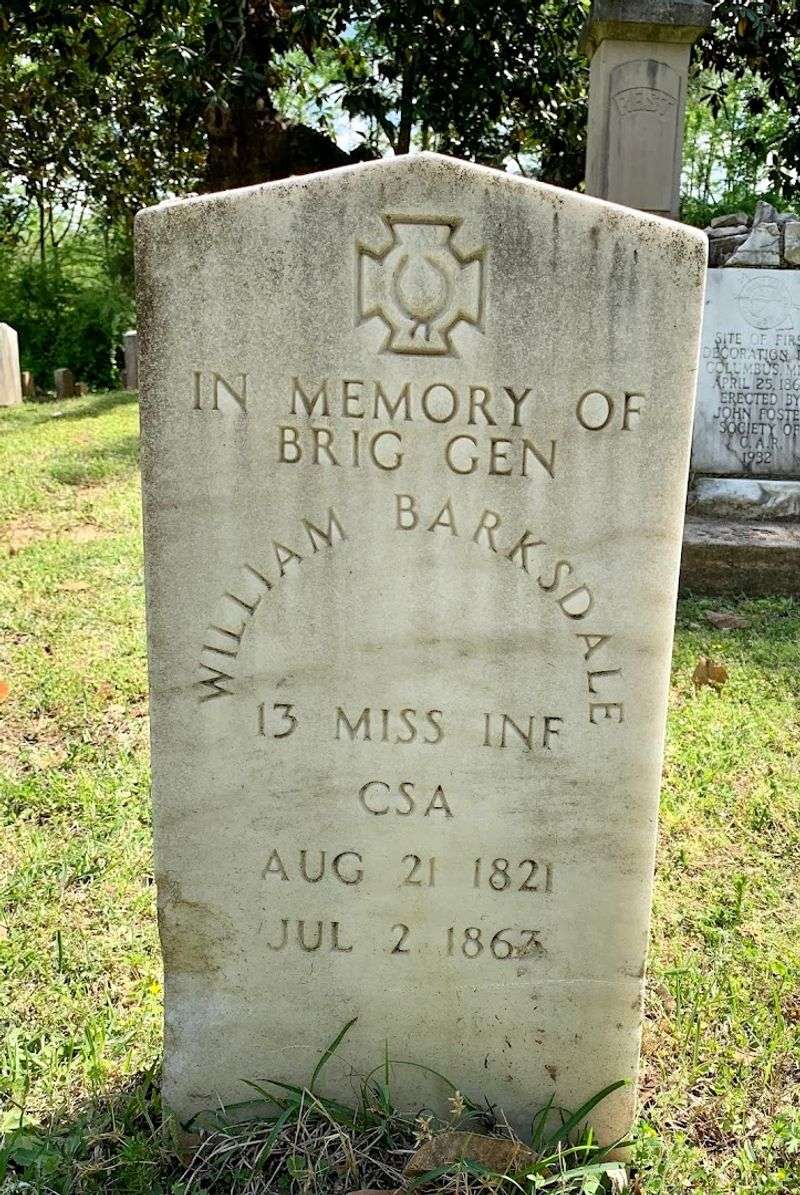
Friendship Cemetery in Columbus holds a story that changed how an entire nation remembers its conflict. On April 25, 1866, a group of local women gathered here and placed flowers on the graves of both Union and Confederate soldiers.
That act of compassion is widely credited as the origin of what became Memorial Day.
Let that sink in for a moment. A small cemetery in Mississippi sparked a national holiday observed across the entire country every year.
That is a remarkable piece of history sitting quietly in a town most road trippers never stop in.
Established in 1849, Friendship Cemetery is among the oldest burial grounds in the state. Rows of marble headstones stretch beneath ancient magnolia trees that have stood here longer than anyone alive can remember.
The landscape is genuinely beautiful in every season.
A weeping angel statue marks the grave of Reverend Thomas Teasdale, and it has become one of the cemetery’s most photographed spots. The craftsmanship on older monuments throughout the grounds is extraordinary.
Nineteenth-century stonecutters put real artistry into their work.
Visitors have reported seeing apparitions of Civil War soldiers near dusk, which adds an extra layer of intrigue to an already deeply atmospheric place. Whether you are a history lover or a ghost story enthusiast, Friendship Cemetery delivers on both fronts.
It is not trying to be spooky. It just is.
The cemetery is well-maintained and open to visitors. Guided tours are sometimes available and worth taking if the timing works out.
Walking these grounds solo with no tour group is equally powerful.
Friendship Cemetery is located at 4th St S, Columbus, MS 39701.