
This Flat 1.5-Mile Mississippi Boardwalk Trail Takes You Deep Into A Cypress Swamp With No Climbing
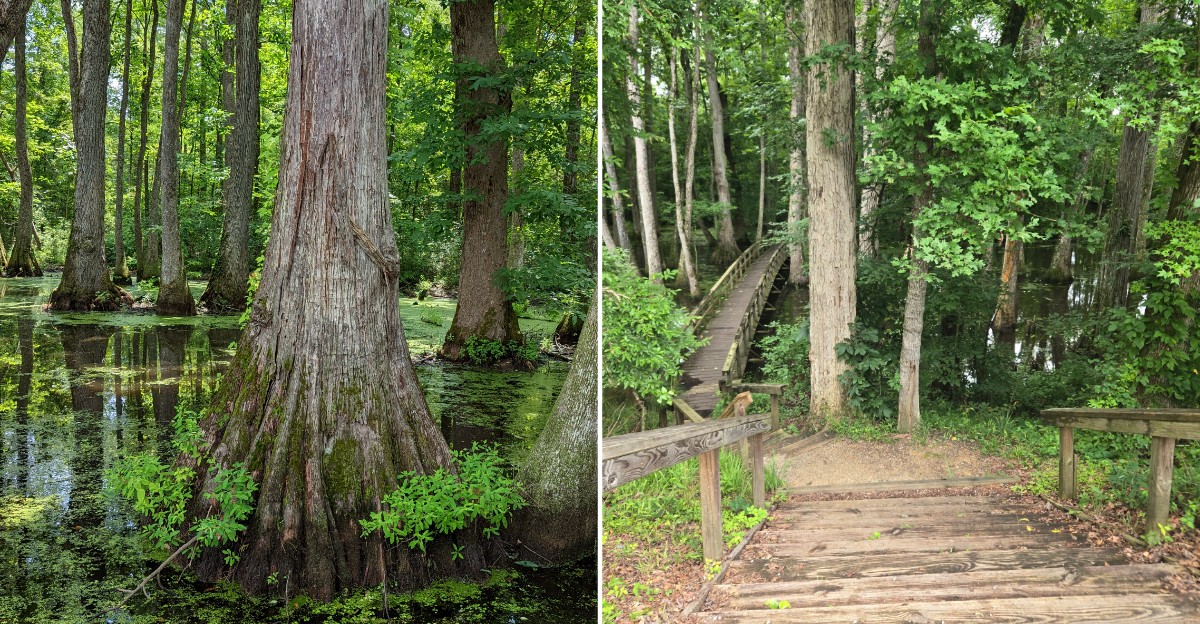
Walking is healthy, as overused as that sounds, and this short walk will genuinely help you unwind definitely not a waste of time. This Mississippi boardwalk trail takes visitors deep into a cypress swamp without a single hill to climb.
Wooden paths wind through the wetlands, keeping the trail accessible without sacrificing the natural scenery around it. Wildlife shows up regularly along the boardwalk, adding another reason to slow down and pay attention.
Nothing about this trail feels overly difficult, making it suitable for hikers of nearly every skill level. Photography opportunities exist around nearly every turn, especially where the boardwalk crosses open water.
Families often turn the walk into a full outing, taking their time to spot birds and other wildlife. This trail proved that sometimes the best walks require nothing more than sturdy shoes and curiosity.
A Boardwalk That Does All The Work For You
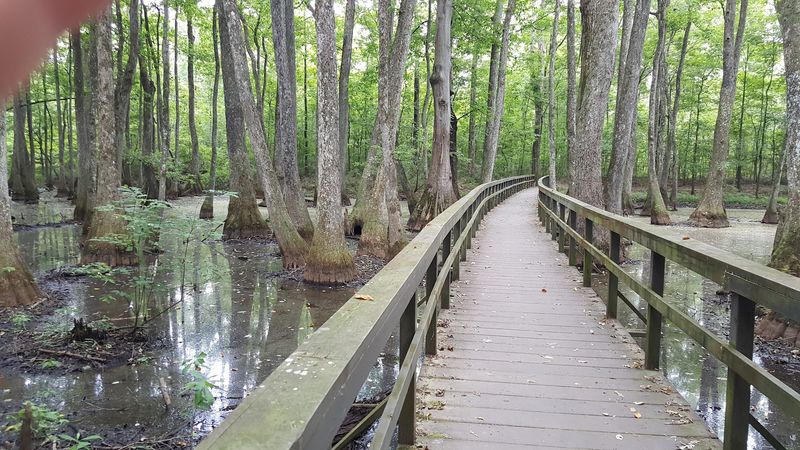
Some trails make you earn the view. Not this one.
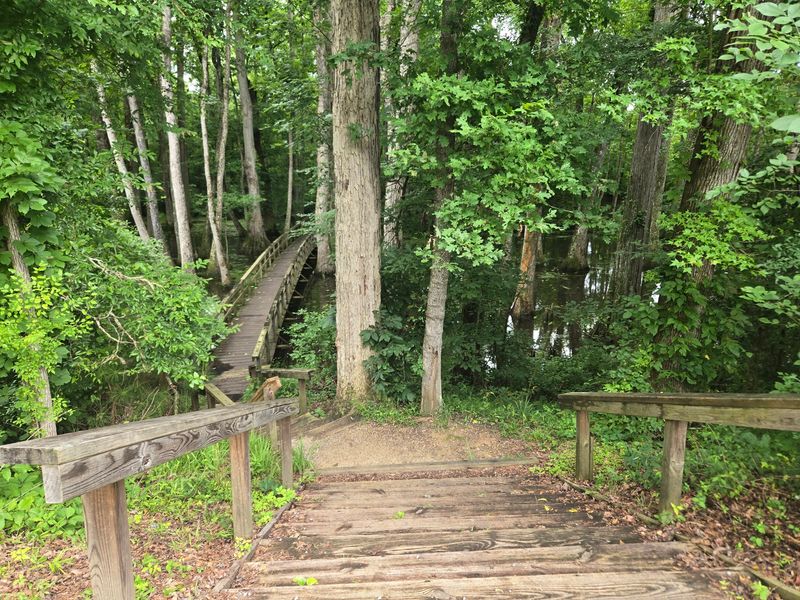
The wooden walkway here runs roughly half a mile in a loop, and the only elevation change worth mentioning is a short set of stairs at the start. After that, it is flat boards under your feet the entire way through the wetland.
What makes it feel longer and bigger than it is has everything to do with placement. The path does not skirt the edge of the water politely.
It cuts right across the middle, so the swamp surrounds you on both sides while you stroll.
Families with small kids love it because nobody gets carried back to the car in tears. Older visitors appreciate that the surface stays even and predictable, with railings along the water crossings.
Those stairs at the beginning do mean wheelchairs will have trouble, which is worth knowing before making the drive out. Once you are down, though, the rest is smooth sailing.
Most people finish the loop in fifteen to thirty minutes, depending on how many times they stop to stare at something. Honestly, stopping is the whole point.
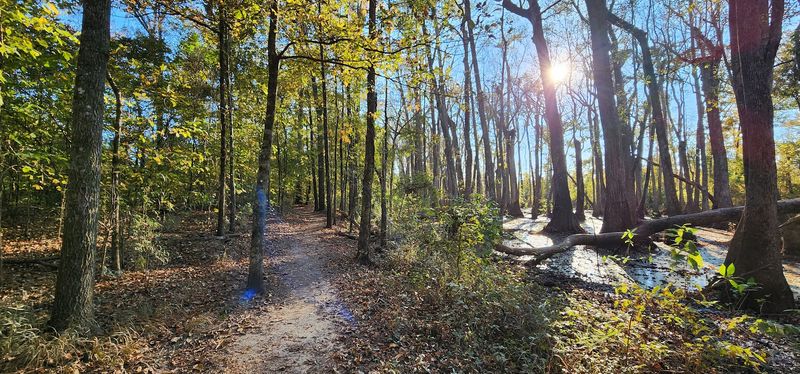
Part of the route continues onto a narrow dirt path beyond the boards, so shoes with decent grip help after rain. You will find it at Milepost 122, Natchez Trace Pkwy, Canton, MS 39046.
Bald Cypress Knees And Their Strange Job
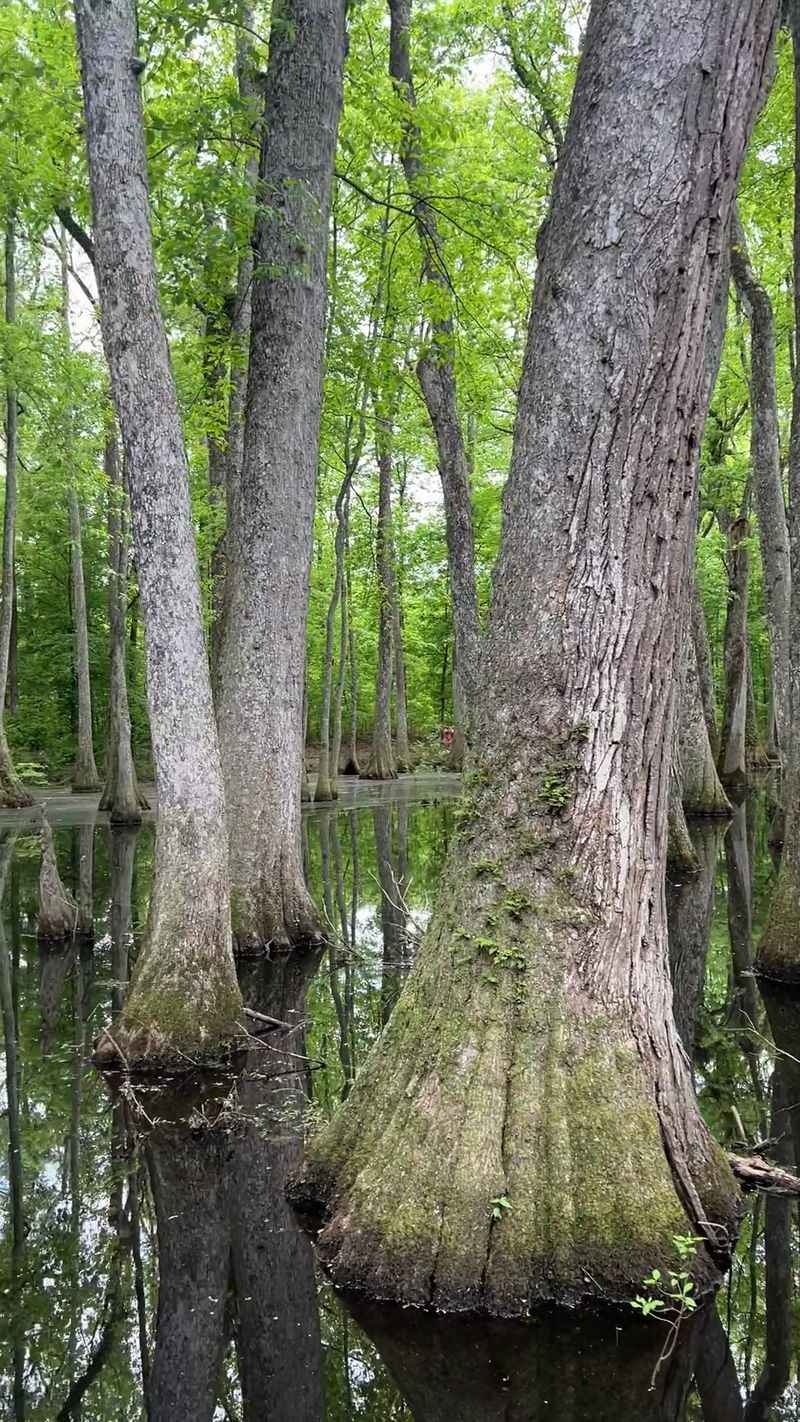
Sticking up out of the water like wooden stalagmites, cypress knees are the weirdest thing in the whole swamp. They grow from the roots of bald cypress trees, and for a long time scientists were convinced they helped the tree breathe underwater.
That theory has mostly been set aside. Current thinking says the knees act like anchors, giving the trees extra stability in mud that never really firms up.
Bald cypress and water tupelo both handle soggy ground that would kill almost any other tree. Their trunks flare out wide at the base, a design that keeps them upright when the water rises.
The name bald cypress comes from an odd habit. Unlike most cone-bearing trees, it drops all its needles in fall and stands completely bare through winter.
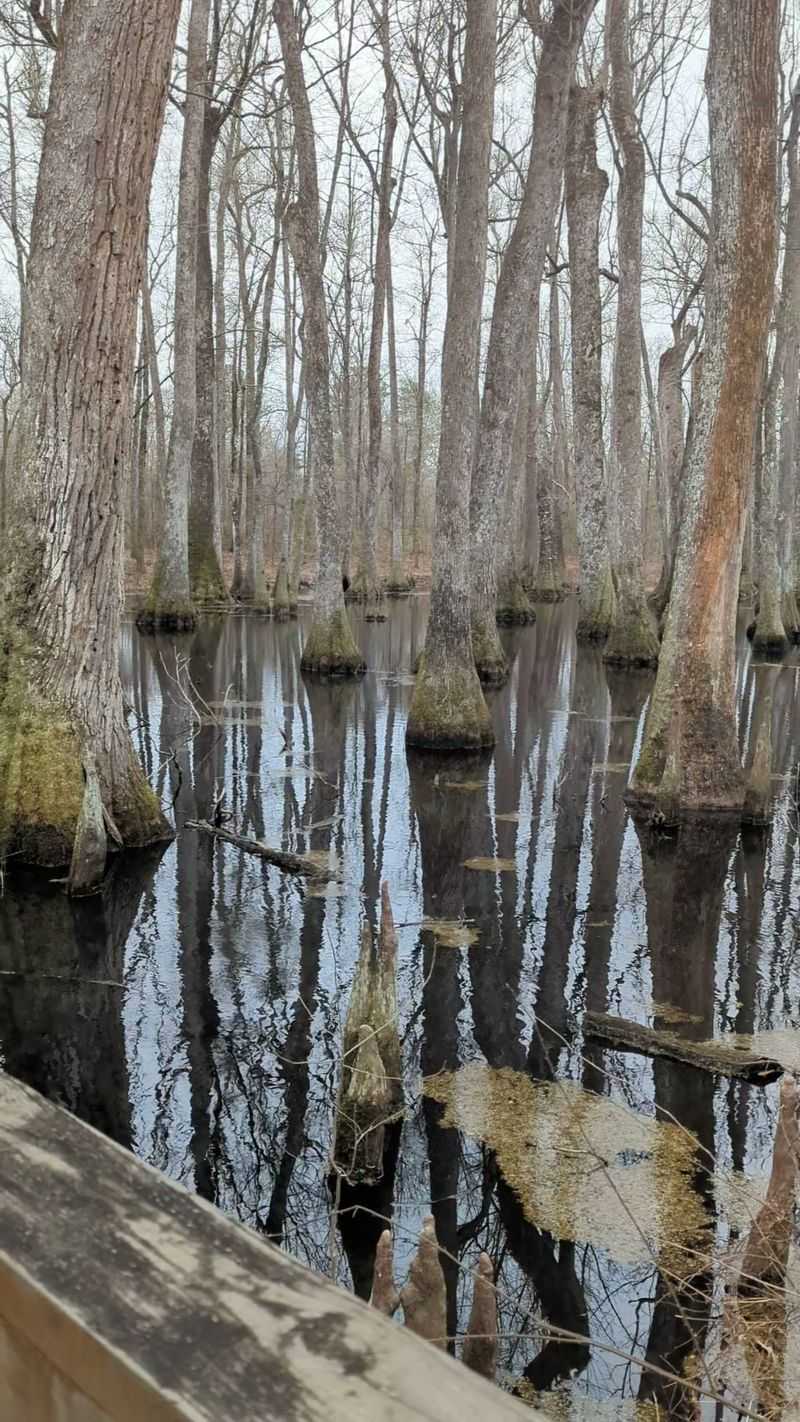
Look closely at the bases where wood meets water, and you will see how the reflections double everything. The knees appear to have twins hovering just below the surface.
Some of these trees have been standing here for a very long time, quietly outlasting everyone who has walked past them. Moss drapes the branches in places, adding to the mood.
Interpretive signs along the boardwalk explain the biology without turning it into a science lecture. Kids tend to get genuinely interested once they hear the breathing theory.
Baby Alligators Sunning On Floating Logs
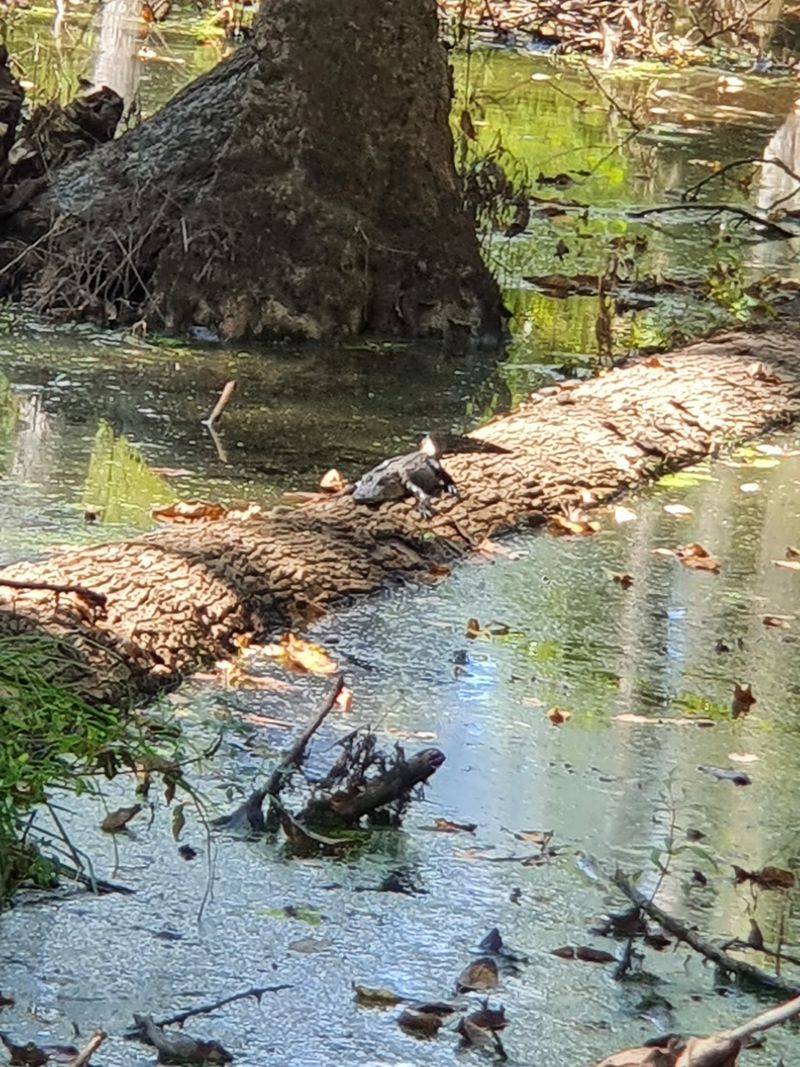
Let us address the reptile in the room. Yes, there are alligators here, and no, they are not lurking under the boardwalk waiting for tourists.
The ones people spot are usually juveniles, small enough to stretch out on a floating log or a mat of vegetation without sinking it. They tend to hang out toward the middle of the swamp where the sun reaches the water.
Warm afternoons give you the best odds. Cold snaps send them into hiding, so winter visits often turn up nothing but ripples and imagination.
Plenty of visitors walk the entire loop without seeing a single one, which is part of the fun. The possibility keeps everybody scanning the water instead of their phones.
Turtles are far more reliable company. They pile onto logs in the sunshine, and some of them get surprisingly large.
Frogs, snakes, wading birds, and waterfowl round out the cast. Little fish dart through the shallows near the boardwalk supports, easy to spot if you pause and look straight down.
Staying on the boardwalk matters, both for your safety and for the animals. Feeding wildlife of any kind is a terrible idea here.
Move slowly and quietly and your chances of seeing something improve dramatically. Rushing through guarantees you miss it all.
How A Wandering River Built This Place
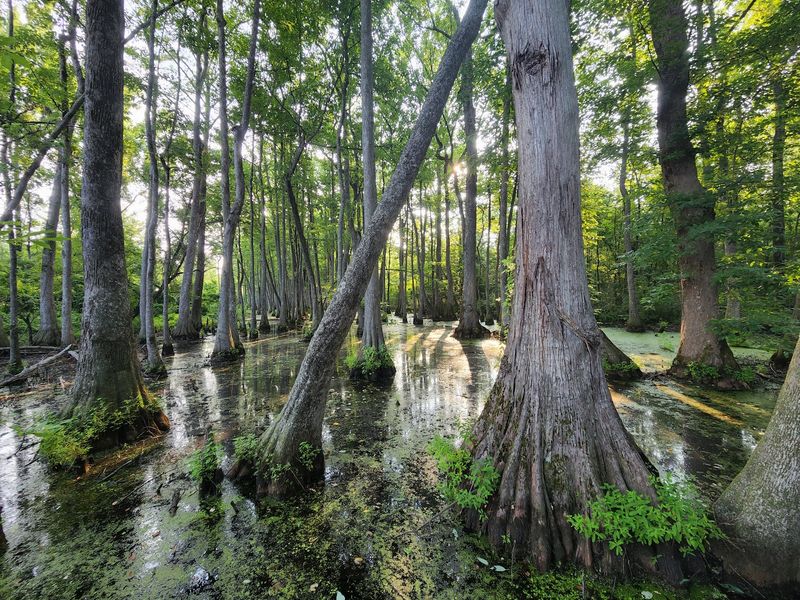
Rivers get restless. The Pearl River once flowed right through this exact spot before deciding to take a different route entirely.
What it left behind was a shallow abandoned channel, still holding water but no longer moving much. During a stretch of low water, bald cypress and tupelo seedlings took root in that muck and never left.
Centuries later, those seedlings became the towering trees you see reflected in the water today. Geology moves slowly, but it clearly knows what it is doing.
Here is the part that surprises people. The swamp is temporary.
Silt and fallen plant material keep filling the old channel a little more every year. Eventually the ground will dry out enough that black willow, sycamore, and red maple will move in and crowd out the cypress and tupelo.
Nobody alive will watch that transition finish. Still, knowing you are looking at a landscape mid-change makes the view feel different.
Swampy ground was common along the old Natchez Road, especially in rainy seasons when travelers had to slog through it. Army crews later built causeways and drained many of those wet stretches.
This one survived, which is lucky for everyone who pulls over at Milepost 122. Signs along the trail lay out the whole story.
Reflections That Turn Water Into A Mirror
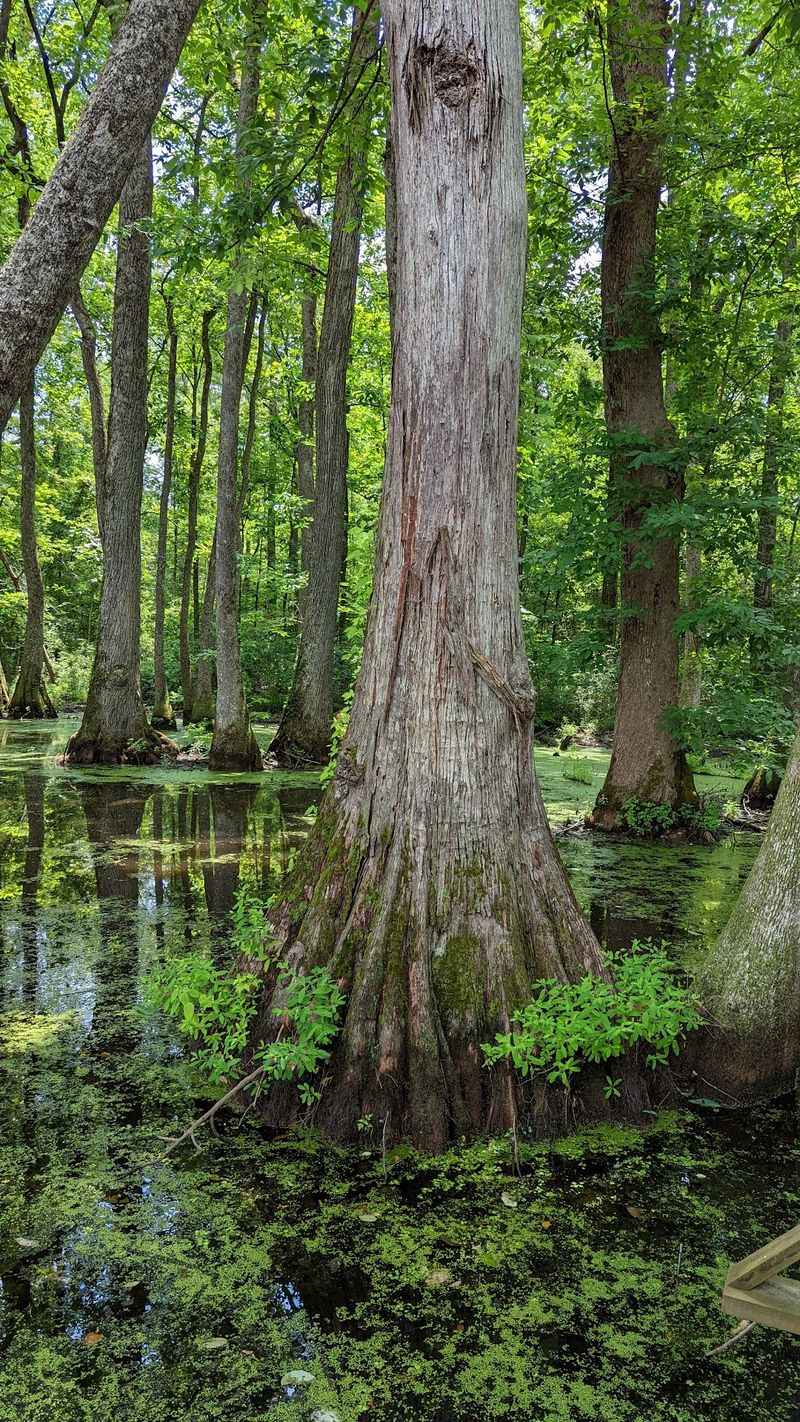
On a calm day, the water here stops behaving like water. It flattens into glass and copies the entire canopy overhead, upside down and nearly perfect.
Photographers have been chasing that effect for years, which is how this stop earned a spot among the notable natural wonders along the Natchez Trace. The trick is arriving when there is no wind.
Early morning usually delivers the stillest surface. Light filtering sideways through the trunks adds depth that midday sun tends to flatten out.
Compositions basically build themselves. Frame a cluster of knees in the foreground, let the trunks lead upward, and the reflection handles the bottom half of the shot.
Moss hanging from branches catches light in a way that reads almost silver in photos. Combined with the dark water, it produces that moody, slightly haunted look people associate with southern swamps.
Phone cameras do fine here, so there is no need to haul expensive gear. The scenery does most of the heavy lifting.
Overcast days work better than you might expect, cutting harsh contrast and deepening the greens. Rain-free gloom is honestly ideal.
Wildlife shots require patience and a steady hand from the boardwalk. Zoom in rather than leaning over the rail.
The Soundtrack Of A Southern Wetland
Close your eyes for a second and the swamp gets louder. Crickets buzz, frogs croak at uneven intervals, birds call from somewhere in the canopy, and occasionally something splashes with no explanation offered.
Then there are stretches of complete silence that feel almost staged. That contrast is what people remember long after the trip ends.
The atmosphere leans eerie in the best possible way. Dark water, moss, and trees that vanish upward into shade create a mood that borders on cinematic.
Shade covers most of the boardwalk, so even warm days stay reasonably comfortable under the canopy. The temperature drop when you descend those stairs is noticeable.
Seasons rewrite the whole scene. Spring and summer flood everything in bright green, while fall brings rust and gold to the canopy before the cypress goes bare.
Winter strips the trees down to skeletons standing in water, which sounds bleak but photographs beautifully. Water levels fluctuate too, and droughts can lower the swamp considerably.
Traffic noise from the Parkway fades faster than expected once you are among the trees. Within a minute or two it is just you and the wetland.
People describe leaving calmer than they arrived. Twenty minutes of this does more than it has any right to.
Thousands Of Years Of History Along The Trace
The road you drove on is older than the country. Well, the route is, anyway.
The Natchez Trace Parkway follows a 444-mile corridor across three states, tracing paths worn down over roughly 10,000 years. Native peoples used it first, then explorers, traders, and boatmen walking home after floating goods downriver.
President Thomas Jefferson designated it a national post road back in 1801 so mail could move through the region. That decision helped cement the route into American history.
Travelers on the old road dealt with swampy ground constantly, especially when rain turned low areas into muck. Crossing wetlands like this one was a genuine hardship, not a photo opportunity.
Today the Parkway has no commercial traffic and no billboards, which makes the drive itself part of the experience. Speed limits stay low and the scenery stays constant.
Milepost 122 sits just north of Jackson, making this an easy add-on to almost any trip through central Mississippi. Several other historic stops cluster within a short drive.
Standing on the boardwalk, it is strange to think about people trudging through this same landscape with mail sacks. They definitely did not have handrails.
The National Park Service manages the whole corridor, swamp included.
Smart Packing And Timing For The Visit
Bug spray. Bring it, use it, then use it again. Mosquitoes here are legendary, and they do not care about your plans. Warm months bring them out in force, and ticks show up in the grassier sections too, so a quick check afterward is smart.
Spring and fall hit the sweet spot. Milder temperatures, fewer insects, and either fresh greenery or fall color make those seasons the easy winners.
There are no restrooms at the stop and no picnic tables either. Facilities exist about a mile away along the Parkway, so plan accordingly before pulling in.
Closed shoes beat sandals, especially if you continue onto the dirt portion of the loop. After rain, that section gets slick.
Budget more time than the twenty-minute estimate suggests. People who linger tend to see the most wildlife, and rushing defeats the purpose entirely.
Leashed dogs are a common sight on the boardwalk, and the shade makes it pleasant for them. Kids do great here as long as they understand the stay-on-the-boards rule.
Craving something longer? The Yockanookany Section of the Natchez Trace National Scenic Trail starts directly across the Parkway and offers real mileage.
Pack water, since there is nowhere to buy any nearby.