
Nevada’s Mining Past Still Lines The Main Streets Of These 10 Free-To-Visit Spots
Pull off a Nevada highway with no real plan and you might end up on a street where the storefronts are older than the pavement under your tires. The state’s silver and gold rushes left behind courthouses, stone towers, board sidewalks, and whole towns that never quite emptied out, and a surprising number of them cost nothing to walk through.
That matters when gas money is the biggest line item in a day trip budget. Here are ten Nevada places where the mining era is still standing in plain sight, free to explore at your own pace.
1. Virginia City Historic District
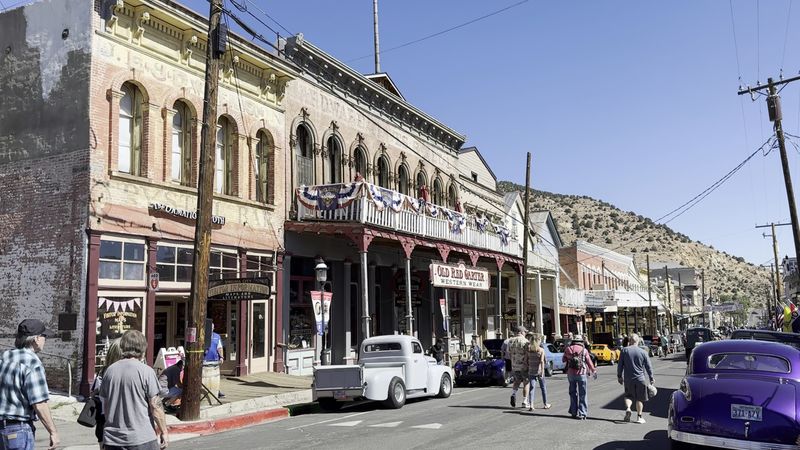
Silver built this place, and the evidence still lines both sides of C Street. Virginia City grew out of the Comstock Lode, and its wooden sidewalks, false-front storefronts, and 1800s brick buildings remain the main event.
Walking the district costs nothing. Free street parking and a free parking lot are both listed, with paid options nearby if a weekend crowd fills things up.
Shops lean toward souvenirs, though several stock genuinely historical pieces worth a slow browse.
The historic district keeps hours of 9 AM to 5 PM, and Saturday draws the heaviest foot traffic by a wide margin. Weekday mornings are the quiet window, which matters on a street this compact.
Families tend to do well here, since the walkable core is built for kids and a train ride runs for anyone wanting more than a stroll. Two or three hours on the boardwalks can pass before you spend anything at all.
Arriving early also keeps parking simple and the group together. Confirm seasonal hours before making the climb up into the Virginia Range from the Reno side, since small-town schedules in Nevada shift with the weather.
2. Gold Point
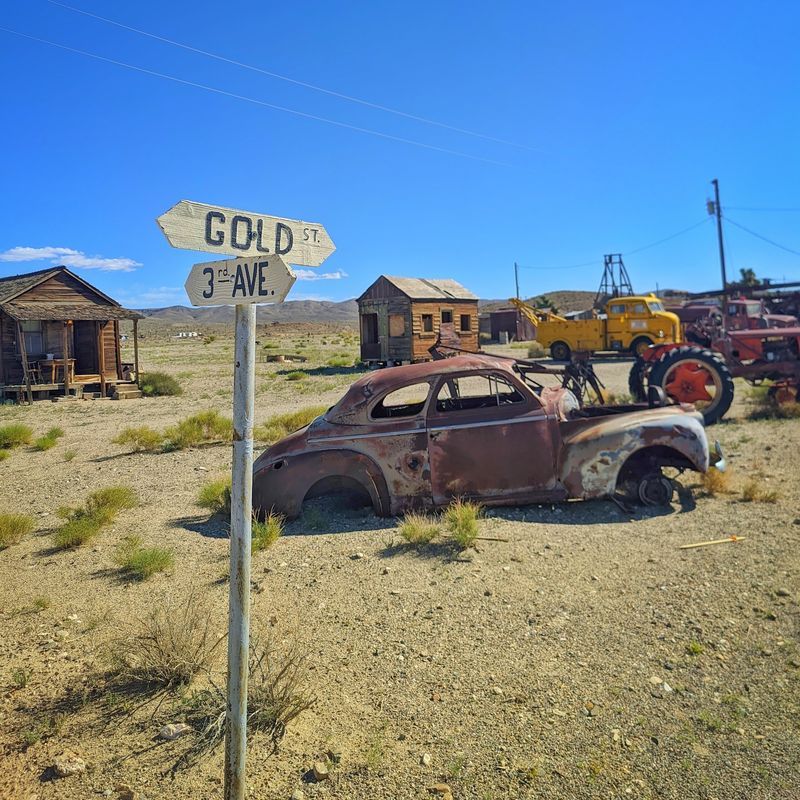
Out on NV-774 in Esmeralda County, a scatter of weathered wood buildings sits exactly where the mining camp left them. Gold Point qualifies as a living ghost town, meaning a handful of structures are still lived in and cared for rather than left to fall apart.
That detail shapes how you visit. Much of the appeal is exterior: photographs of leaning cabins, tin roofs, and the old saloon building along the dirt main thoroughfare.
Several buildings are private residences, so wandering inside is off the table.
What you get instead is quiet. There are no amenities out here, no admission gate, and on-site parking is simply the ground beside the road.
Bring water, snacks, and a full tank.
Hiking routes spread out from the townsite for anyone who wants to stretch the stop into a longer afternoon among the hills.
Kids generally take to it, largely because the place looks like a movie set that nobody bothered to dismantle. Consider it a worthwhile detour off US-95 rather than a destination with services, and plan your fuel stops accordingly before turning onto the dirt.
3. Goldfield Courthouse Landmark
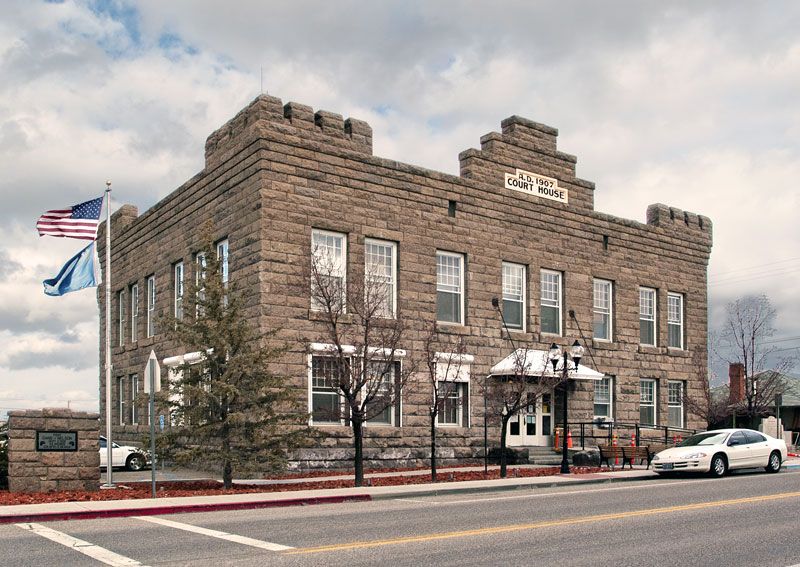
Few small towns in Nevada own a building this substantial. The courthouse at 403 Crook Avenue rises in heavy stone from a community that now counts fewer than 300 residents, and the mismatch is the whole point.
Goldfield’s early 1900s gold rush briefly made it one of the biggest cities in the state, flush enough to build in stone rather than lumber. The courthouse survived the bust and still anchors the historic corridor just off US-95.
Viewing the exterior is free and available around the clock, which makes it an easy pause on a long drive between Las Vegas and Tonopah. There is no ticket booth, no set hours to work around, and no pressure to hurry.
Photographers usually do best in the morning or late afternoon, when low light picks out the stonework and window arches.
Pair it with a slow lap of the surrounding streets, where boomtown-era buildings still stand alongside occupied homes. Ten or fifteen minutes covers the landmark itself, but the broader walk can fill an hour.
Sun protection helps here, since shade along the corridor is scarce.
4. Eureka County Opera House
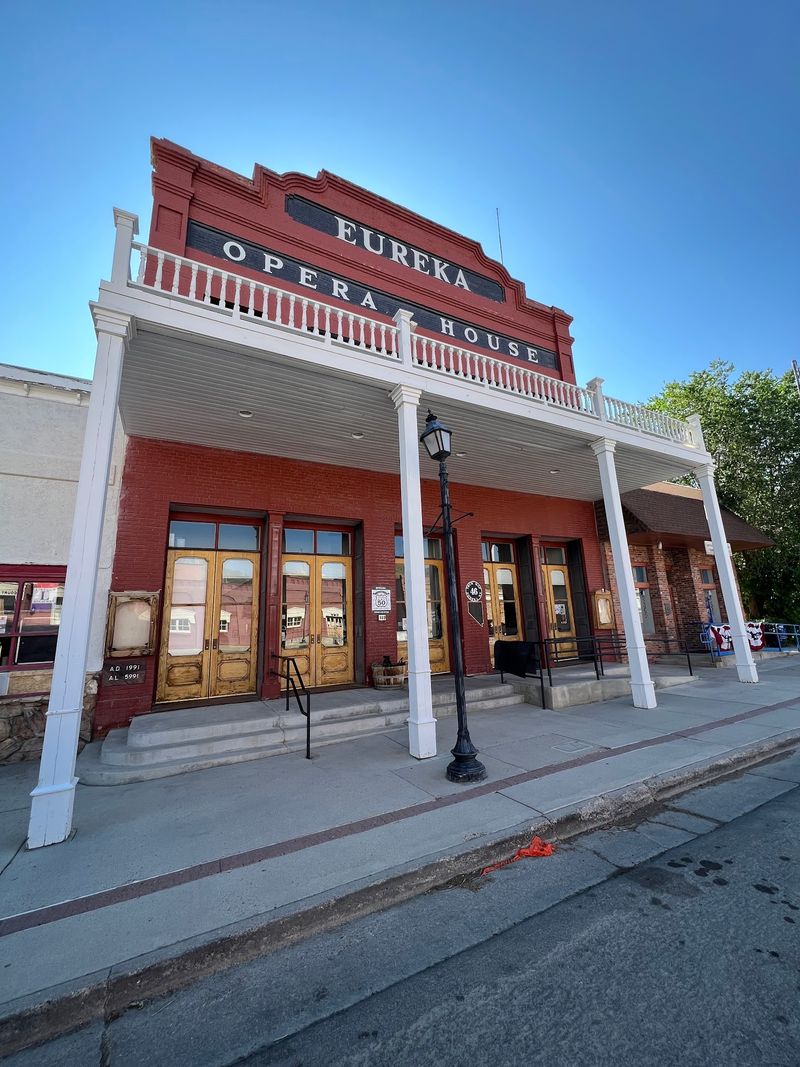
An opera house in a town this size tells you how much money once moved through central Nevada. Built in the 1880s during the silver-lead boom, the Eureka County Opera House still stands at 31 S Main St, right in the center of everything.
The interior has been beautifully renovated and hosts live performances and gatherings. Access inside depends on whether an event or meeting is underway, so treat an open door as a bonus rather than a guarantee.
Staff here know both the building and the wider story of mining town culture, and they are generous with it when they have a moment.
Restrooms are available on site. There is no restaurant in the building, so plan meals elsewhere in town.
What makes the stop work even on a closed day is the setting. Eureka’s Main Street district is walkable and free, lined with 1870s-era structures that reward a slow lap on foot with a camera.
Hours and event schedules change in a town of this scale, so a quick check before you commit to the drive is smart planning.
5. Million Dollar Courthouse
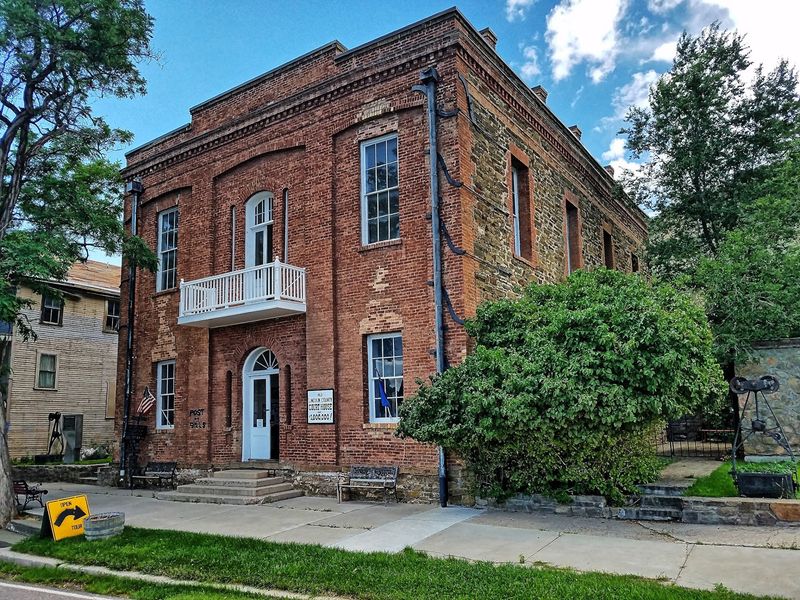
The nickname is not marketing. Pioche’s courthouse ended up costing the town more than a million dollars, and the debt was not cleared until 1932, decades after the silver boom that prompted it had faded.
Inside, the building works as a time capsule. Visitors can see the courtroom, the old jail, and attorney offices, along with artifacts tracing Pioche and Lincoln County history.
Listed hours run 10 AM to 3 PM daily, and restrooms are available.
Outside costs nothing at all. The exterior, grounds, and surrounding streetscapes sit on Pioche’s stepped hillside grid above the Main Street corridor, and the walk between them delivers views across the surrounding mountains.
Pioche itself is remote southeastern Nevada, a long haul from either Las Vegas or Reno, which is exactly why the mining-era layout survived so intact.
A realistic visit runs an hour or two once you add the streets to the building. Small-town Nevada hours can shift seasonally, so confirm before you drive, and pack water for the walk uphill.
6. Stokes Castle
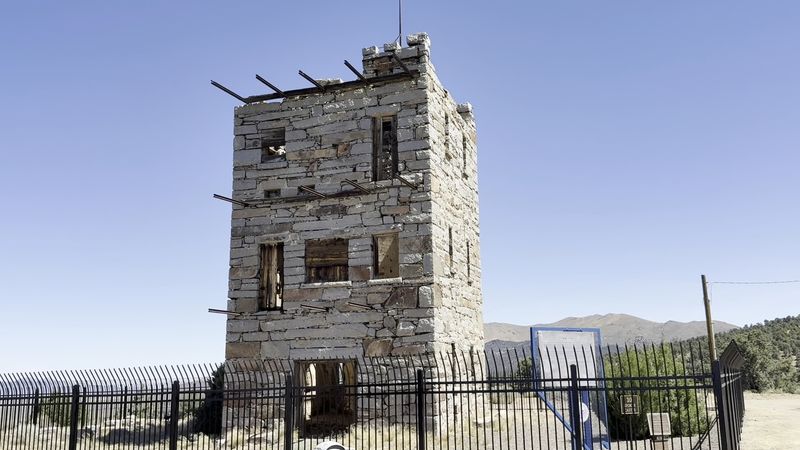
A three-story stone tower standing alone above a Nevada valley does raise questions. Mining financier Anson Phelps Stokes had it built in 1897 from rock, cedar wood, and railroad steel, positioned to overlook the Reese River mining district.
The result is unmistakably odd and unmistakably Nevada. The tower is not flashy, but it is authentic, and the view across the basin toward Route 50 does most of the work.
Access is free, with daily hours of 7 AM to 7 PM. A picnic table and fire ring sit nearby, which turns a five-minute photo stop into a packed-lunch break with a valley spread out below.
Come prepared, because there are no restrooms and no food service at the site.
Austin, the small highway town just below, counts under 200 residents and sits directly on the US 50 corridor. That makes the castle one of the easiest free stops on a cross-state drive.
Sunday mornings and Saturday afternoons bring the most company; Tuesday evenings are about as quiet as it gets out here.
7. Rhyolite Historic Area
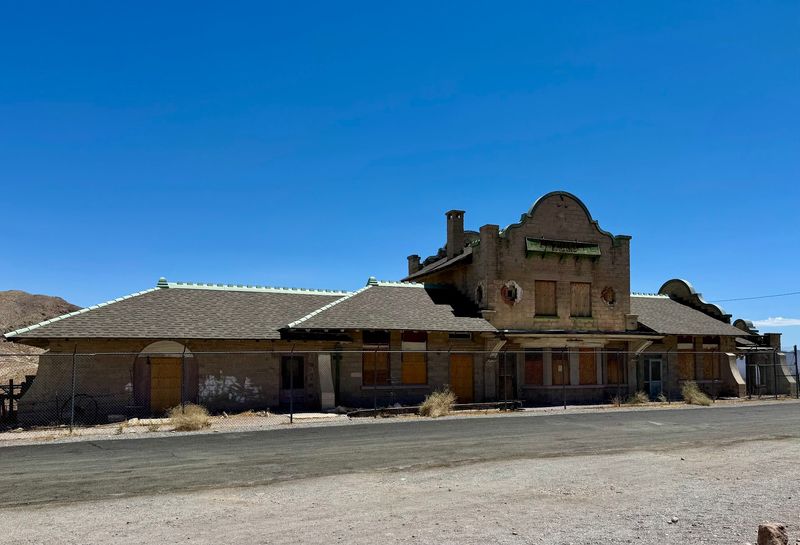
Less than a decade. That is how long Rhyolite functioned as a real town after the 1904 gold rush pulled thousands into the Bullfrog Hills, and by around 1910 the exodus was well underway.
What remains near Beatty is a ghost town of crumbling concrete shells and striking architectural fragments. The three-story Cook Bank ruin and the old train depot are the headliners, with interpretive plaques explaining individual buildings as you walk.
Most of the surviving structures line the main road, and additional sites sit just off it, down gentle slopes you can wander at your own pace. An outdoor art collection nearby adds a second, stranger layer to the visit.
Access is free. Listed hours run 8 AM to 5 PM, and the site is kid-friendly, though open desert ground means sturdy shoes and plenty of water.
Monday mornings tend to be quietest, while weekend afternoons draw the most cars.
Give it an hour minimum, longer if you read every plaque. Stay clear of fenced-off areas and old shafts while exploring.
8. Belmont Courthouse
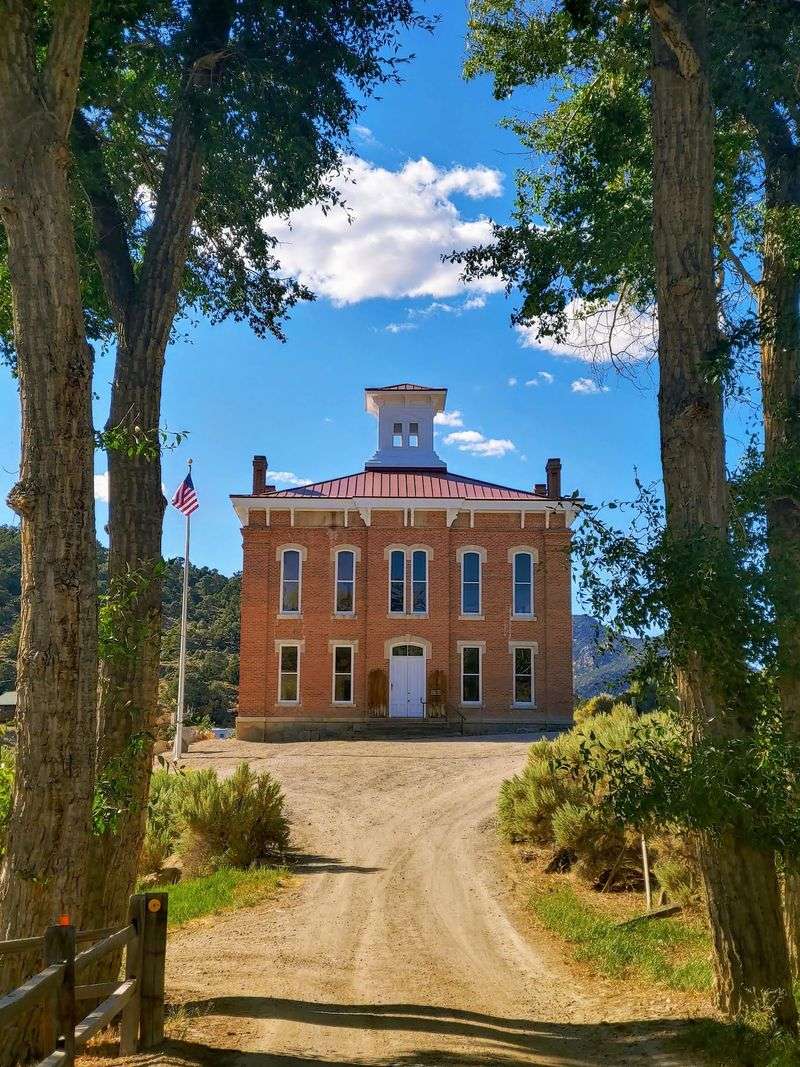
Brick was a statement in the high country of Nye County. The Belmont Courthouse went up in 1876 during the local silver boom, and its two-story facade still dominates a townsite that has been semi-abandoned for well over a century.
County business ran through this building until 1905, when the Nye County seat moved and the courthouse was left empty. The mining decline did the rest.
Today the address reads 75 Cedar St, and the surroundings are what make the trip memorable: preserved historic buildings, old cabins, and the quiet of the Toquima Range at elevation.
Viewing is free and available 24 hours, so timing is flexible. Kids usually find the scale of the place fascinating, especially set against so much open sagebrush.
Belmont sits well off the paved main routes, reached through the Manhattan area, so check road conditions and fill the tank first. Winters here run genuinely cold, and layers are not optional in shoulder seasons.
Budget a couple of hours to walk the townsite properly rather than treating it as a drive-by.
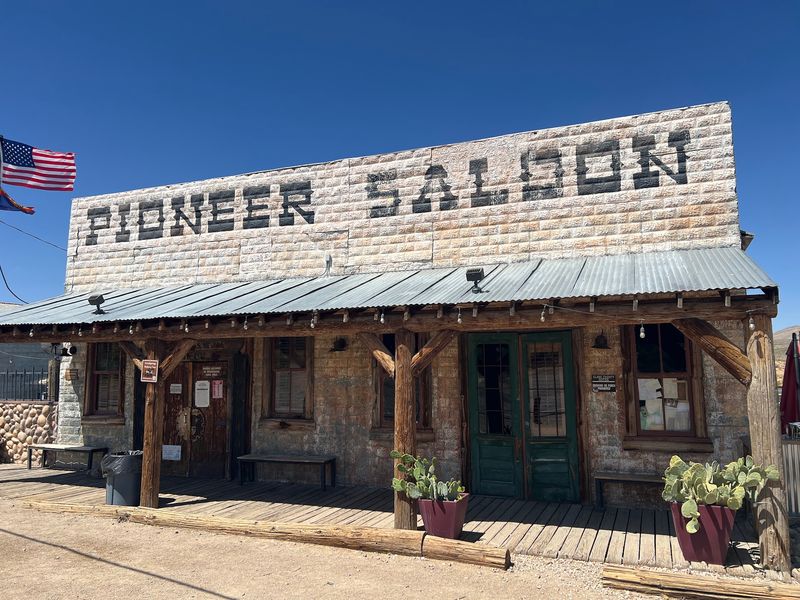
9. Pioneer Saloon
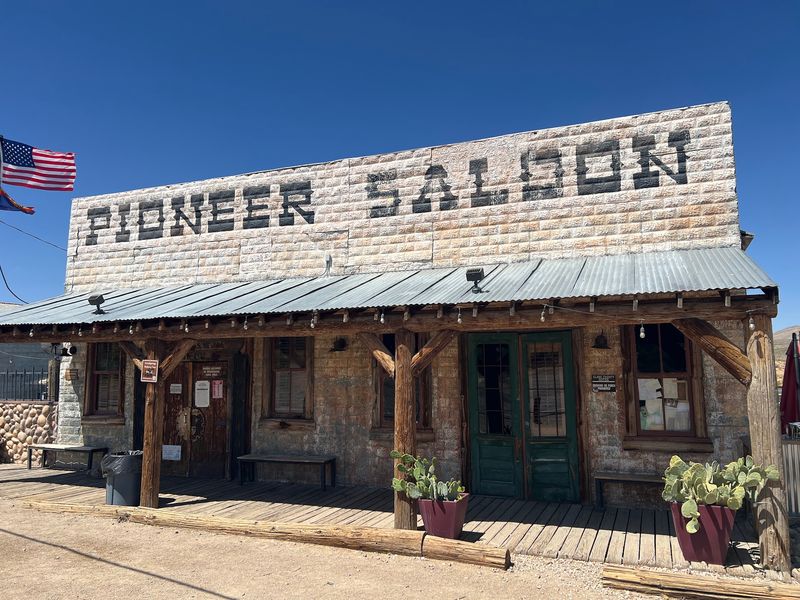
Opened in 1913, this stamped-tin landmark has outlasted the Yellow Pine mining district that built it. Goodsprings today counts roughly 200 residents, and the building at 310 NV-161 is the reason most travelers turn off the highway at all.
Stopping in and looking around costs nothing, with a free parking lot, free street parking, and usually plenty of room. The interior leans cozy and historic, fireplace included, and a gift shop sits alongside the dining room.
Food runs to burgers, pizza, barbecue, pancake stacks, pulled pork, milkshakes, and a full vegan menu, generally landing in the ten to twenty dollar range per person. High chairs and a kids’ menu are available, and dogs are welcome inside and out.
The huge outdoor deck hosts live music and doubles as dancing space when a band is playing.
Hours run 11 AM to 9 PM Monday through Thursday and 9 AM to 10 PM Friday through Sunday, with no reservations taken. Weekend afternoons get busy, so a weekday visit means shorter waits and more time studying the walls.
10. McGill Drugstore Museum
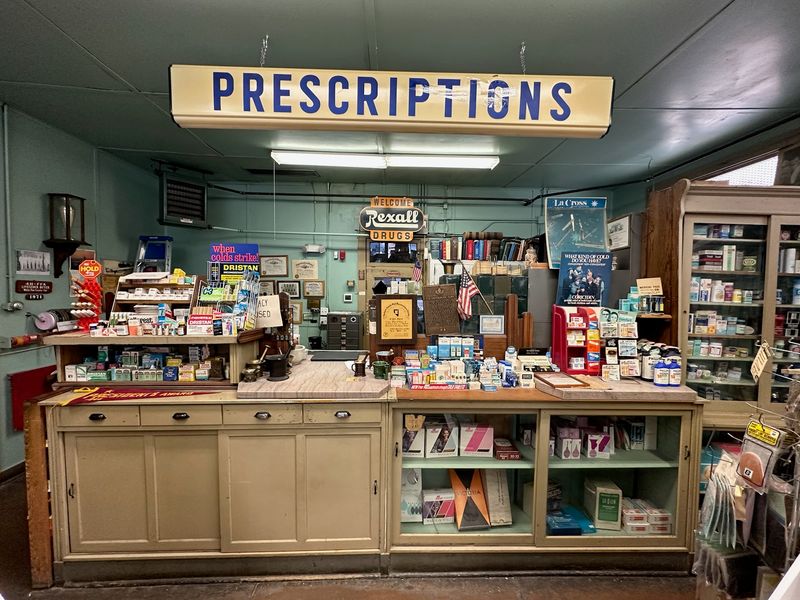
Walk in and the shelves are still stocked. The McGill Drugstore closed up and simply stayed that way, leaving a working-town pharmacy frozen mid-century with its bottles, packaging, prescription records, and soda fountain intact.
Admission is free, which is remarkable given how complete the collection is. Docents lead visitors through the building and explain both the pharmacy’s operation and the history of McGill itself, a company town built around copper smelting.
The ice cream counter tends to be the favorite stop for younger visitors, who get to see how a small-town gathering spot actually worked before shopping centers existed.
Hours run Thursday through Sunday, 10 AM to 3 PM, and the museum is closed Monday through Wednesday. On-site parking is available, and there is no restaurant in the building.
Finding it is easy: 11 S 4th St, essentially right on US-93 as you pass through town north of Ely.
A visit usually takes thirty to forty-five minutes. Because staffing is volunteer-based, checking that the doors will be open before driving out is genuinely worth the effort.