
10 Massachusetts Basilicas, Cathedrals, And Shrines Worth A Meaningful 2026 Road Trip
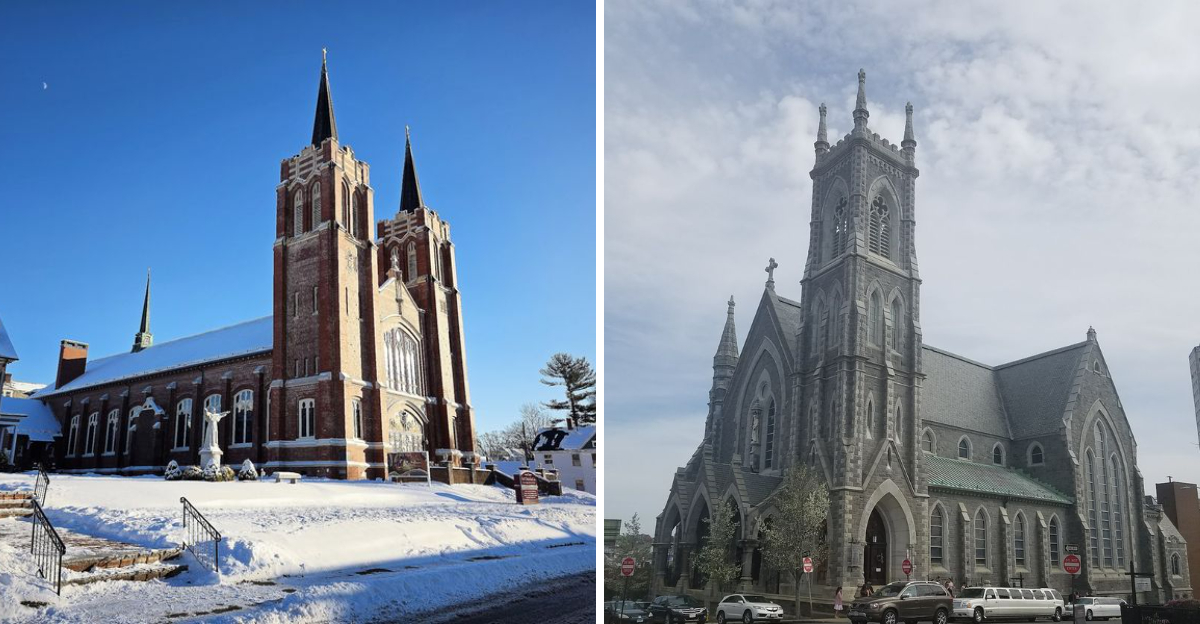
Behind every grand altar and stained glass window is a story, and Massachusetts has some fascinating ones waiting behind church doors.
These basilicas, cathedrals, and shrines were shaped by immigrant communities, local traditions, major historical events, and generations of people who helped build them.
Their walls reflect far more than religious history. They also tell pieces of the Massachusetts story.
A 2026 road trip connecting these sites can lead through busy cities, quiet towns, and peaceful hilltop grounds. Along the way, travelers will find monumental architecture, elaborate interiors, old statues, memorials, and places that have welcomed visitors for decades.
You could rush through them with a quick photo and move on, but that would miss half the point. The details deserve time.
History, architecture, and a deep sense of place make these sacred landmarks worth slowing down for along the way.
1. Basilica And Shrine Of Our Lady Of Perpetual Help
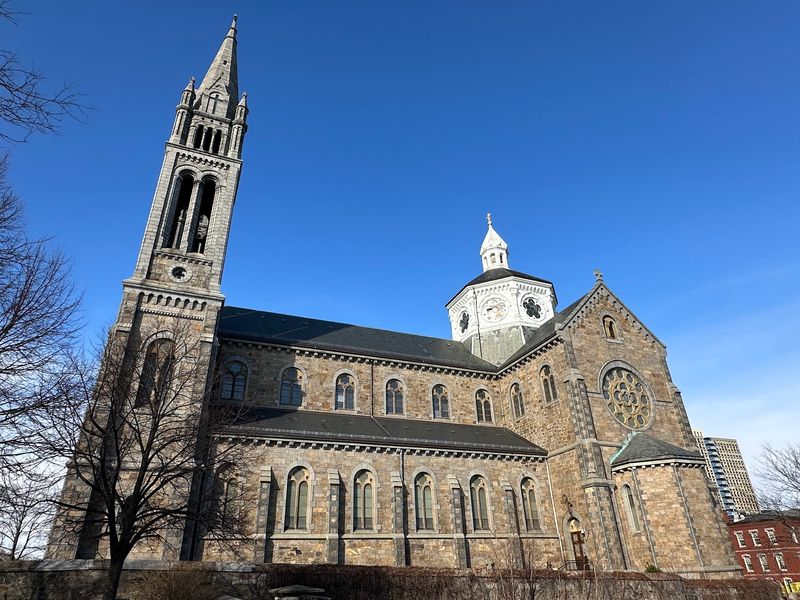
Bostonians simply call it Mission Church, and the nickname has stuck for generations. The full name, Basilica and Shrine of Our Lady of Perpetual Help, sounds far grander. Both fit.
Standing at 1545 Tremont Street in Boston, the basilica anchors the Mission Hill neighborhood with real presence. Its towers rise above the rooftops and act as an easy landmark for first-time visitors.
You will spot them long before your GPS finishes talking.
Inside, the scale does the heavy lifting. Tall arches carry your eyes upward, and the light shifts as the day moves along. The atmosphere leans prayerful rather than showy, which is part of the appeal.
The church has served its community for well over a century. That long history is baked into the stone, the woodwork, and the worn steps at the entrance.
Parking in this part of Boston takes patience, so public transit is your friend. The Green Line and nearby bus routes drop you within a short stroll.
Give yourself time to sit quietly before heading back out. Massachusetts has plenty of loud attractions, and this one offers the opposite. Start your route here, then let the rest of the state unfold at its own pace.
2. National Shrine Of The Divine Mercy
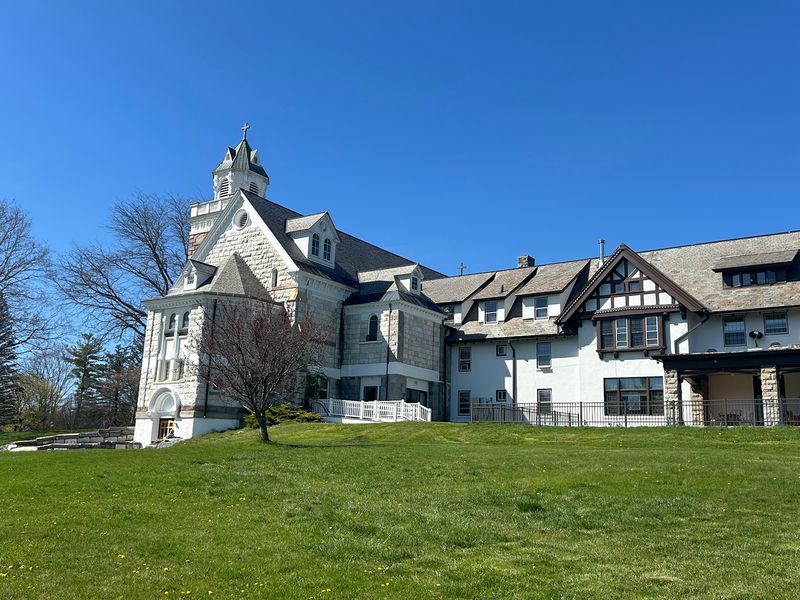
Trade traffic for treetops on this one. The drive west through the Berkshires is half the reward, and the destination sits on a hill with views that make you slow down automatically.
The National Shrine of the Divine Mercy occupies 2 Prospect Hill Road in Stockbridge. Open space surrounds the buildings, so the whole property feels unhurried.
Visitors wander the grounds as much as they visit the church itself. Architecture here was built with contemplation in mind. Nothing shouts. Everything nudges you toward stillness, which is a rare setting in a busy world.
Outdoor prayer spaces are scattered across the landscape. Some people follow them in order, others simply drift and find a bench with a good view.
Seasons change the mood dramatically. Autumn brings the famous Berkshire colors, while winter turns the hillside quiet and crisp.
Comfortable shoes matter, since the grounds involve gentle walking on uneven paths. Bring a jacket too, because hilltops in western Massachusetts stay breezy.
Stockbridge itself is a charming stop, with a walkable main street nearby. Combine the two and you have an easy half-day plan that leaves you calmer than when you arrived.
3. National Shrine Of Our Lady Of La Salette
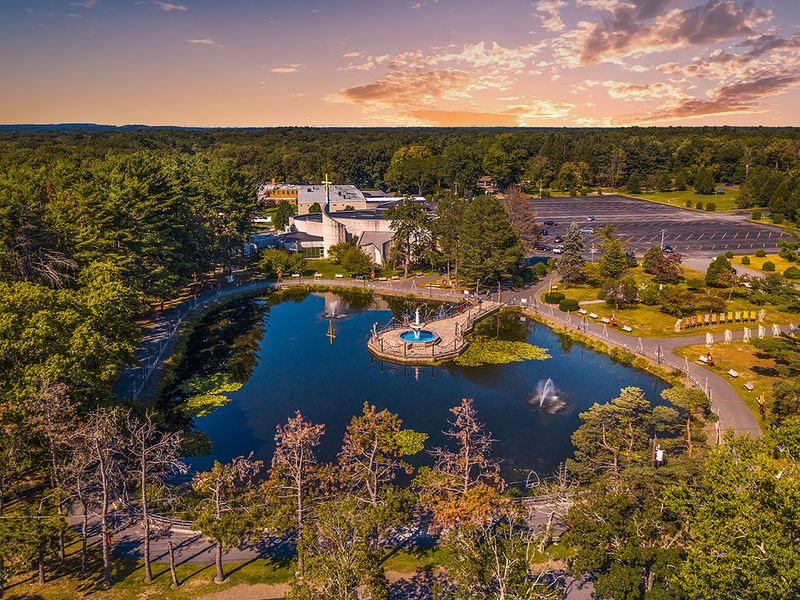
A million lights is not a figure of speech here. Every holiday season, the campus at 947 Park Street in Attleboro becomes the Christmas Festival of Lights, and the displays stretch across the grounds.
Outside of December, the property still keeps visitors busy. Multiple prayer routes wind through the landscape, with smaller devotional sites tucked between the trees.
A set of steps climbs toward a crucifix on a hill. Pilgrims often pray as they ascend, one step at a time, and the view from the top rewards the effort.
The main shrine honors the apparition of Our Lady, and it remains the heart of the site. Everything else radiates outward from there.
Families do well here because the grounds are open and welcoming. Children can walk freely without anyone shushing them every thirty seconds.
A gift shop sits on the property, and a cafeteria serves groups that reserve in advance. Retreats and meditation time are part of the regular rhythm.
Nearby attractions include the Xfinity Center and Wheaton College, so the surrounding area offers plenty to pair with your visit. Plan an evening arrival in winter, or a lazy afternoon in summer, and both versions work beautifully.
4. Basilica Of Saint Stanislaus
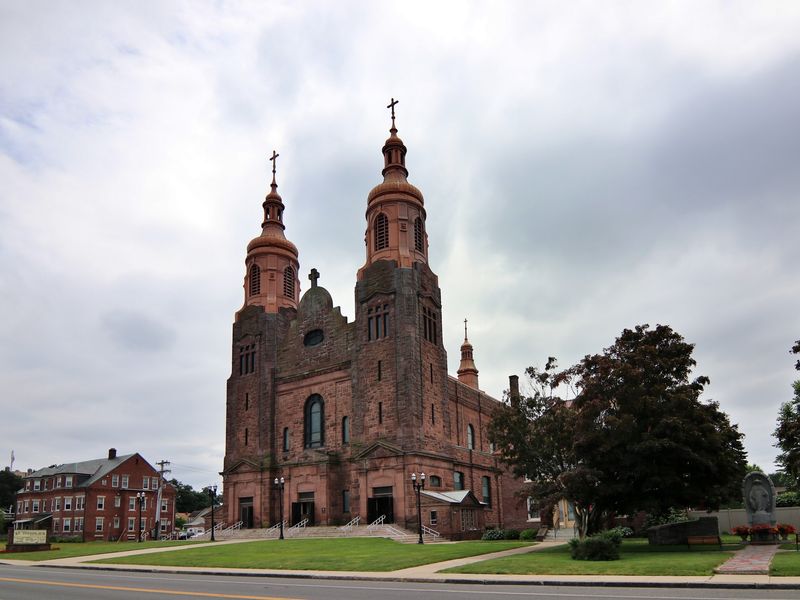
Two monumental masonry towers, each crowned with copper drums and graceful belvederes, announce this building from blocks away. Chicopee residents have used them as a landmark since 1908.
The brownstone church at 566 Front Street was built by and for the city’s Polish immigrant community. Baroque Revival style gives it cathedral-like weight, which surprises visitors who expected something smaller.
Inside, the main nave and two side naves seat at least 800 worshippers. Space like that changes how sound travels, and even footsteps feel important.
Stained glass is the showstopper. European artists crafted the windows, and each one carries its own theme, so it pays to move slowly along the aisles.
Downstairs tells a different story. The lower church has a more modern design and hosts daily Masses, confessions, and Adoration of the Blessed Sacrament.
Special cabinets display a collection of relics, and a shrine to Saint Kateri Tekakwitha was added in recent years. Both reward a closer look.
Pope John Paul II elevated the church to minor basilica status in 1991. That honor recognized its history and its role in the community, and it still draws travelers across Massachusetts today. Visit on a sunny morning for the best window light.
5. St. Joseph Basilica
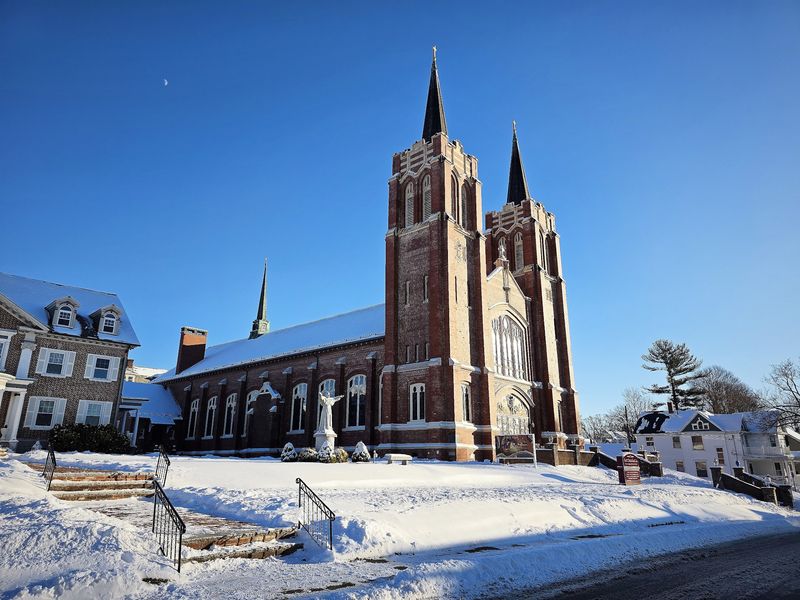
Bronze doors depicting the 15 Mysteries of the Rosary greet you before you even reach the threshold. Above them sits a high relief of Jesus as the Good Shepherd. That is an entrance worth photographing.
Set at 53 Whitcomb Street in Webster, this brick basilica rises from a residential hillside with twin towers and spires. The Neo-Gothic design came from architect John W. Donohue.
History runs deep here. The parish was founded in 1887 as the first Catholic parish established specifically for Polish immigrants in New England.
The present building was completed in 1912. Its silhouette has been part of the Webster skyline ever since.
Step inside and the color hits you. Vibrant murals and stained glass windows narrate biblical stories alongside Polish devotional themes.
A major renovation during the 1990s restored and enhanced the liturgical art. New marble flooring and custom furnishings came out of that work.
In 1998, Pope John Paul II granted the title of minor basilica, recognizing its dignity and its role as a center of worship.
Webster sits near Lake Chaugogagogmanchauggagoggchaubunagungamaugg, which is genuinely its name. Try pronouncing it after your visit and see how far you get.
6. Cathedral Of The Holy Cross
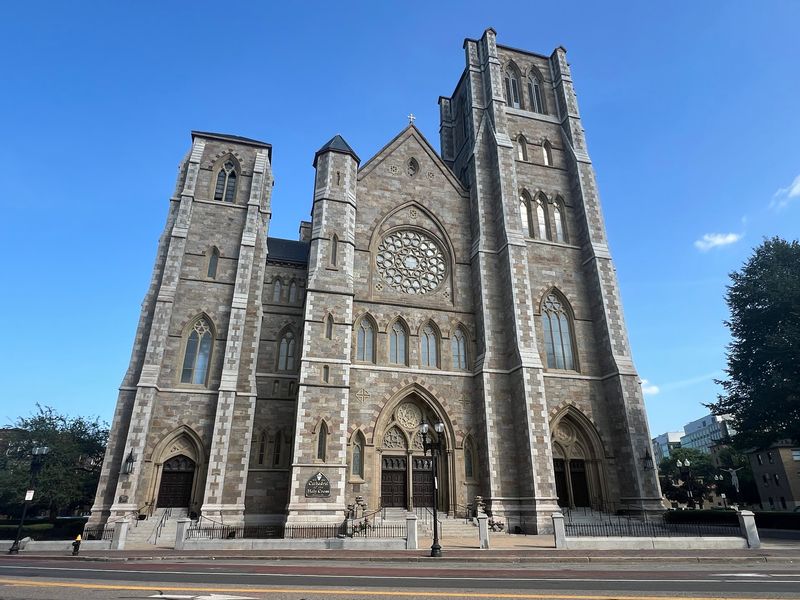
Big is an understatement. At 364 feet long, 90 feet wide, and 120 feet tall, this is one of New England’s largest Catholic churches.
The Cathedral of the Holy Cross rises at 1400 Washington Street in Boston’s South End. It serves as the mother church of the Catholic Archdiocese of Boston.
Irish-American architect Patrick Keely designed it in Gothic Revival style. Construction started in 1866, and the dedication followed in 1875.
Roxbury puddingstone and gray limestone give the exterior its rugged texture. Run your eyes along the walls and you will notice the stone is anything but plain.
A pipe organ built in 1875 by Hook and Hastings Company remains a treasured feature. Hearing it fill that space is something you do not forget.
A $26 million renovation in 2018 and 2019 refreshed the interior, revealed overlooked architectural details, and improved accessibility. The result feels bright rather than heavy.
More than 2,100 Masses happen here each year, celebrated in several languages including English and Spanish. The congregation reflects the whole city.
Community outreach matters here too, with the lower church serving as an emergency shelter. Beauty and service share the same address, which makes the visit stick with you.
7. Cathedral Of Saint Mary Of The Assumption
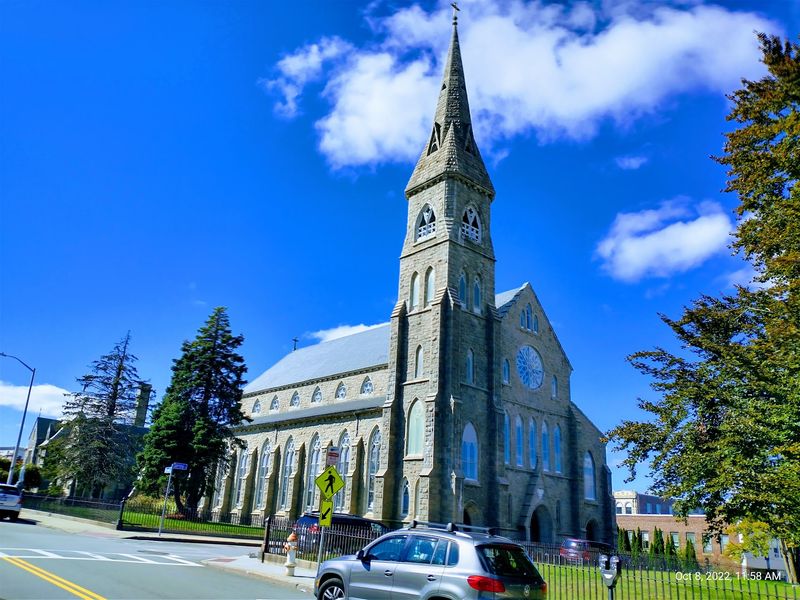
Granite quarried close to home built this one, and the spire climbs 190 feet above the ground. Fall River spotted it long before skyscrapers were a thing.
Found at 327 Second Street, Saint Mary’s Cathedral went up between 1852 and 1856. It stands as the oldest surviving church building in the city.
Patrick Keely designed it in an Early English mode of Gothic Revival. The cathedral and its rectory joined the National Register of Historic Places in 1983.
Look up once you are inside. The central nave rises to a hammer-beam ceiling 90 feet high, with clerestory windows spilling daylight across the space.
The oldest stained glass came from Germany and was installed in 1891. Those panels have been catching morning light for well over a century.
Two chapels adjoin the main church. The Lady Chapel serves as a Blessed Sacrament chapel, while the Bishop’s Chapel holds the crypt of four Fall River bishops.
Music lovers should note the pipe organ installed in 2015. It incorporates parts from a 1952 Kilgen organ and an 1883 Hook and Hastings instrument. Fall River sits close to the coast, so pair this stop with a breezy drive afterward.
8. Saint Paul Cathedral
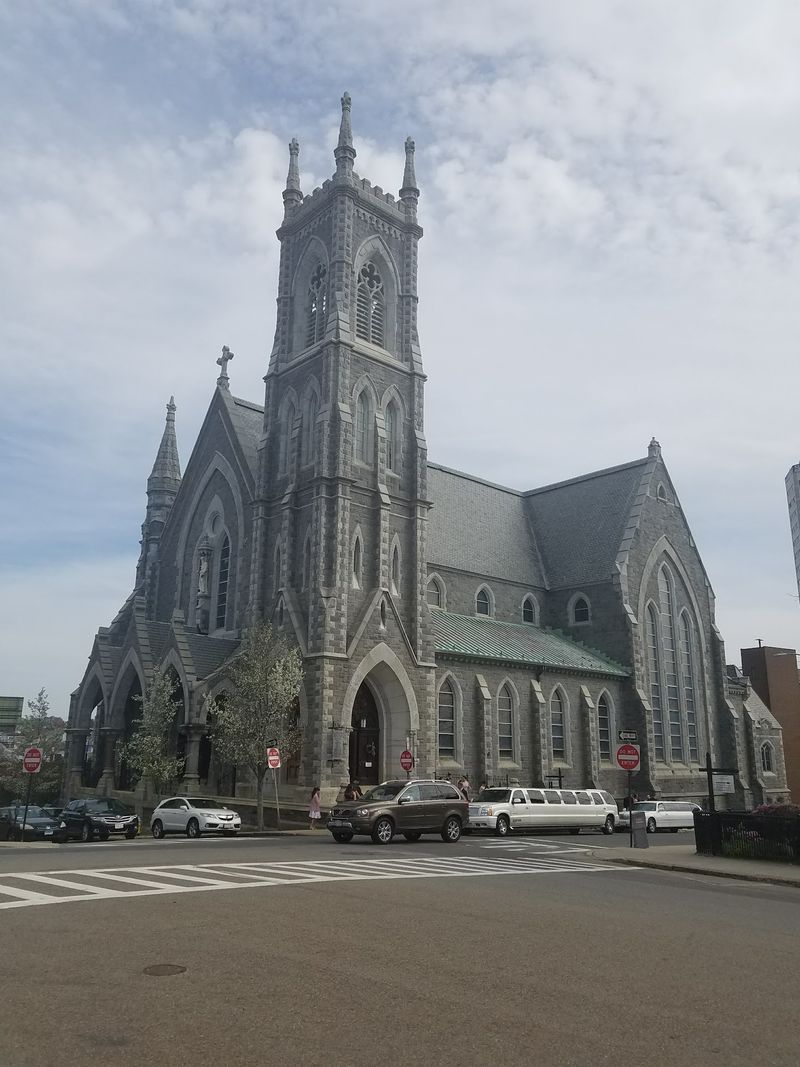
Downtown Worcester hides a Victorian Gothic heavyweight in plain sight. Office buildings surround it, and then suddenly there is rock-faced granite and a tall square tower.
Saint Paul Cathedral occupies 38 High Street and serves as the mother church of the Diocese of Worcester. Construction stretched from 1868 to 1889.
Architects E. Boyden and Son gave the cruciform building a formidable yet graceful look. Steeply pitched roofs and Gothic-arched entrances complete the picture.
The main facade pairs the big tower with a gabled nave end and a smaller tower topped by a round turret. Asymmetry keeps it interesting from every angle.
Tall Gothic windows light the nave and transepts. On clear afternoons the interior glows without any help from electricity.
Cathedral status arrived in 1950. A green and white marble altar was installed in 1996, along with a shrine housing the tabernacle.
Major renovations in 2021 tackled the roof, windows, and exterior masonry, so the stonework looks sharp.
Beside the building sits a small courtyard with a statue of Saint Francis of Assisi. Come December, that courtyard hosts a Nativity display, which makes a winter visit especially worthwhile in central Massachusetts.
9. Cathedral Of Saint Michael The Archangel
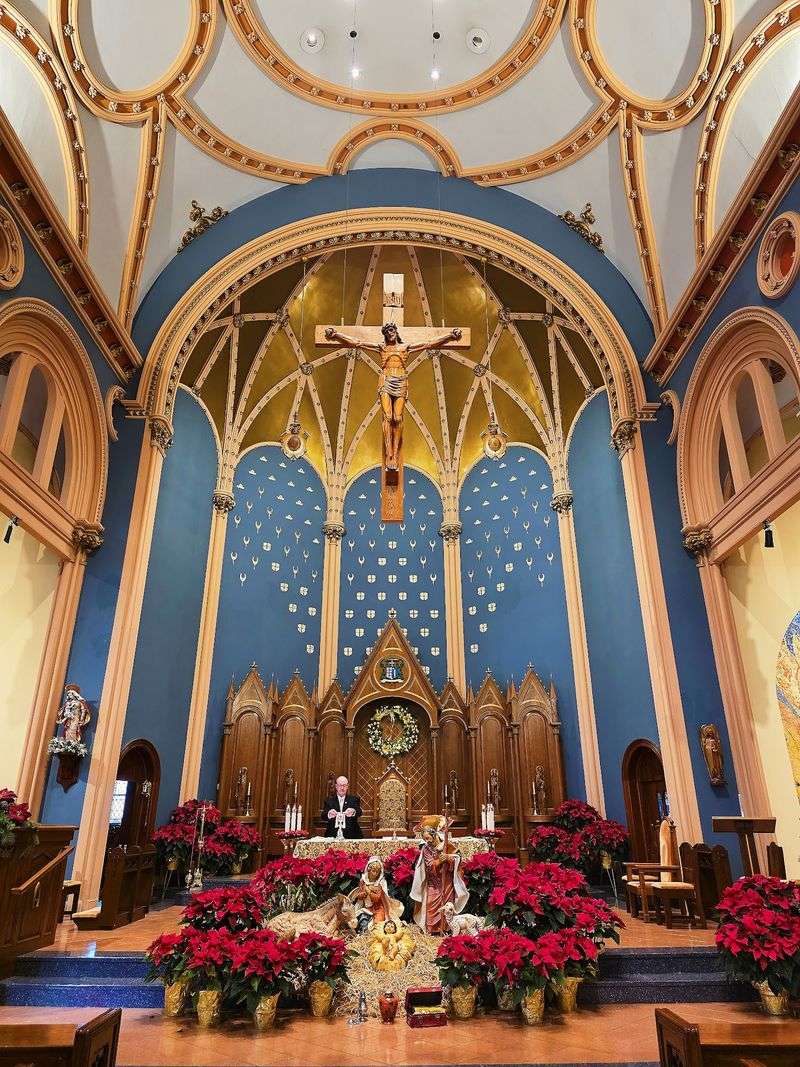
Over 6,600 pipes and four keyboards make the gallery organ here the largest in western Massachusetts. Acquired in 1929, it still commands the room.
The cathedral sits at 260 State Street in Springfield and serves as the mother church of the Diocese of Springfield. Its brick exterior blends Italianate and Federal influences.
Patrick Keely designed the building, which was constructed in 1861. His name keeps appearing on this road trip for good reason.
Parish roots reach back to the early 19th century and the Catholic immigrants who settled the area. What began as a parish church became a cathedral in 1870 when the diocese was established.
Recognition of its historic value came in 1974. The cathedral and rectory became contributing properties to the Quadrangle-Mattoon Street Historic District.
A 1997 renovation added the Bishop Marshall Center behind the church. Inside that addition you will find the Holy Spirit Chapel, meeting rooms, a parish hall, and a TV studio used for broadcasting Mass.
The surrounding district is one of Springfield’s most attractive areas for a stroll. Museums and brick rowhouses sit within easy reach. Arrive when the organ is playing if you can manage the timing.
10. The Shrine Of Our Lady Of Fatima – Xaverian Missionaries
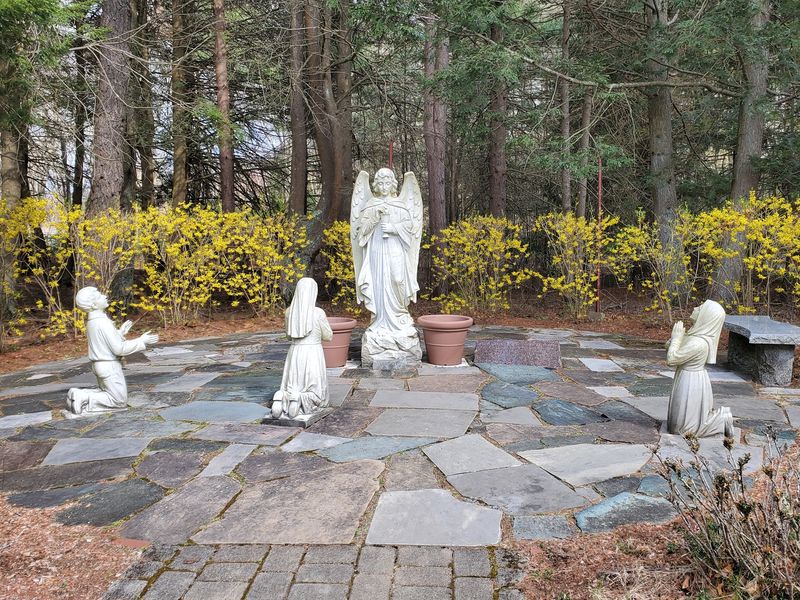
Small towns keep some of the best surprises, and Holliston proves the point. Quiet streets lead to a shrine devoted entirely to the message of Fatima.
You will find it at 101 Summer Street. The setting is calm, leafy, and far removed from highway noise.
Reflection is the whole point here. The shrine exists to share the Fatima message and to give visitors an unhurried place to pray.
Grounds invite slow walking. There is no checklist, no rush, and no crowd pushing you along a route.
Architectural details throughout the property were chosen to support that spiritual purpose. Nothing competes for attention, which is exactly why it works.
Pilgrims come for the atmosphere as much as the devotion. Others simply want a peaceful pause during a long day of driving.
Holliston itself is worth a short detour. The town center is compact, and the surrounding roads make for pleasant, low-stress driving.
Closing out a Massachusetts pilgrimage route here feels right. After the towering spires and thundering organs of Boston, Worcester, and Springfield, a quiet shrine offers the perfect exhale.
Bring a notebook, sit for a while, and let the trip settle before you head home.