
This Free Vicksburg Museum Lets Kids Climb Through A Real Towboat Parked Beside The Mississippi River
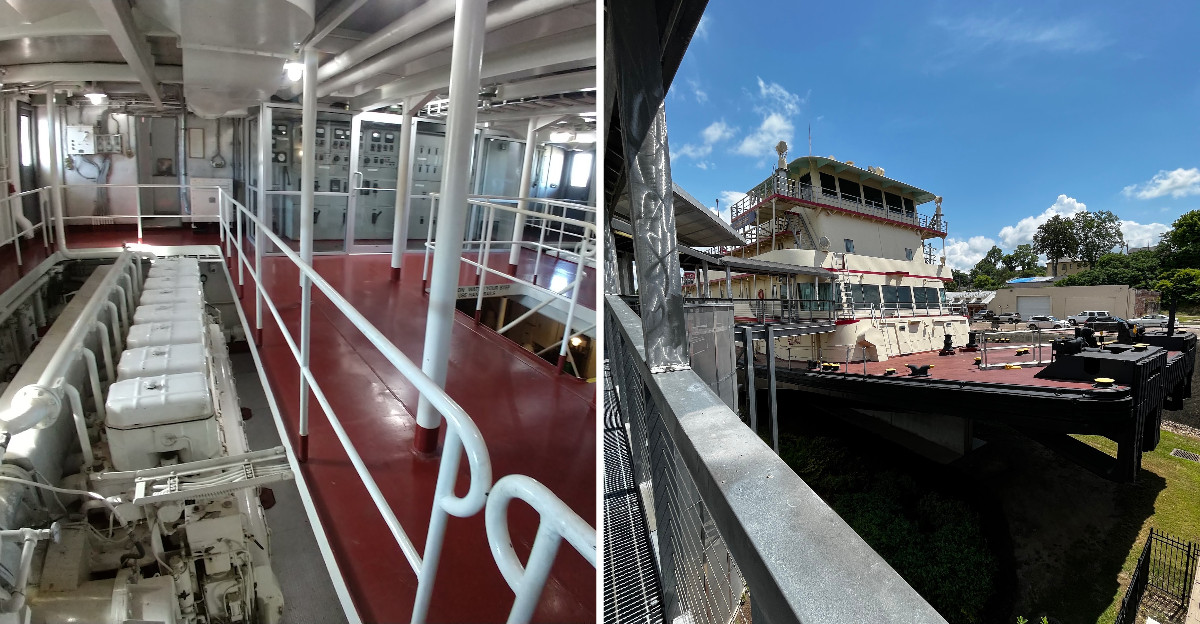
Kids rarely get to climb aboard a real working riverboat, let alone one that sits on dry land right next to the river it once ran. In Mississippi, a free museum lets families do just that, from the rumbling engine room all the way up to the pilot house.
What looks like a quiet stop downtown turns into hours of exploring, pressing buttons, and asking big questions about the river. Here is what your family can expect, and why this one belongs on your road trip plan.
A Riverfront Museum in Historic Downtown Vicksburg
Tucked along Washington Street in historic downtown Vicksburg, the Lower Mississippi River Museum sits close to the water that inspired it. Families find it easy to fold into a day of strolling the old downtown blocks, since the building is right in the heart of the area.
Officially, it carries the name Jesse Brent Lower Mississippi River Museum, and the U.S. Army Corps of Engineers operates it.
That connection matters, because the Corps has spent generations working on flood control and navigation along the river, and the museum tells that story in a way kids can follow.
Two big parts make up the visit. Inside the main building, you will find exhibits, videos, an aquarium, and hands-on stations about the river and the people who live beside it.
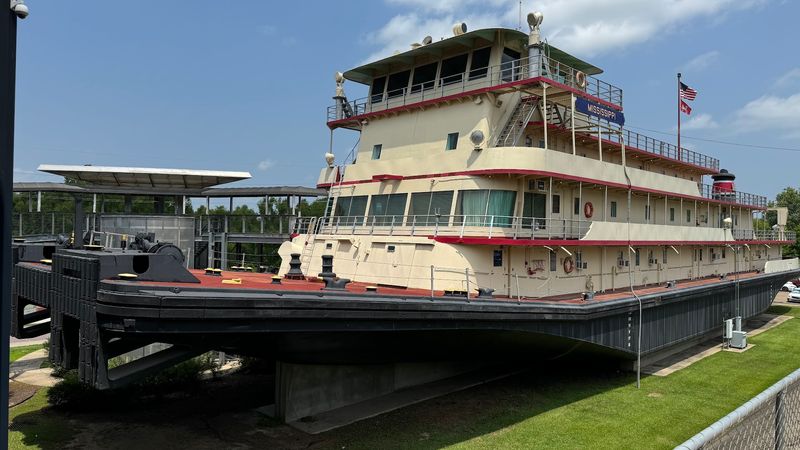
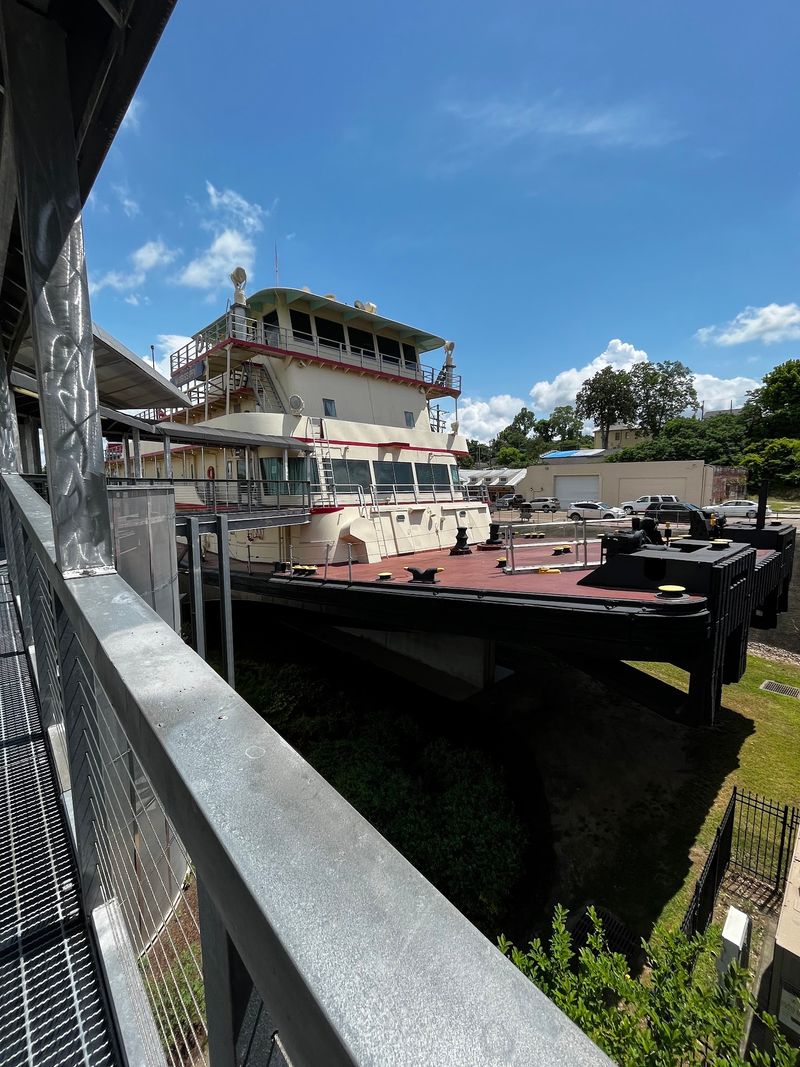
Just outside waits the real showstopper: a restored paddlewheel towboat resting on dry land, ready for little explorers to climb through.
Visitors often describe the place as covering far more than just the river itself. The displays touch on how the Mississippi shaped Vicksburg’s economy, military past, and natural environment over the centuries.
For parents, that means one stop can spark conversations about geography, history, science, and engineering, all before lunch.
The M/V Mississippi IV and Its Working Years
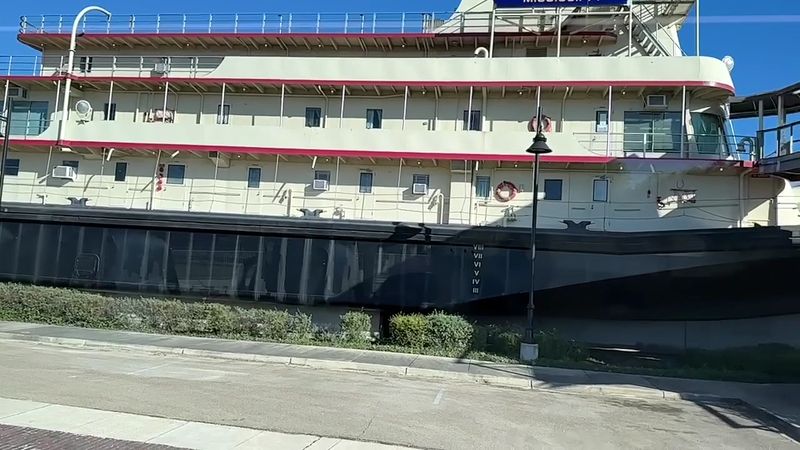
From 1961 until 1993, the M/V Mississippi IV pushed and inspected its way along the river. It served as both a towboat and an inspection vessel for the Mississippi River Commission and the U.S.
Army Corps of Engineers.
Unlike the wooden steamboats kids may picture from storybooks, this vessel runs on diesel power and has an all-steel superstructure. Its paddlewheel design still gives it that classic riverboat look, which makes it instantly exciting for young eyes.
Children often spot it from the sidewalk and start tugging at sleeves.
Here is a fun fact to share on the way in: the Mississippi IV is the first and only fully restored, dry-docked riverboat housed within a museum in the United States. That makes your visit a rare chance, not just a fun one.
One visitor connection adds extra charm. The boat’s journey to becoming a museum piece involved towing it south for dry dock work and bringing it back up through Louisiana waterways, with crews even cutting the mast to squeeze under a bridge.
Sharing that detail with kids helps them see the boat as something that truly traveled, worked, and lived a full life on the water before landing here.
Three Decks to Explore, Engine Room to Pilot House
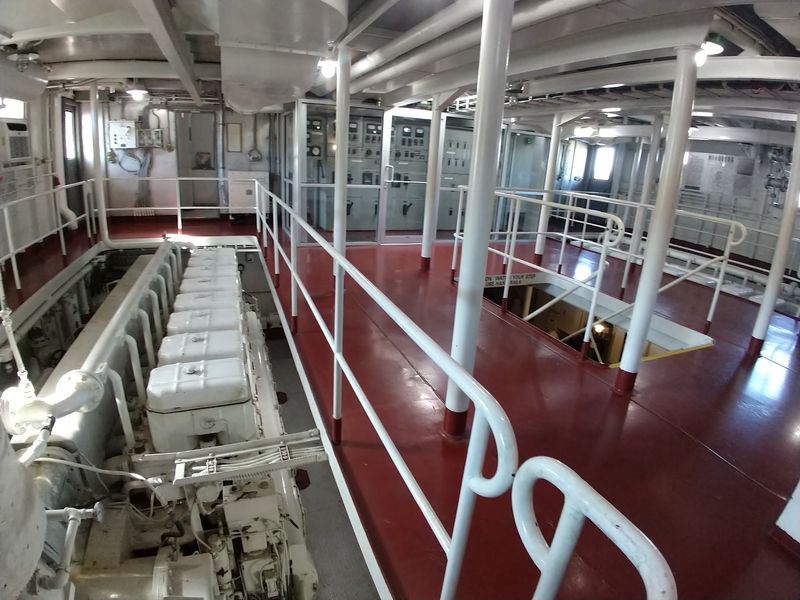
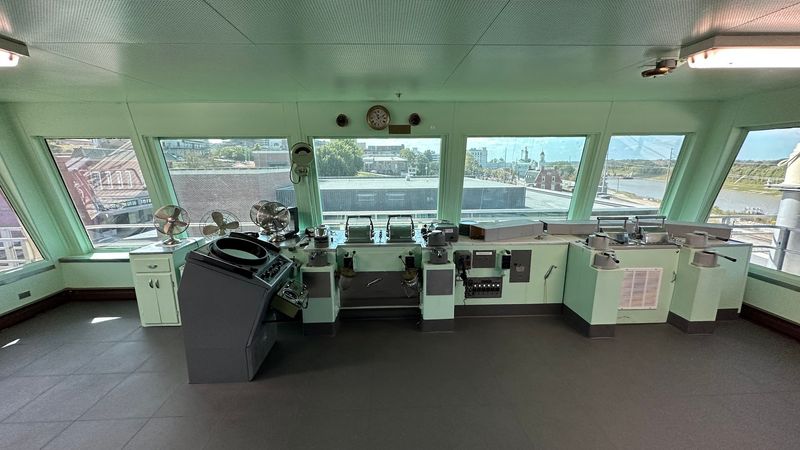
Picture your kids stepping down into a real engine room, surrounded by giant machinery, then climbing stairs until they stand in the pilot house looking out like a captain. That journey is the heart of the visit.
Families can walk through nearly the entire vessel, and guests often mention having three decks to roam. The crew once lived aboard, so you will pass through spaces that show everything needed for daily life on the river.
Many describe it as a floating hotel, which surprises kids who expected just a steering wheel and some ropes.
Free Tour Cards guide self-paced, themed tours, so older children can lead the way and read aloud while younger siblings hunt for the next room. The format works nicely for families who move at different speeds.
A quick tip for parents: the pilot house simulator has sometimes been out of order, and guests note that rough play has been part of the reason. Before heading up, remind kids to treat equipment gently.
The museum runs on public funding, and careful hands help keep the experience open for the next family. Even without the simulator, the views and controls make the top deck a favorite.
Fish Tanks, Films, and the Orientation Theater
Catfish, gar, and other native river swimmers glide through a 1,515-gallon aquarium inside the main building. For younger kids, this tank is often the first big wow, and it gives them a close look at what actually lives under the muddy surface.
Nearby, the Orientation Theater offers a film covering the river’s history, including events and organizations that shaped life along the Mississippi. Guests traveling the Great River Road have called the film informative, and it works well as a warm-up before the boat tour.
Kids who know the backstory tend to ask sharper questions once aboard.
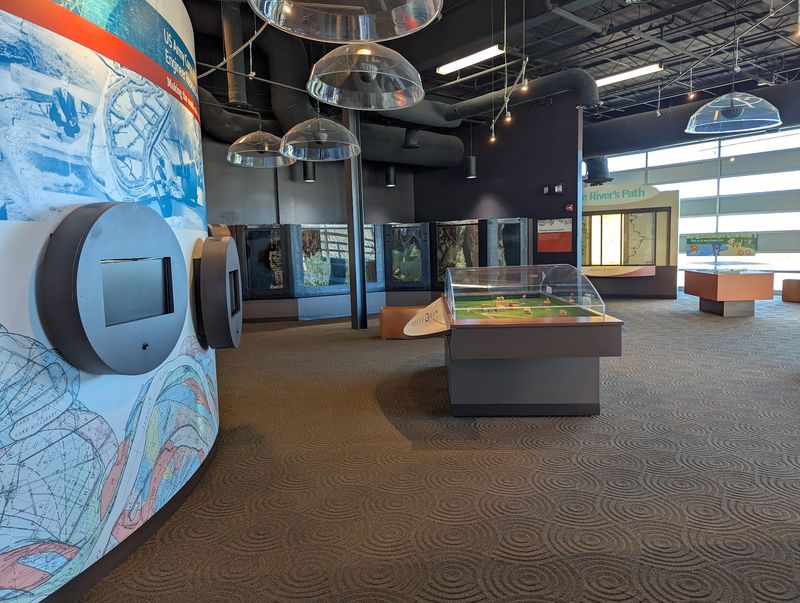
Photos, short movies, and miniature models also fill the galleries. Together they paint a picture of the river’s power and its effect on the land it flows through.
Parents should know that some audio-visual elements, including the theater and certain kiosks, have occasionally been down. Calling ahead can save little ones from disappointment if the film is a must-see for your group.
Even on those days, the aquarium and the many printed displays keep curious minds busy. Plan a few relaxed minutes by the fish tank, since it doubles as a calm reset for tired legs.
Hands-On Stations Along the Mississippi Trail
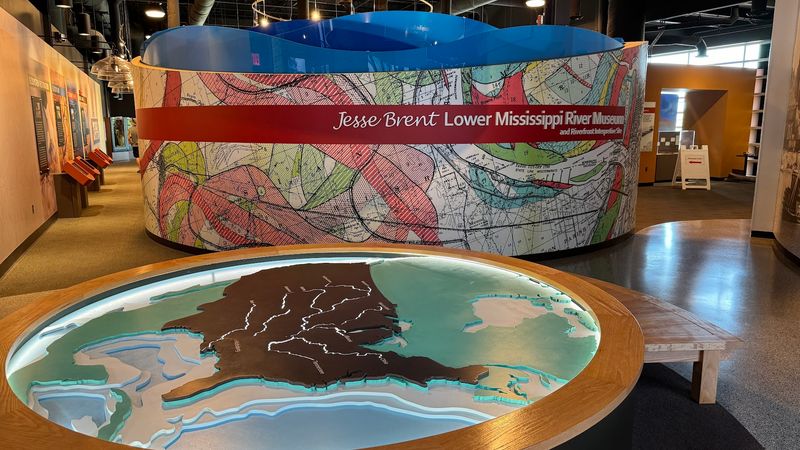
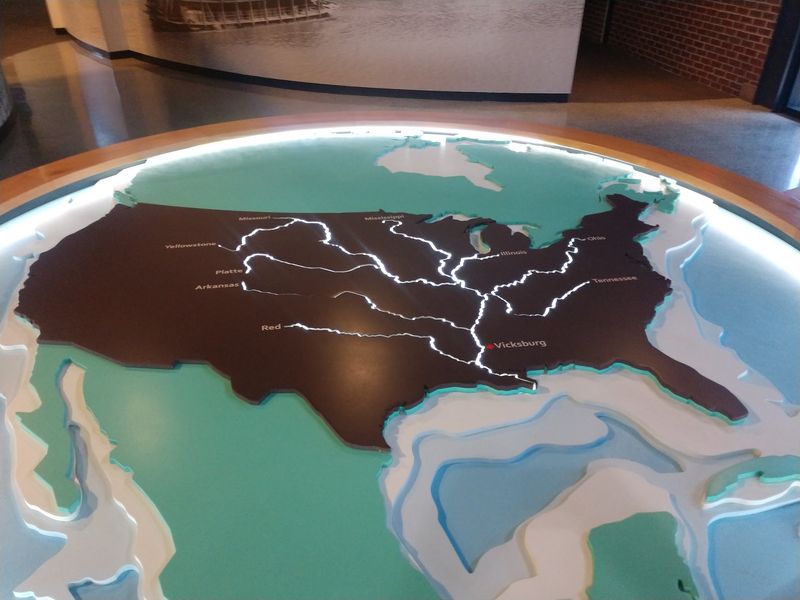
Buttons, screens, and choose-your-path scenarios give restless hands something to do. The interactive Mississippi Trail lets guests explore different river situations, turning dry facts into small puzzles.
Monitors throughout the building explain flood control methods and river commerce. Visitors frequently point out that the interactive pieces help put the river’s size and changes into perspective.
They also show how people work to lessen the effects of floods and shifting land, which is a strong science lesson in disguise.
School-age kids get the most from these stations, though many guests feel the experience is entertaining for children 10 and under too. Older kids who enjoy building things or watching how systems connect may spend longer here than expected.
To keep the visit smooth, consider giving each child a mission. One could find out how goods travel by barge, while another learns how levees protect towns.
Meeting back up to share answers turns the galleries into a family game. The museum’s links to the Corps of Engineers mean the explanations come from people who do this work, so kids learn real methods rather than simplified guesses.
Many adults leave with a new respect for river engineering, too.
Family Stories from the 1927 Flood
Inside a replicated tent, the Great Flood of 1927 becomes personal. The exhibit shares stories from families who lived through that historic flood, letting visitors hear the experience in their own words.
Kids usually connect with history better through people than dates. Standing inside a tent like the ones that sheltered displaced families helps them imagine packing up a home and waiting for the water to go down.
It is a quieter, reflective stop compared to the boat, and that change of pace can be helpful.
Parents of younger children may want to preview the space and talk through the idea of a flood in simple terms first. Framing it around community, recovery, and the engineering that followed keeps the message hopeful.
The 1927 flood also helps explain why so much of the museum focuses on flood control. After seeing the tent, the levee displays and outdoor river model suddenly make more sense.
Older kids may start asking how towns like Vicksburg stay safe today, which is exactly the kind of question the rest of the museum answers. Linking these exhibits together turns separate displays into one clear story about people and a very powerful river.
Outdoor River Model and the Science of Flow
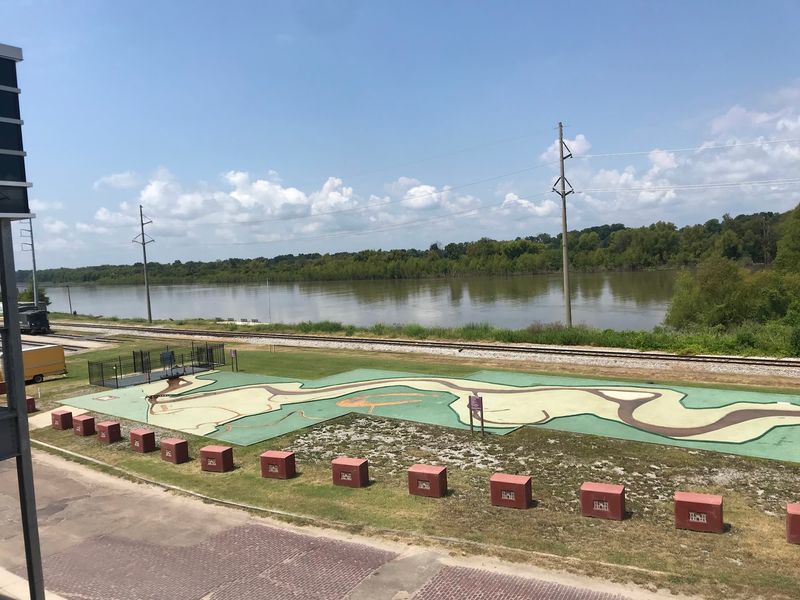
Step outside and the river shrinks to kid size. A scaled model of a section of the Mississippi shows how different factors change the water’s flow and the surrounding environment.
Seeing curves, channels, and banks laid out at once helps kids grasp ideas that are hard to picture on a map. Why does a river bend?
What happens when water speeds up or slows down? The model gives those questions a visual answer that sticks.
For families who homeschool or want a bit of learning on vacation, this exhibit pairs nicely with the indoor flood control displays. You can point back to what you just read and watch it make sense on the ground.
Even preschoolers enjoy tracing the river’s path with a finger.
Plan for weather, since this stop is outdoors. Hats and water help on hot Mississippi afternoons, and a short visit here makes a good break between the indoor galleries and the boat.
Grab a family photo too, with the towboat as a dramatic backdrop. Combined with the aquarium and Mississippi Trail, the model rounds out a surprisingly complete picture of how this giant waterway behaves and why people work so hard to manage it.
Free Admission, Hours, and Easy Logistics
Free admission is the detail parents love most, and it means you can visit without stretching the travel budget. Guests mention free parking nearby as another bonus.
The museum sits at 910 Washington St, Vicksburg, MS 39183. Hours run 9 AM to 4 PM Monday through Saturday, with shorter Sunday hours from 1 to 4 PM.
Arriving earlier in the day leaves time for both the galleries and the full boat tour without rushing. For questions, call 601-638-9900 or check lmrm.org.
Restrooms are located in the main building, so plan a stop before heading onto the boat. Visitors describe the facility as clean, and guests have also praised the area as highly accessible for people with disabilities.
Keep in mind that a boat naturally includes stairs between decks, so families with strollers may want a carrier for the onboard portion.
Staff members at the front desk regularly get credit for being friendly and helpful. They are good people to ask about which exhibits are running that day.
You can also pick up the Vicksburg city passport here and collect a stamp toward a free T-shirt at the visitors center, a fun bonus for kids who enjoy collecting.
Why Families Leave Talking About the Big Boat
Ask kids what they remember afterward, and the answer is usually simple: the big boat. Plenty of families say their children loved it most, and adults tend to agree that walking every deck feels like stepping into a time capsule.
Still, the visit offers more than one thrill. Between the aquarium, the flood stories, the interactive trail, and the outdoor model, kids get a well-rounded look at a river that shaped a whole region.
Parents leave with a better sense of the Corps of Engineers’ role, too.
Families who enjoy hands-on learning, curious school-age kids, and road trippers following the Great River Road will get the most from a stop here. Toddlers will enjoy the fish and the boat, though the reading-heavy galleries suit older children better.
Budget around a couple of hours for a relaxed pace.
Pair the museum with a walk through historic downtown, and you have an easy, low-cost half day in Vicksburg. For a family looking to trade screens for real engine rooms and pilot house views, this stop delivers something kids rarely get anywhere else.
Expect plenty of questions on the drive home, and maybe a new fan of riverboats.