
This Hidden Canyon In New Mexico Hides A Stunning Swimming Hole Most Visitors Never Discover
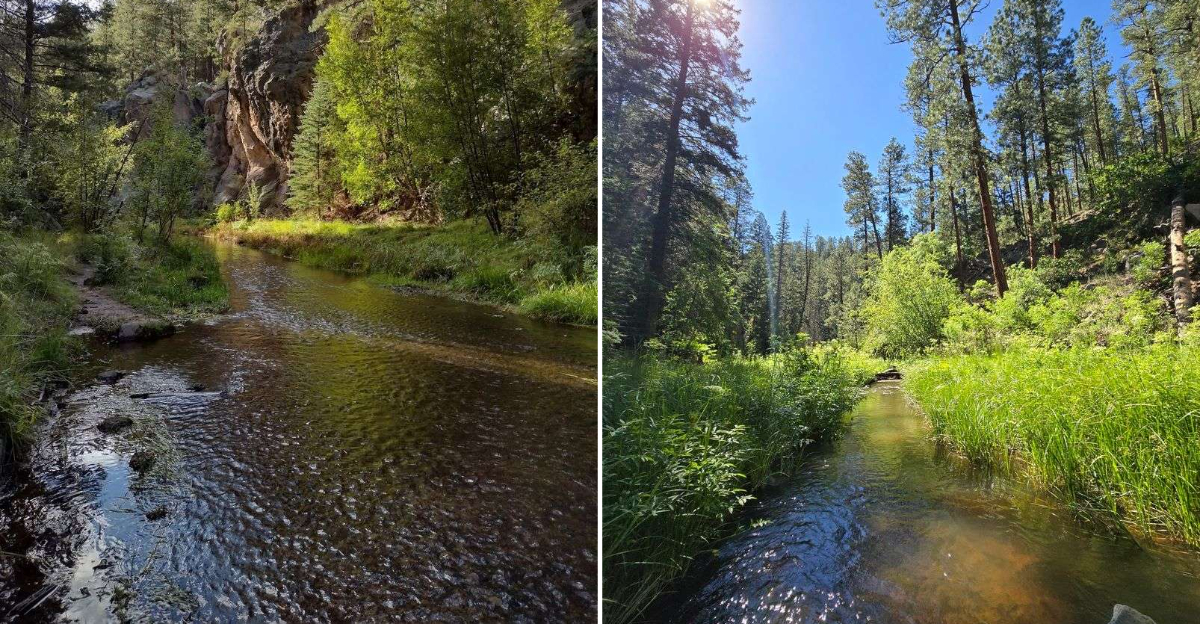
A walk through nature, a sunny day, and a spot where you can actually cool off in the water. This hidden canyon in New Mexico offers exactly that combination, though most visitors never even discover it exists.
The trail winds through rocky terrain before finally opening up to a swimming hole tucked deep inside the canyon walls. Water here stays cool even during the hottest summer afternoons.
Regulars know the best times to visit, avoiding crowds that build up later in the day. Nothing about the setting feels overrun despite its growing popularity among hikers.
Photography opportunities exist around nearly every turn, especially once the canyon walls come into view. This canyon proved that sometimes the best swimming spots require a little searching first.
Geological Formation And Unique Features
Water is the sculptor here, and it has been working on this project for thousands of years. The East Fork of the Jemez River cuts through softer volcanic rock, slowly opening a passage that narrows to about 25 feet wide near the end of the hike.
What makes the geology extra interesting is the neighborhood. The Jemez Mountains sit beside the Valles Caldera, a giant crater left behind by ancient eruptions that reshaped this entire region.
Because of that volcanic past, the rock has personality. Cliffs, huge boulders, and layered walls in reddish and gray tones frame the creek, and the greenery growing out of cracks makes the whole thing look staged.
The river starts up in the wide-open Valle Grande before dropping into these rugged canyons. That transition from grassy basin to tight rock corridor happens fast, and it explains why the water stays cold even in July.
At the far end, the canyon opens into a small amphitheater with waterfalls and deep pools. Some pools sit at the base of steep rock that adventurous hikers scramble up, though the surfaces get slick.
Meadows, conifer stands, riverbank plants, and bare volcanic cliffs all crowd together in a short distance. Few places pack that much variety into a two-hour walk.
The trailhead area sits at 31827 NM-4, Jemez Springs, NM 87025.
Best Time Of Year For Swimming
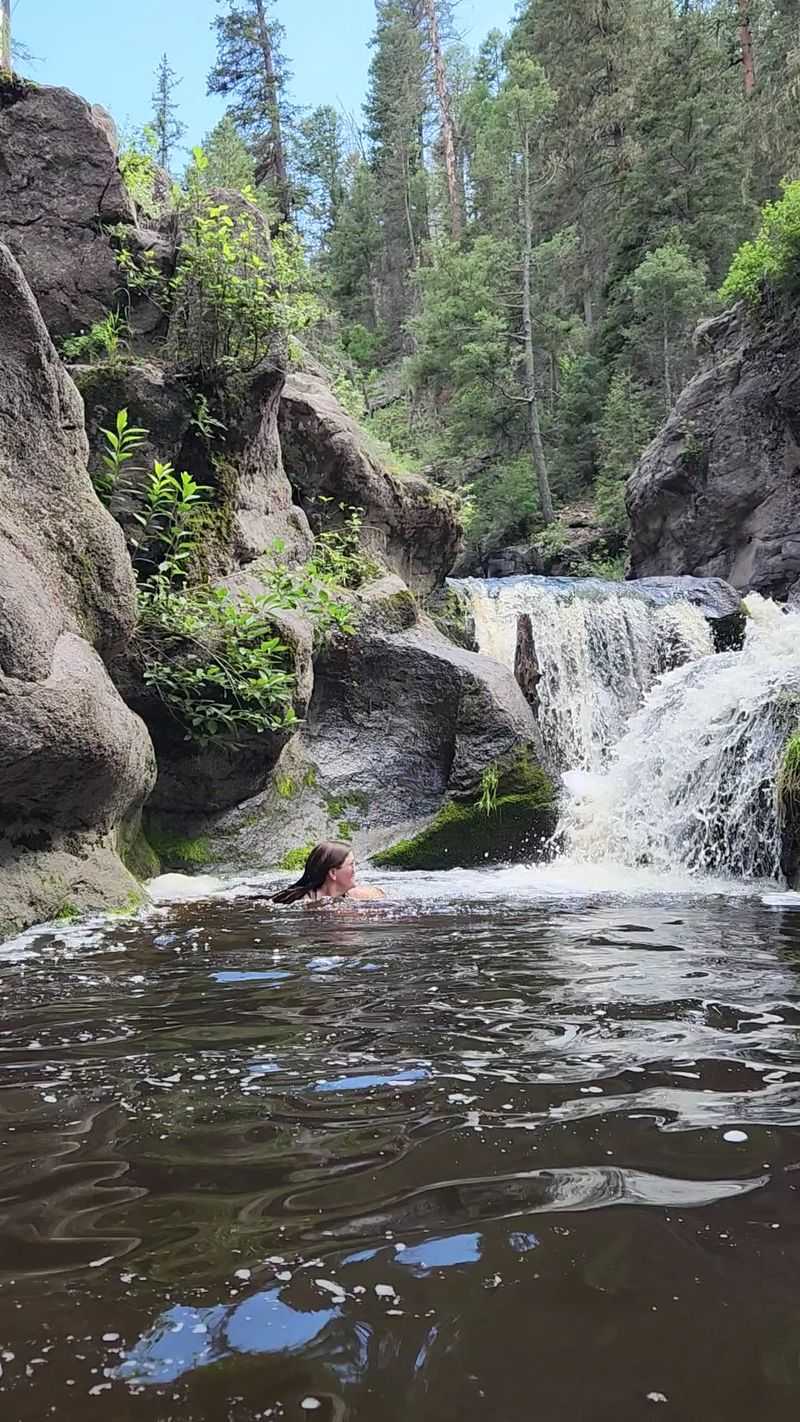
Timing matters more here than almost anywhere else. The hiking route is generally walkable from March through November, but the sweet spot for wading and swimming lands in May, June, September, October, and early November.
July and August are the tricky months. Monsoon thunderstorms roll over the Jemez Mountains during that stretch, and a narrow canyon is the last place anyone wants to be when a storm dumps rain upstream.
Spring has its own catch. In wet years, snowmelt runoff through April and early May can push the creek high and fast, turning easy ankle crossings into a genuine problem.
September is a favorite for a reason. Water levels tend to settle around knee depth, the crowds thin out, and the light through the canyon gets warmer as the season shifts.
Expect cold water no matter the calendar. Even on a ninety-degree afternoon, the pools stay bracing enough to make anyone gasp on the first plunge, which is honestly half the fun.
Mornings are the smartest window. Afternoon lightning is the main risk at these elevations, and starting early also means having the waterfall pools mostly to yourself before other hikers arrive.
Weekends in summer get busy. A weekday visit in shoulder season delivers the quiet canyon experience people imagine when they picture a secret swimming hole.
Wildlife Around Water Spots
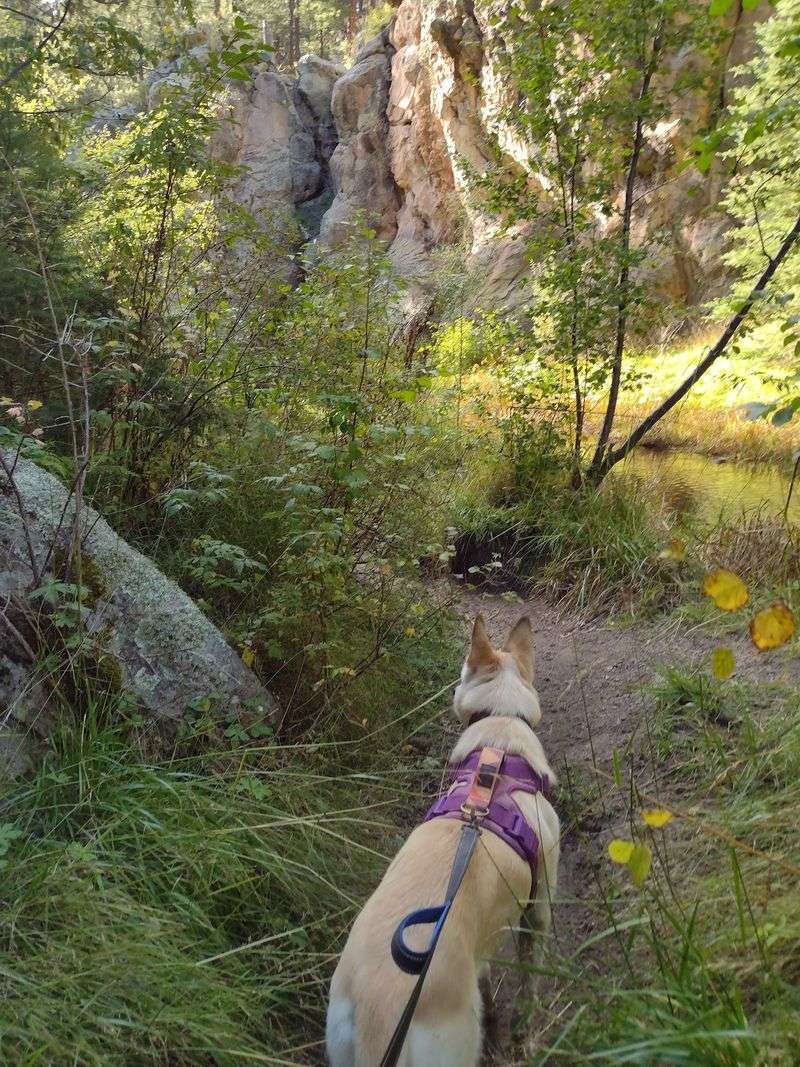
Fish are the residents most hikers never see, though they are everywhere. The East Fork holds native Rio Grande sucker, Rio Grande chub, fathead minnow, and longnose dace, plus non-native brown and rainbow trout that anglers chase.
Cold-water fishing this good is rare in the Southwest, which is why fly fishers show up along the Jemez River system with real dedication. Some of them treat this stretch as a standing appointment.
Birds put on the loudest show. The corridor of willows, conifers, and open meadow attracts a steady rotation of songbirds, and their calls echo off the rock walls in a way that sounds amplified.
Snakes turn up occasionally, usually sunning near the trail and usually harmless. Most slide off once they feel footsteps coming, so give them room and keep walking.
Two uncommon plants grow in this drainage, giant helleborine and bunchberry dogwood, both tied to consistently damp ground. Finding them means the wet habitat is doing its job.
Bugs deserve a warning. Mosquitoes and biting flies love the streamside vegetation, especially in early summer, so repellent belongs in every pack.
The Pueblo of Jemez Natural Resources Department works to protect wildlife and habitat throughout the region. Knowing that adds weight to every small choice visitors make, from where they step to how loudly they talk.
Safety Tips For Swimming In Remote Areas
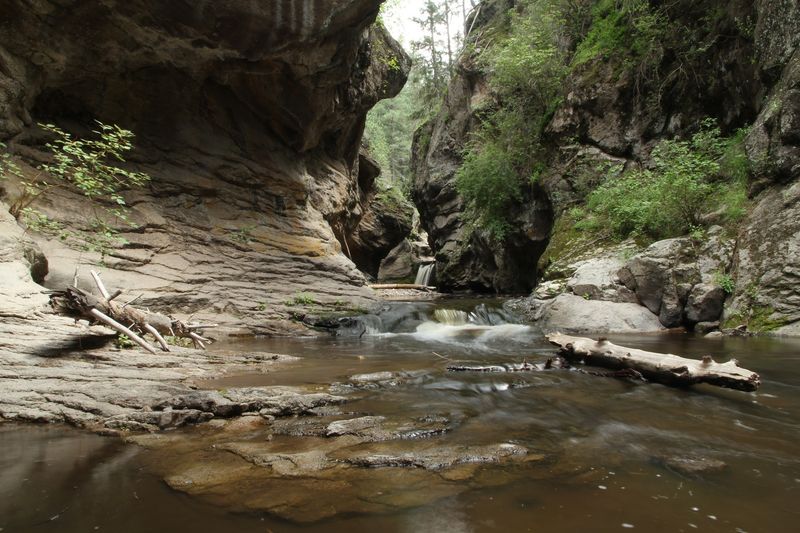
Flash floods are the headline hazard, full stop. Water can surge through a slot canyon in under five minutes, and rain falling miles upstream is enough to trigger it even under blue skies overhead.
Checking the forecast for the entire drainage basin, not just Jemez Springs, is the single most important prep step. If storms are anywhere in that watershed, the answer is simple.
Not today.
Muddy or unusually high water is another clear signal to turn around. Both suggest something is happening upstream that hikers cannot see from inside the canyon.
Outrunning a flood rarely works unless the exit is right there. Knowing where higher ground sits along the route beats hoping for speed.
Rock near the waterfalls gets glassy with algae and spray. Falls happen fast, and the pools below sometimes hide deep pockets, so nobody should jump into water they have not checked first.
Walking off the edge feet-first is the accepted approach for the cliff jumping spots. Diving headfirst into unknown depth is how trips end badly.
Bring more drinking water than seems necessary. Dry mountain air pulls moisture out of people faster than they notice, especially mid-summer.
Hike with a partner. Help takes a long time to reach a remote canyon, and cell service is unreliable at best down between the walls.
Packing Essentials For A Swimming Trip
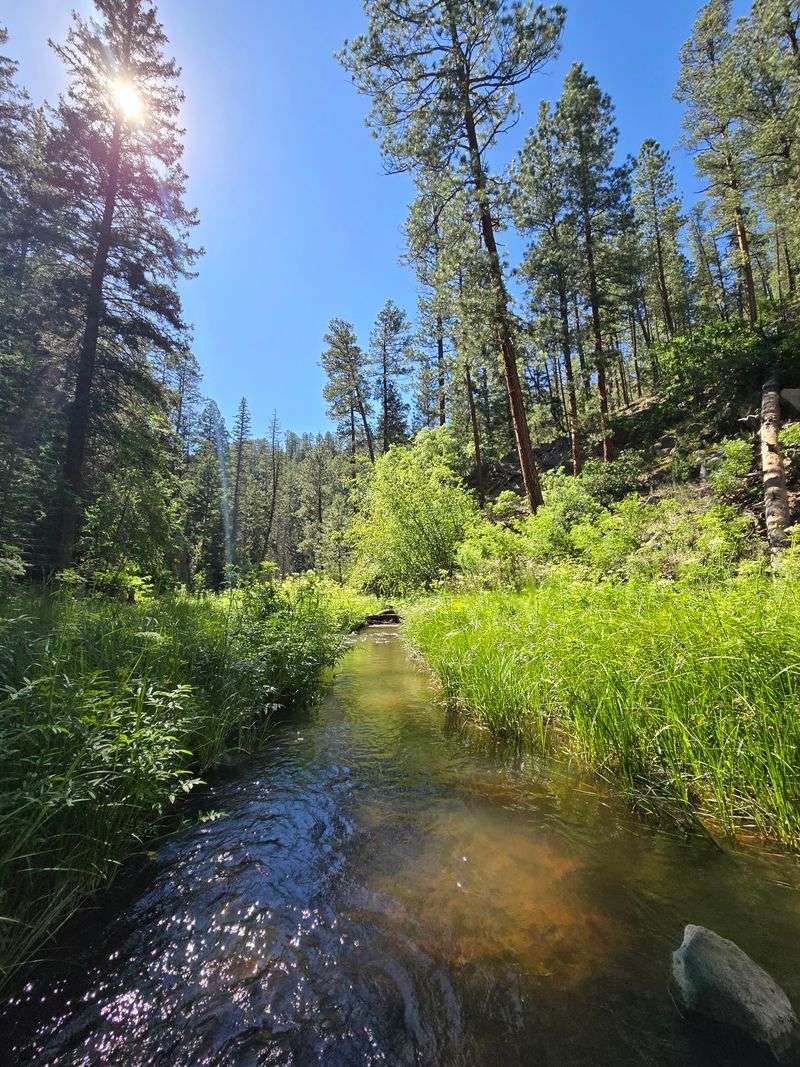
Footwear is where most people mess up. Grippy water shoes or sport sandals handle the dozen or more creek crossings far better than sneakers, and they protect toes from sharp rocks hiding under the surface.
Some hikers manage in flip-flops during low water, but traction on algae-covered stone is worth paying attention to. A second dry pair waiting in the car feels luxurious afterward.
A quick-dry towel and a full change of dry clothes make the drive home much more pleasant. Cold water plus mountain breeze equals shivering.
Sun protection is not optional in northern New Mexico. Sunscreen and a wide-brimmed hat handle the exposed sections before the canyon narrows and offers shade.
Water, then more water. Dry air at elevation dehydrates hikers quietly, and there is no place to refill along the route.
Trekking poles do double duty here, helping with balance on wet rock and probing crossing depth before a foot commits.
Bug spray belongs near the top of the list. The streamside brush produces mosquitoes with enthusiasm.
Round it out with a small first aid kit, a waterproof phone pouch, and dry bags for anything electronic. Long pants save shins from scratches where the trail gets overgrown, and a rash guard helps in genuinely cold pools.
How To Respect Local Environment And Preserve Nature
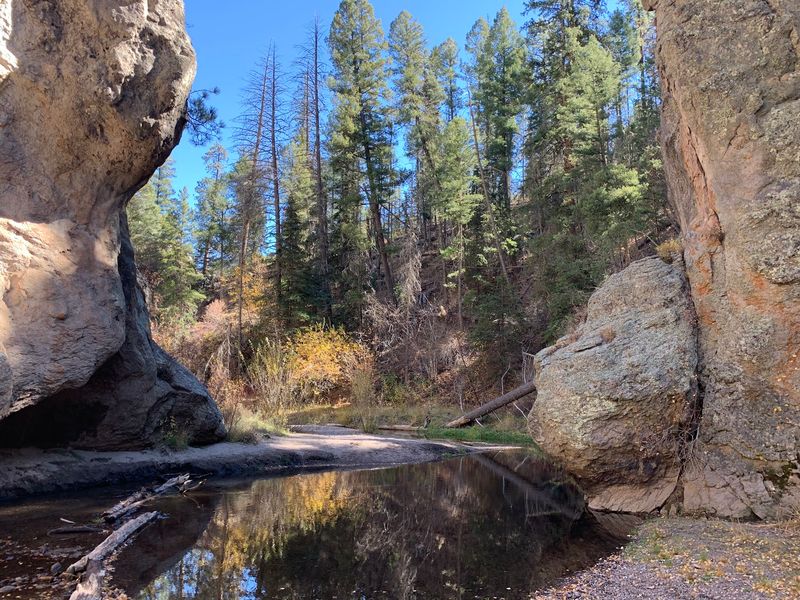
Litter is the one complaint that comes up about this canyon, and it stings because the place is otherwise close to perfect. Everything packed in needs to come back out, including snack wrappers that seem too small to matter.
Carrying a spare bag for other people’s trash costs nothing and makes an obvious difference. A few conscientious hikers can reset the whole vibe of a trail.
Rocks, plants, and sticks belong where they sit. Souvenir collecting adds up quickly when hundreds of visitors each take one small thing.
Staying on established paths protects streamside plants that hold the banks together. Braided social trails widen fast in soft soil and take years to recover.
Wildlife watching works best from a distance, roughly 25 yards for most animals and much farther for anything with sharp teeth. Feeding animals teaches them habits that eventually get them to vanish.
Keeping noise down changes the entire experience. The canyon acoustics amplify voices and speakers, and quiet lets everyone hear water and birds instead.
Reusable bottles beat disposables, especially in a place where water sources are the whole attraction.
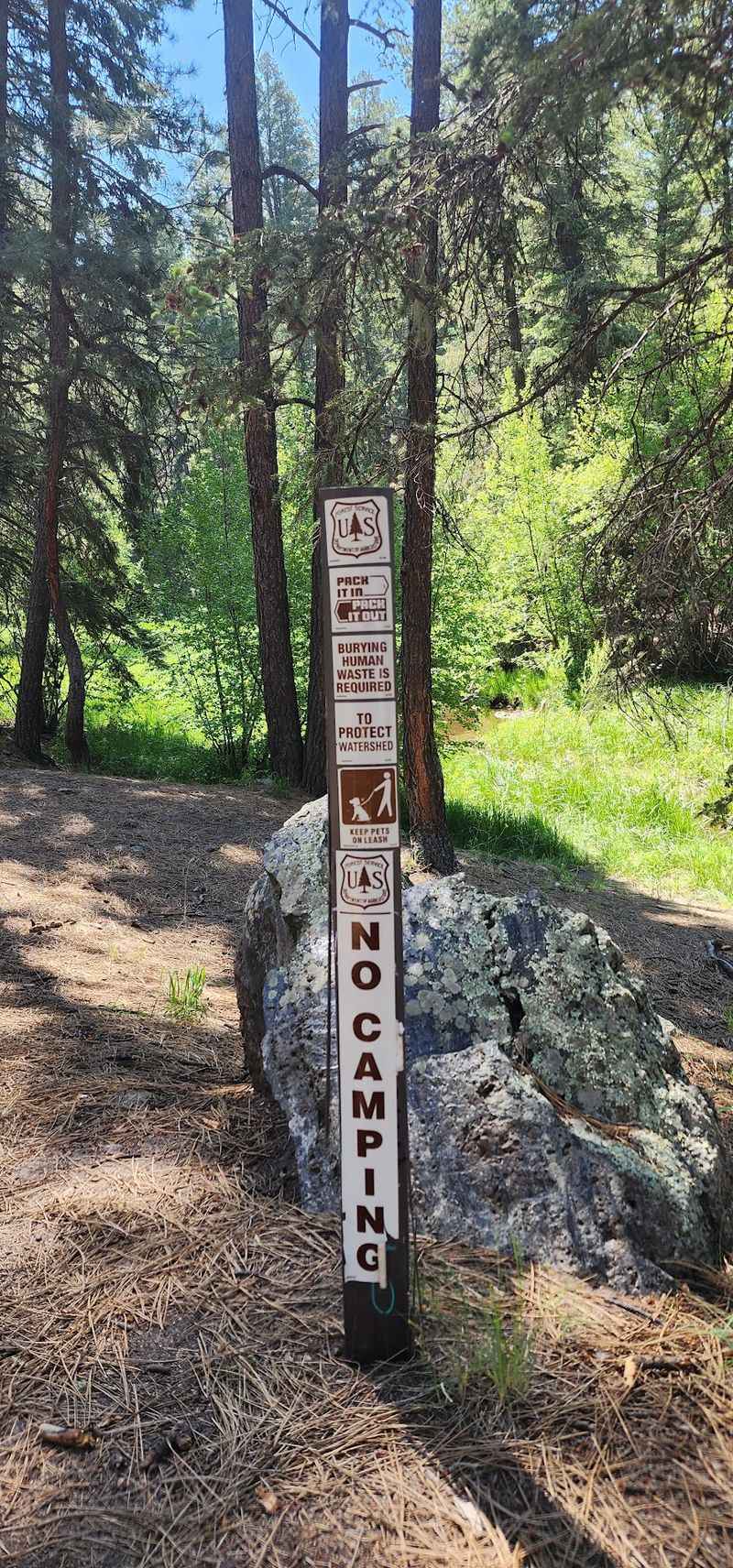
The Pueblo of Jemez Natural Resources Department actively works to protect and enhance these natural and cultural resources. Following posted regulations honors that effort and keeps access open for the next group of curious hikers.
Access Routes And Hiking Trails
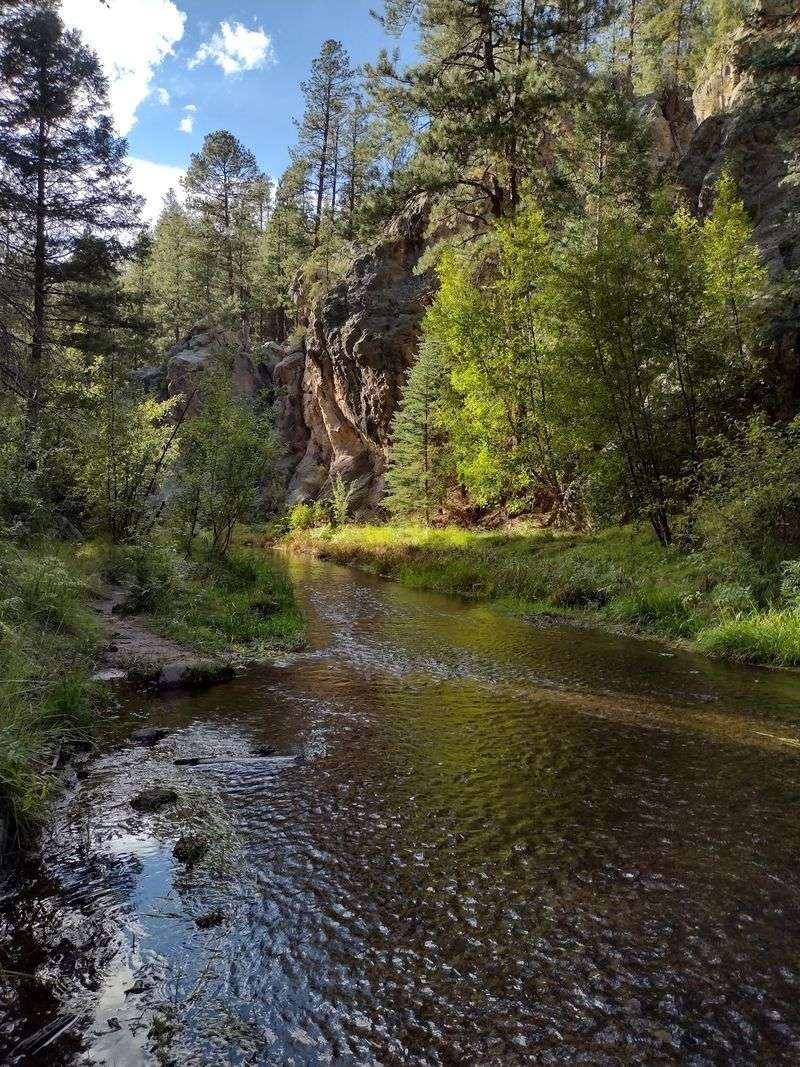
Finding the start is half the adventure. Access comes off State Highway 4 between Jemez Springs and Los Alamos, with a steep descent into a small parking area that includes picnic facilities and restrooms.
Distance estimates vary wildly depending on the source, anywhere from about 2.2 miles out and back to closer to 4.8 miles. A full canyon traverse runs roughly five miles.
Elevation gain is minimal along the creek itself, which is why families with young kids manage it. The climb back up to the highway pullout is the part that surprises people.
Parking at the west end skips the worst of that hill, and plenty of hikers do exactly that. Others start at the Las Conchas Trailhead and work downstream, though that route means walking in the river.
The trail plays hide and seek. Paths appear on both banks, disappear into brush, and reappear across the water, making this a choose-your-own-route kind of hike.
Reaching the first waterfall takes roughly 30 to 45 minutes at a decent clip, or about an hour at a relaxed family pace.
Nearby Jemez Falls makes an easy add-on for the same trip. Recent Santa Fe National Forest land purchases have also opened new public access points around Jemez Springs.
Photography Techniques For Water And Landscapes
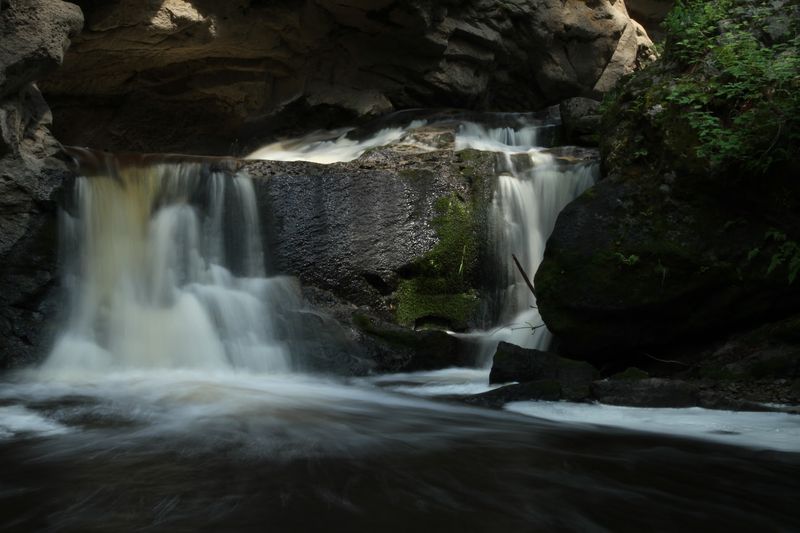
Light is the whole game in a slot canyon. Reflected sunlight bounces off the walls and produces that warm glow photographers chase, and it shifts constantly with the hour and the season.
Clear or partly cloudy days work best. Fully overcast skies flatten everything and strip out the color that makes these images worth taking.
Mid-morning to early afternoon usually delivers the strongest interior light. Arriving with time to wait pays off, because the canyon looks different every twenty minutes.
A wide-angle lens somewhere between 16mm and 24mm handles tight spaces and dramatic lines. Changing lenses down in the canyon invites dust onto the sensor, so pick one and commit.
A sturdy tripod matters in the dim sections, especially for focus stacking or blending exposures across bright and shadowed areas.
Skip photographing direct sunlight on the walls or including open sky in the frame. The dynamic range gets unmanageable fast, and the glow disappears.
Getting low near moving water creates strong foreground interest, with rippled reflections doing half the work. Wet rock in the frame adds texture too.
Try the Cloudy white balance setting as a starting point. Cameras often pull faint pinks and magentas out of canyon shadows that human eyes simply skip over, which is a fun surprise later.