
This Hidden Dune Beach In Georgia Remains Unwalked By Most Georgians
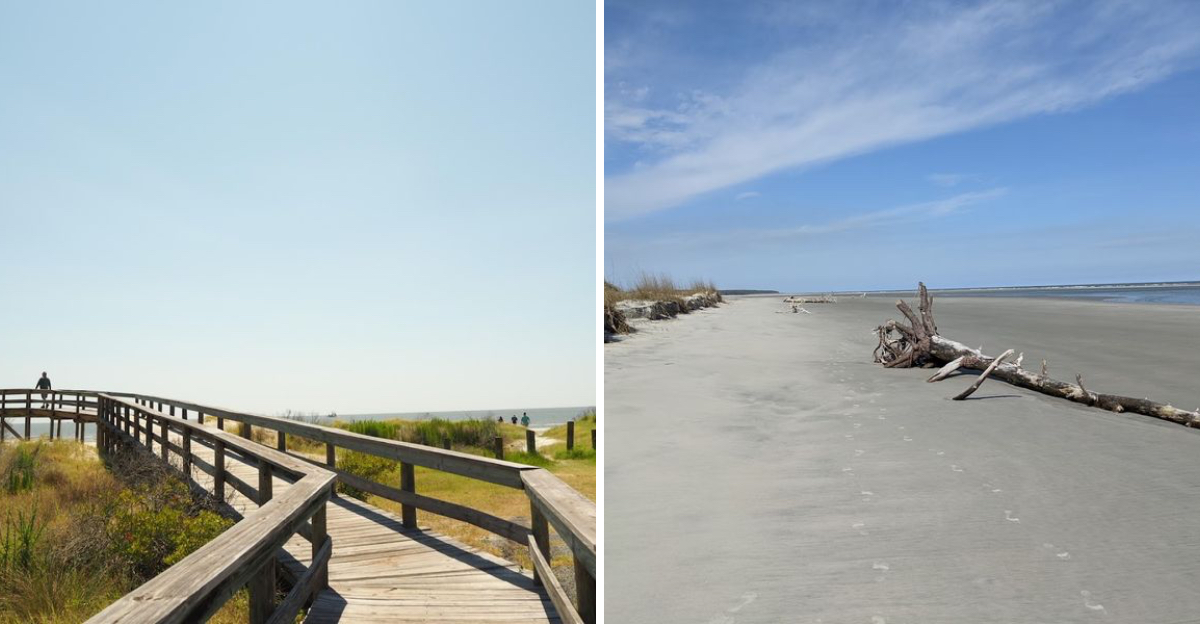
Georgia keeps one beach locked behind a boat ride, a reservation, and a good deal of patience. You cannot drive up, park, and stroll onto the sand like at every other coastal stop.
Salt marsh slides past the boat windows while the mainland disappears behind you. By the time your feet hit the sand, the noise of everyday life is long gone.
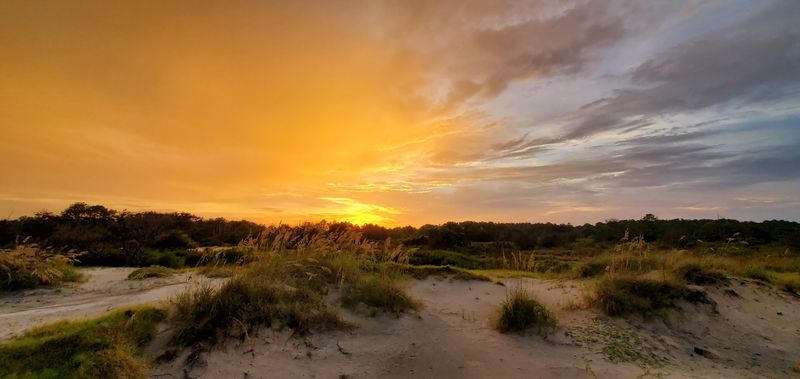
Wild dunes rise along the shore, bigger and older than anything else on this stretch of Georgia coastline. Wildlife wanders past like nobody is watching, and centuries of layered history sit quietly beneath the sand.
There is far more waiting once you actually reach the shore. The effort to get here is real, and that is exactly why it stays worth planning for.
A Journey Worth Every Minute Of Planning
Not every beach makes you earn it, but Nanny Goat Beach absolutely does. The journey to this hidden stretch of Georgia coastline begins at the mainland dock in Meridian, Georgia, where a state-operated passenger ferry sets off across the water.
The ferry ride takes roughly 20 to 30 minutes. That crossing alone feels like stepping out of the modern world and into something quieter and older.
Reservations are mandatory before boarding. Visitors must be pre-registered by a host on the island, and access is strictly controlled by the Georgia Department of Natural Resources.
No walk-ups are allowed.
This level of planning might sound like a hassle, but it is the very reason the beach stays pristine. No overcrowding, no chaos, no vendors selling overpriced sunglasses.
Just open sand and the sound of the Atlantic.
Parking is available at the Sapelo Island Visitor Center in Meridian. Pack everything needed for the day, because resupply options on the island are essentially nonexistent.
The Dunes That Make This Beach Truly Unforgettable
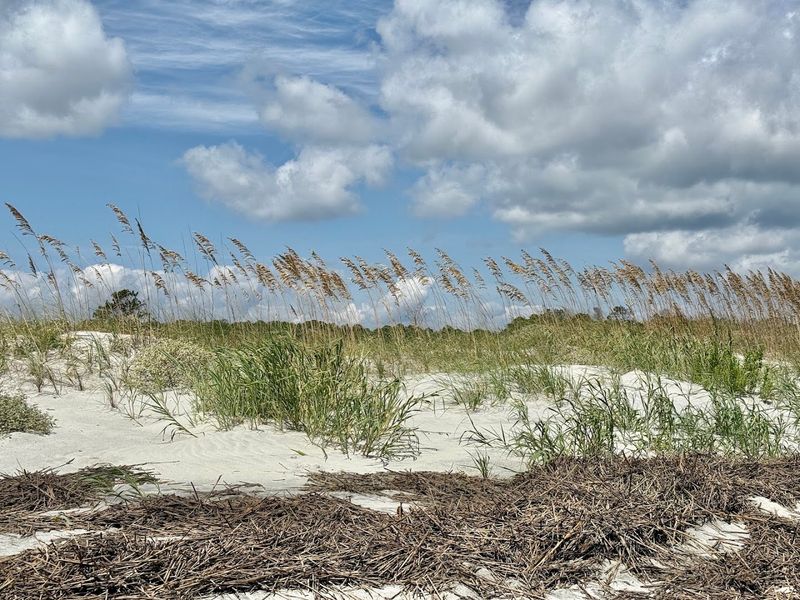
Stand at the edge of Nanny Goat Beach and the dunes do all the talking. These are not the modest sandy bumps found at typical Georgia beach towns.
These formations rise with real presence, sculpted by wind and wave over thousands of years.
Nanny Goat Beach holds the most extensive undisturbed natural beach dunes along the entire Georgia coast. That is not a small claim.
It is a geological fact that sets this place apart from every other sandy stretch in the state.
Sea oats anchor the dunes in place, their feathery tops swaying in the coastal breeze. These plants are fragile and essential.
Without them, the dunes would shift and erode rapidly.
The sand itself is fine-grained quartz, transported shoreward by wave energy from the shallow continental shelf. It has a brightness to it that catches the light in a way that feels almost unreal.
Visitors are strongly encouraged to stay off the dunes themselves. Admire them, photograph them, but let them be.
Two Miles Of Silence And Open Sky
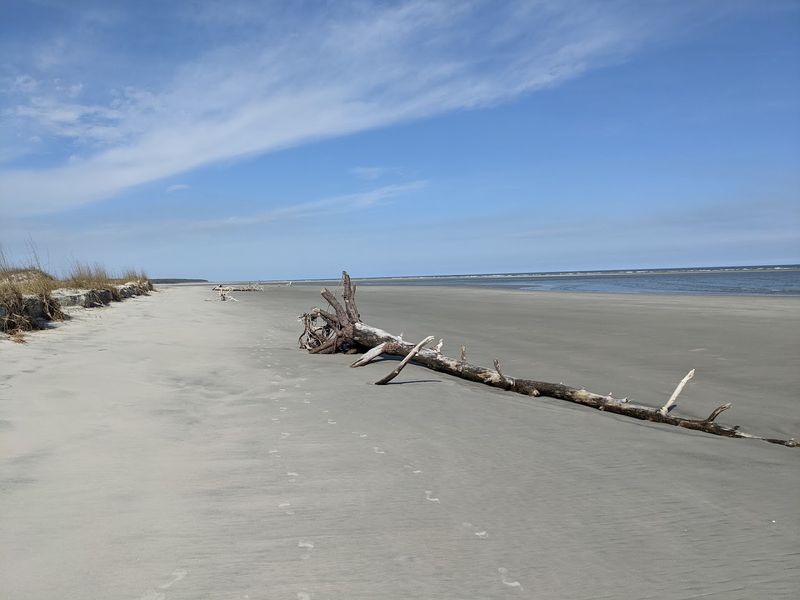
Two miles of beach with almost no one on it. That sentence alone should be enough to get anyone moving toward Meridian, Georgia with a ferry reservation in hand.
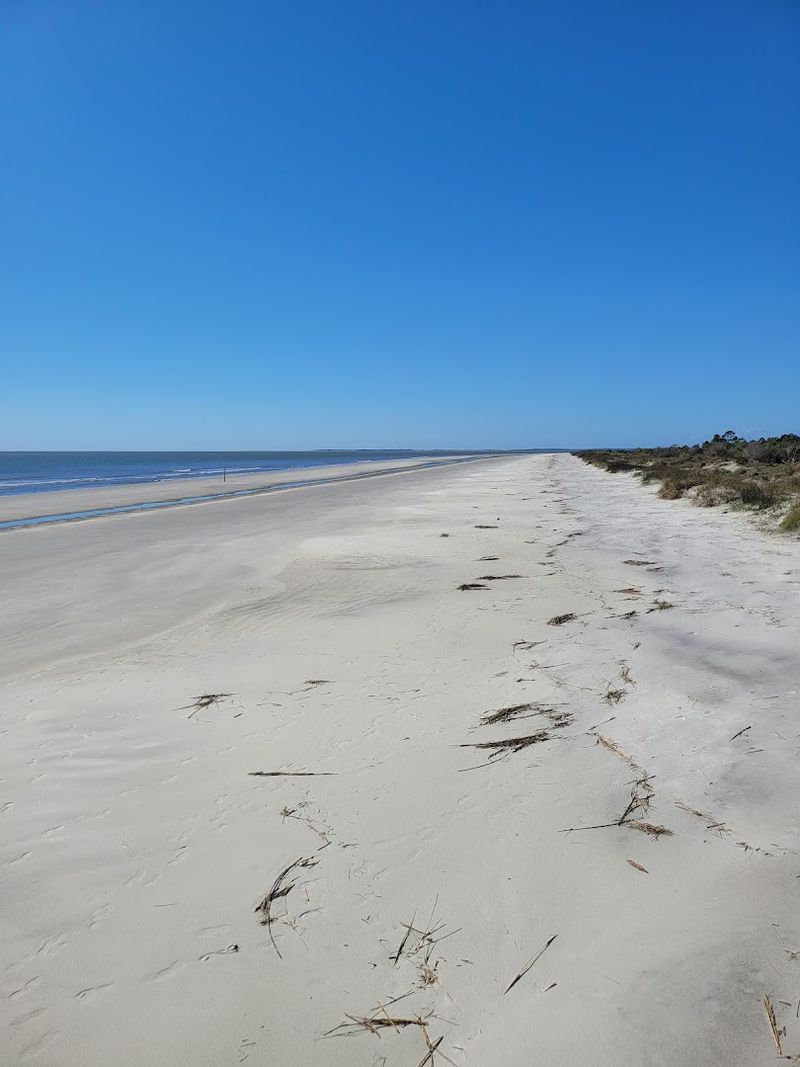
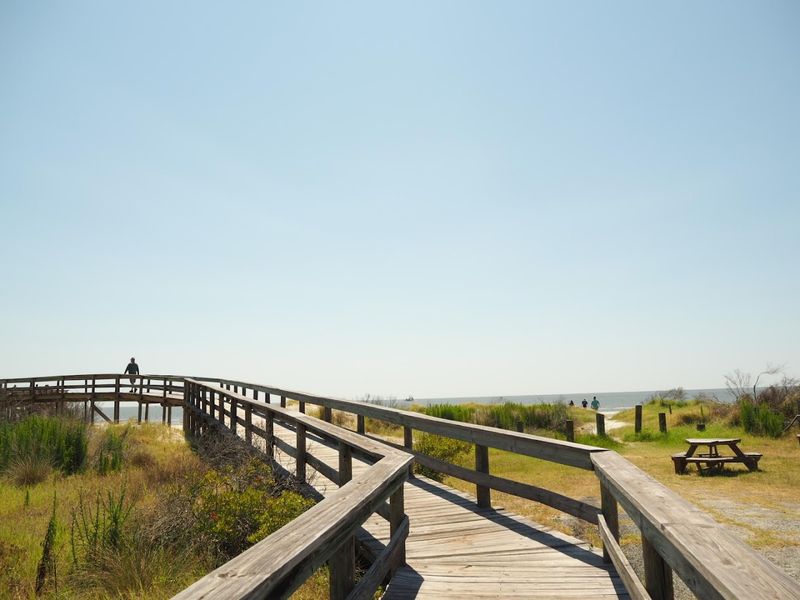
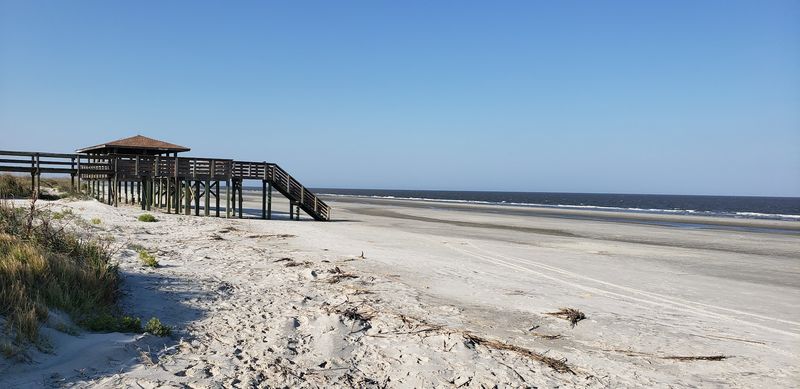
Nanny Goat Beach stretches along the southeastern edge of Sapelo Island, GA 31327, with soft white sand that seems to go on endlessly. The waves here are real Atlantic waves, not the tamed lapping found at developed resort beaches.
Reviews from visitors consistently mention the rough surf and the absence of lifeguards. Swimming is possible, but caution is genuinely warranted.
The ocean here does not soften itself for tourists.
Beachcombing rewards patience. Intact sand dollars and whelk shells turn up regularly along the tide line.
Finding one feels like a small victory, especially because so few people have walked this stretch before you.
There are no bathrooms on site. That detail matters for planning purposes.
Bring what is needed, pack out what is brought in, and respect the land that makes this experience possible.
Wildlife That Has No Reason To Hide
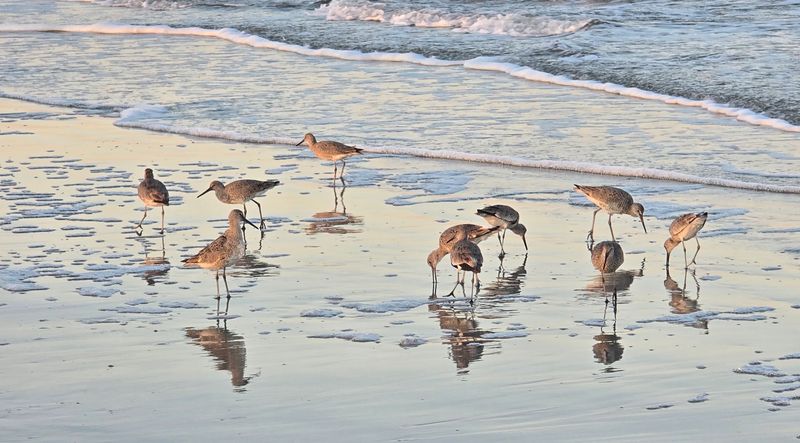
Wildlife on Sapelo Island behaves differently than wildlife at busier destinations. Without constant human foot traffic, animals here are not particularly alarmed by visitors.
That makes every sighting feel more intimate and more rewarding.
Ospreys circle overhead with casual authority. Blue herons stalk the shallow marsh edges with slow, deliberate patience.
Egrets flash white against the green marsh grass like they know exactly how striking they look.
Bald eagles have been spotted soaring above the island as well. Spotting one above a wild Georgia shoreline is the kind of moment that gets remembered for years.
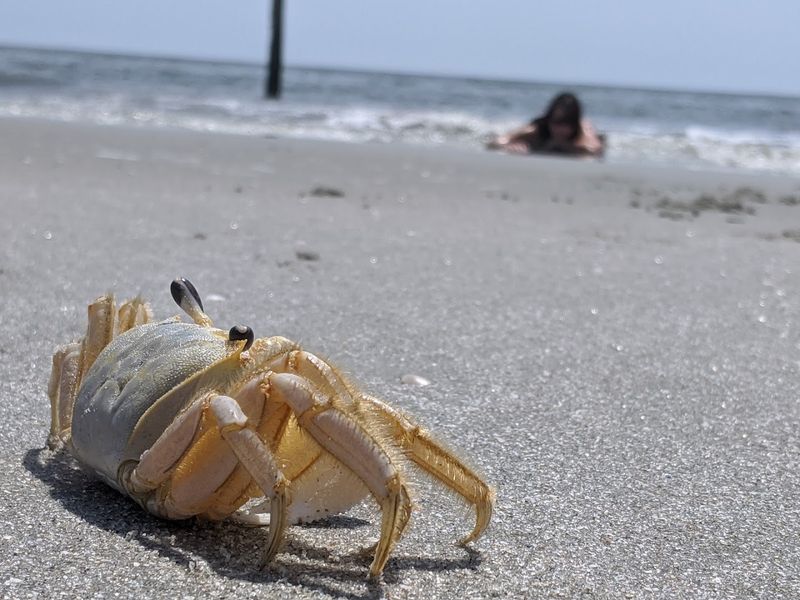
Down at the water’s edge, blue crabs are surprisingly easy to find. Visitors have caught and observed them right at Nanny Goat Beach using simple crab nets.
Kids and adults alike find this endlessly entertaining.
The surrounding salt marshes shelter fiddler crabs, various mollusks, and a web of coastal life that feeds the entire ecosystem. Every creature here plays a role.
The whole system hums along without any human assistance.
Layers Of History Buried In The Sand
Before the dunes, before the ferry, before any of the modern story of this place, people lived on Sapelo Island for thousands of years. Native Americans settled here as far back as 4,000 years ago, and the evidence they left behind is still visible today.
Shell rings, circular mounds made from discarded shells and other materials, mark the locations of ancient ceremonial gatherings. These structures are among the oldest on the Georgia coast and represent a deep, continuous human connection to this land.
Spanish missionaries arrived in the late 16th century, bringing missions and garrisons to the island. That era left its own marks, both physical and cultural, on Sapelo’s identity.
Large plantations followed, relying on the forced labor of enslaved Africans who were brought to work the island’s estates. Their presence, resilience, and cultural contributions would go on to shape Sapelo in ways that outlasted every plantation owner who ever claimed the land.
History here is not a footnote. It is woven into every dune, every tree line, and every tidal creek on the island.
The Gullah Geechee Community Still Calling Sapelo Home
Hog Hammock is not a tourist attraction. It is a living, breathing community on Sapelo Island, and that distinction matters enormously.
The residents of Hog Hammock are direct descendants of enslaved Africans brought to the island in the early 1800s. Their ancestors survived and built something extraordinary, a community that preserved West African language patterns, foodways, and traditions across generations.
This is the Gullah Geechee culture, and Sapelo Island is one of its most intact surviving expressions. Hog Hammock is part of the official Gullah Geechee Cultural Heritage Corridor and was added to the National Register of Historic Places in 1996.
Visitors can learn about this heritage through guided tours offered on the island. These tours are thoughtful, educational, and deeply informative.
They add a dimension to the Sapelo experience that no beach day alone can provide.
Understanding who has called this island home, and for how long, transforms a trip to Nanny Goat Beach from a simple outing into something far more meaningful and worth carrying home.
Landmarks That Anchor The Island’s Story
The beach is the headliner, but Sapelo Island has supporting acts worth the attention of any curious visitor. The Sapelo Island Lighthouse rises from the island’s southern tip, its history stretching back to 1820.
For generations, it guided ships navigating the tricky Georgia coastline. Climbing to the top rewards visitors with panoramic views that stretch across marsh, forest, and open water in every direction.
The Reynolds Mansion stands as another landmark of note. Built as a winter retreat for wealthy owners, the structure later became a research lodge used by scientists studying the island’s ecosystems.
Its architecture feels out of place in the best possible way, grand and formal against a backdrop of wild coastal Georgia.
Nearby, the ruins of the Long Tabby sugar mill offer a quieter, more sobering kind of history. The tabby walls, made from a mixture of oyster shells, sand, and lime, have endured for well over a century.
Each of these sites adds texture to the island’s story. Together, they make Sapelo far more than a beach destination.
Science Happening Right Beside The Shore
Sapelo Island is not just a place to relax. It is also one of the most important sites for coastal ecological research in the entire country.
The University of Georgia Marine Institute has operated on the island for decades. Researchers there have produced work that fundamentally shaped the scientific understanding of salt marsh ecology.
Their findings influence conservation policy far beyond Georgia’s borders.
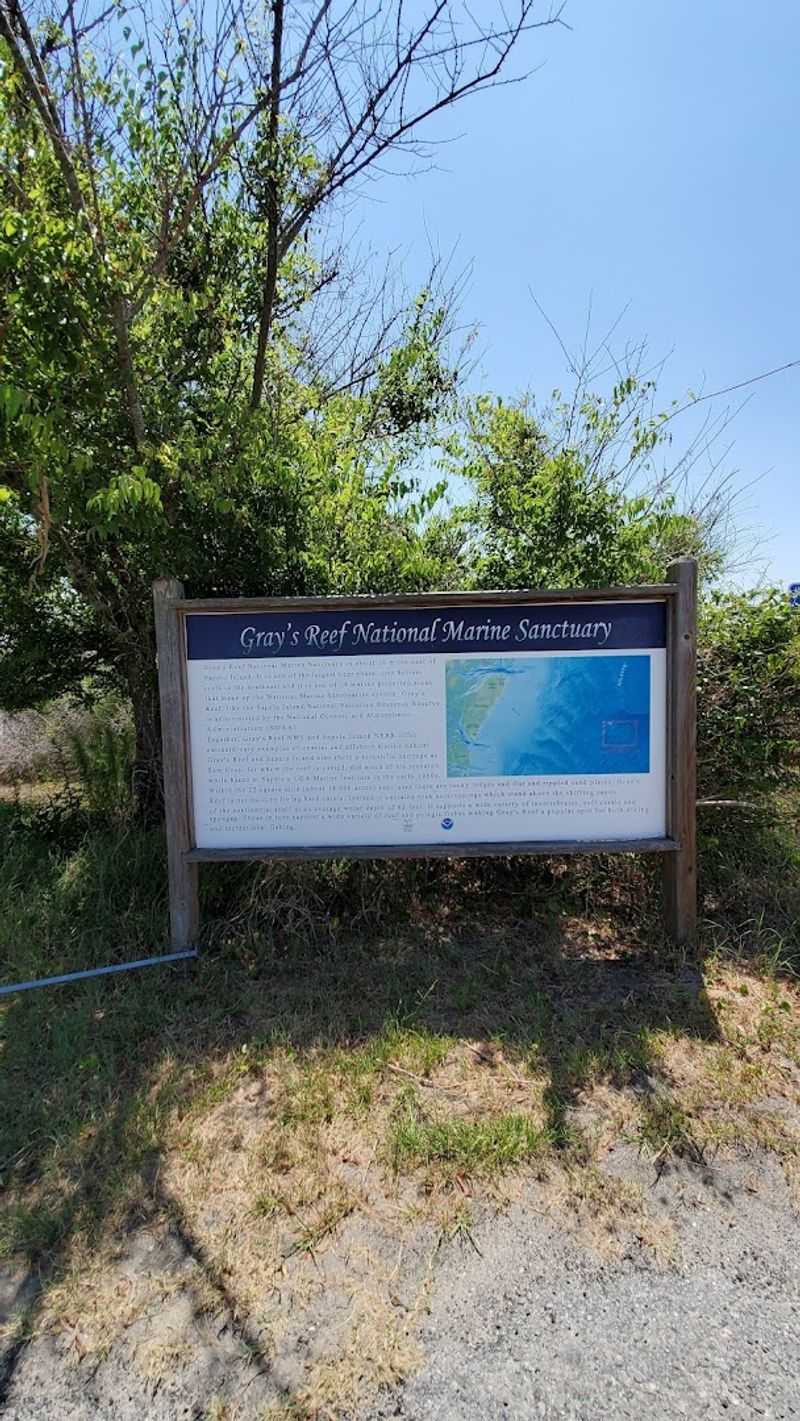
This state-federal partnership protects 6,110 acres of coastal habitat.
This state-federal partnership covers salt marshes, tidal creeks, maritime forests, and the kinds of in-between zones that are easy to overlook but critical to protect.
Educational field trips to the island regularly include visits to the Marine Institute, where participants can test water for salinity and turbidity, examine specimens under microscopes, and get hands-on with coastal science. It is the kind of learning that sticks.
Endangered species including loggerhead sea turtles, bald eagles, and manatees rely on the protected habitats here. The research happening on Sapelo directly supports their survival.
What To Bring And What To Leave Behind
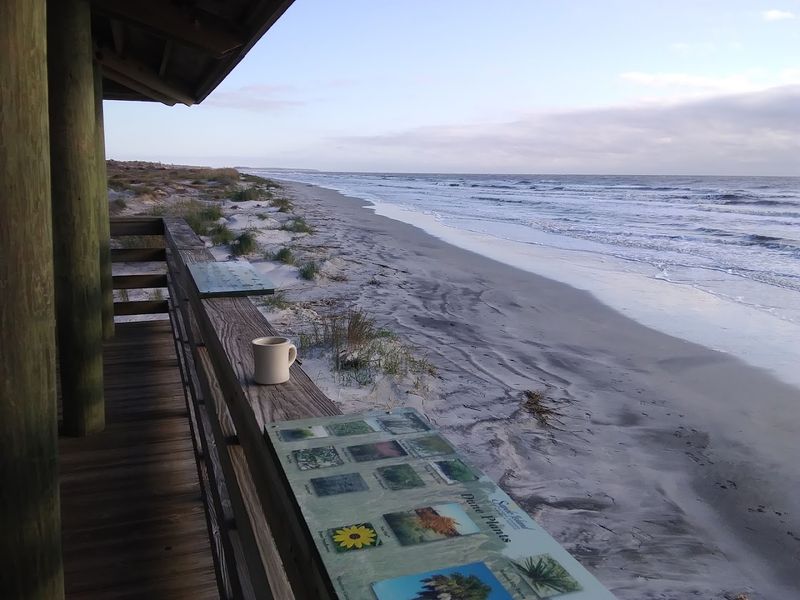
Preparing for a day at Nanny Goat Beach is not complicated, but skipping the prep work will make for a miserable trip. The island is remote by design, and that remoteness means there are no convenience stores, no snack stands, and no rental shacks waiting at the end of the ferry dock.
Sunscreen is non-negotiable. The Georgia coast sun is relentless, especially on an open beach with no shade structures.
Bug spray is equally important. Coastal Georgia marshland is beautiful, but the insects that thrive there are enthusiastic about meeting visitors.
Sturdy walking shoes are a smart addition to any bag. The nature trails near the lighthouse pass through areas where mud is a real factor.
Shoes that can handle a little wetness without drama make the experience far more enjoyable.
Cell phone service is very limited across Sapelo Island. Downloading any maps or information before boarding the ferry is a practical move.
Pets are not permitted on state-run tours.
Pack everything in, pack everything out. The beach stays pristine because visitors treat it that way.
Why This Beach Stays Secret And Why That Is A Good Thing
Most beaches in Georgia are not hard to reach. Drive down a highway, find a parking lot, walk fifty yards, and there is the ocean.
Nanny Goat Beach operates on an entirely different logic.
The restricted ferry access, the reservation requirements, the absence of commercial infrastructure, all of it is what keeps this place looking the way it does. The difficulty of getting here is not a flaw in the system.
It is the system working exactly as intended.
Conservation is at the core of everything on Sapelo Island. The Georgia Department of Natural Resources manages the land with a long view in mind, prioritizing ecological health over visitor volume.
That philosophy shows in every undisturbed dune and every clean stretch of sand.
For the traveler willing to plan ahead, respect the rules, and embrace a slower pace, Nanny Goat Beach delivers something increasingly rare. A coastline that has not been tamed, branded, or sold to the highest bidder.
Georgia has many beautiful places. This one simply requires a little more from the people who want to experience it, and gives back far more in return.