
This Quiet Michigan Marsh Is A Great Place To Spot Bald Eagles This Fall
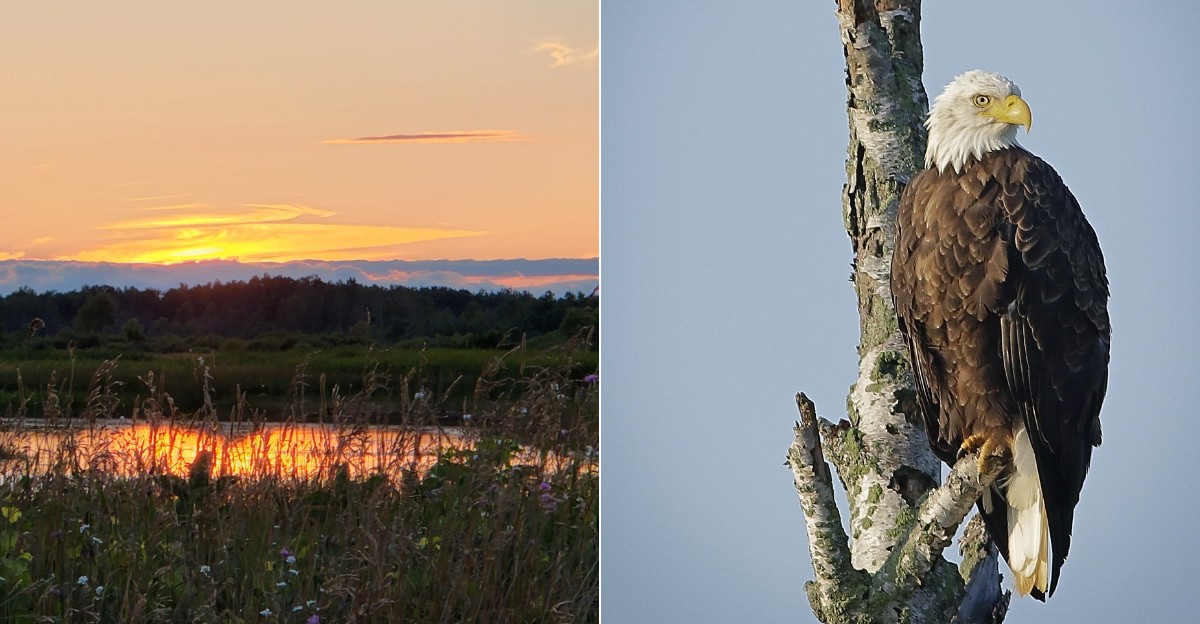
A quiet stretch of Michigan wetland can stop you mid-drive without warning. Cattails lean in the wind, and something white-headed circles overhead.
A wide marsh stretches out along a gravel road here. Ever watched an eagle fold its wings mid-air and dive?
Fall pulls in even more eagles from up north. Watch closely, and you’ll spot turtles stacked on logs too.
There’s no gift shop here, no ticket booth. Just open sky and something circling above.
Bring bug spray and a camera, then leave the rush at home. This kind of morning rewards anyone willing to go slow.
Michigan mornings like this one don’t come with a schedule. Roll the windows down and take it slow.
Where Eagles Rule The Marsh
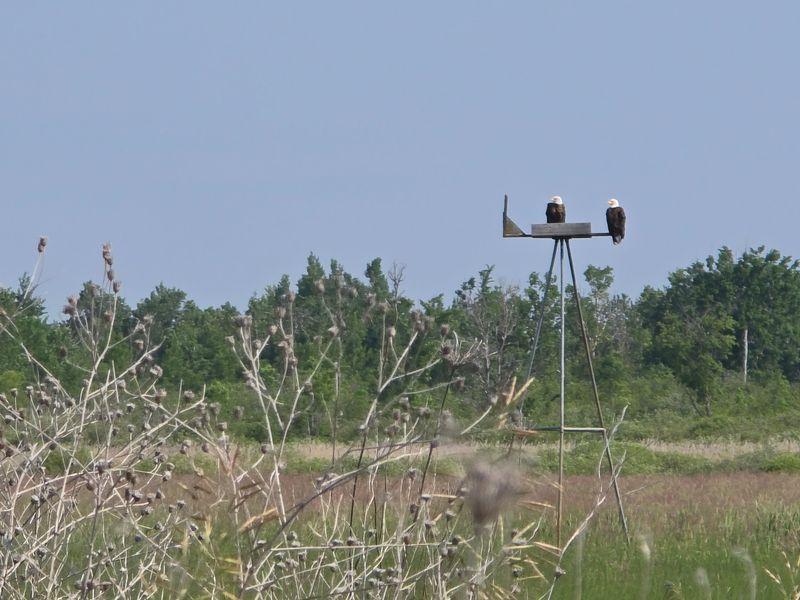
Tuttle Marsh Wildlife Area sits in Oscoda Township, in Iosco County, and it barely announces itself. A brown wooden sign, a gravel road, and then a whole lot of Michigan wetland opening up around you.
The heart of it is a 380-acre impoundment, plus 35 earthen nesting islands built to give birds safe ground. Add the surrounding woods and ponds and you get more than 5,000 acres of habitat.
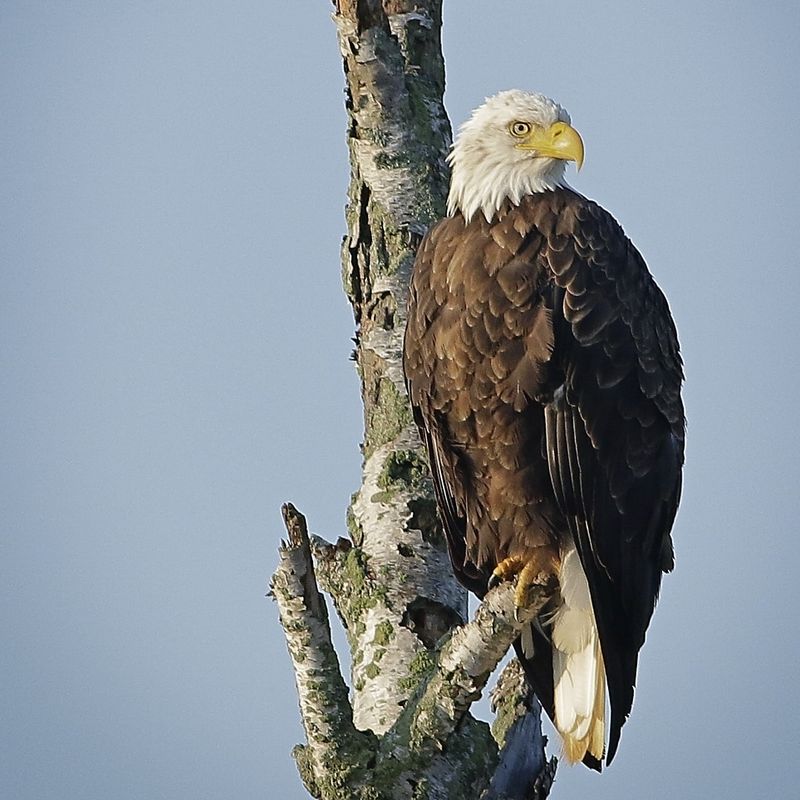
Bald eagles show up here often enough that some regular visitors report seeing them nearly every trip. Eagles like tall mature trees within about a mile of water, with a clear view of everything below.
This marsh checks every box.
Fall is prime time. Resident Michigan eagles stay put, then migrating eagles from Canada and the northern Great Lakes pass through, along with young immature birds leaving their home territories.
Want the best odds? Aim for roughly 8 a.m. to 11 a.m., or the last hour before dusk, when hunting activity picks up.
The marsh is also part of the AuSable Valley Audubon Trails, so there are marked hiking options if you want to leave the car behind.
Fun bit of history: eagles were once a rare sight in this state. Conservation work turned that around, and now a sighting here feels less like luck and more like a reasonable expectation.
Drive Slow, See Everything
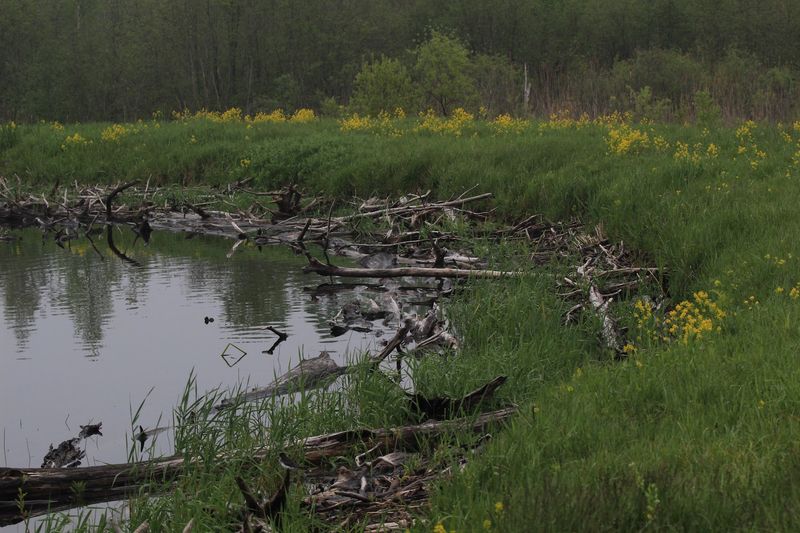
Here is the trick almost every experienced visitor repeats: go slow. The gravel road that bisects the marsh is a few miles long, and rushing it means missing nearly everything worth seeing.
One visitor put it simply, saying they drive slowly so they do not miss much. Smart advice.
At walking speed, turtles on logs and herons in the reeds suddenly appear.
There are pull-offs where you can park, step out, stretch, and scan the water with binoculars. Trails branch off from several of these spots.
Be honest about your vehicle, though. Sections of road are rough gravel with loose rocks, and they get worse after heavy rain.
Low-clearance cars, sports cars, motorcycles, and vintage vehicles may not enjoy the ride.
A berm blocks part of the view from inside a car, which catches some people by surprise. Getting out is the answer.
Good boots help, since trails can be overgrown and genuinely wild.
Watch for animals crossing in front of you. Deer, turkeys, and smaller critters use these roads too.
Would you rather scan the marsh from your window or hike out to a quieter viewpoint? Doing both in one visit is honestly the winning plan in this part of Michigan.
Autumn Brings Extra Wings
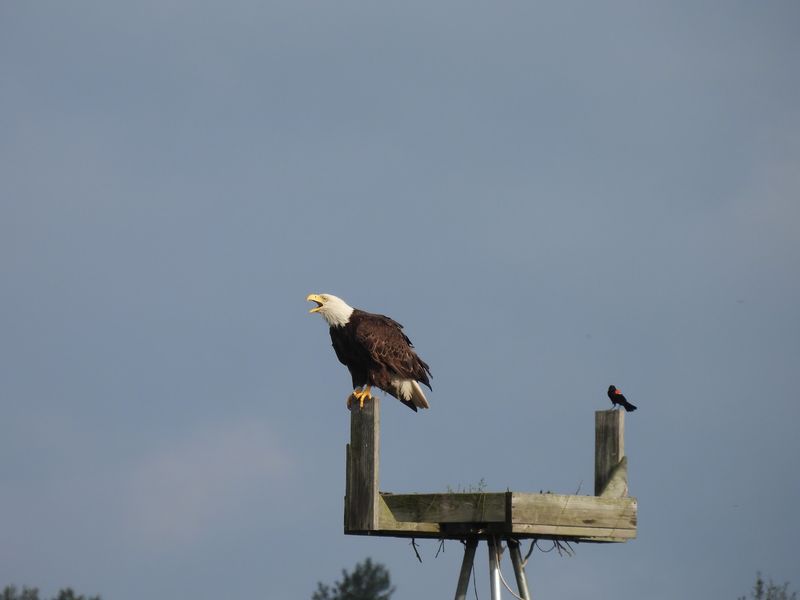
September is when the numbers climb. Michigan’s resident eagles are joined by birds pushing south from Canada and the northern Great Lakes, and suddenly the sky gets busier.
Fish spawning runs in local rivers and streams give eagles an easy reason to hang around. They patrol waterways, watching for a meal that practically delivers itself.
Young eagles are part of the fall story too. Immature birds scatter from northern breeding grounds, and their mottled brown feathers can fool first-time watchers into thinking they spotted a hawk.
Here is a handy detail: bald eagles do not get that bright white head and tail until around four or five years old. So if you see a big dark raptor with a heavy beak, look twice.
Cooler autumn mornings also mean fewer insects than summer, which makes standing still on a berm much more pleasant.
The light in fall is lovely, low and golden, and it makes photos of the marsh look far better than midday sun ever could.
Which would thrill you more, an adult eagle gliding overhead or a young one learning to fish? Either way, this stretch of Michigan wetland gives you real odds.
Bring patience, a thermos, and a folding chair.
Birds Beyond The Eagles
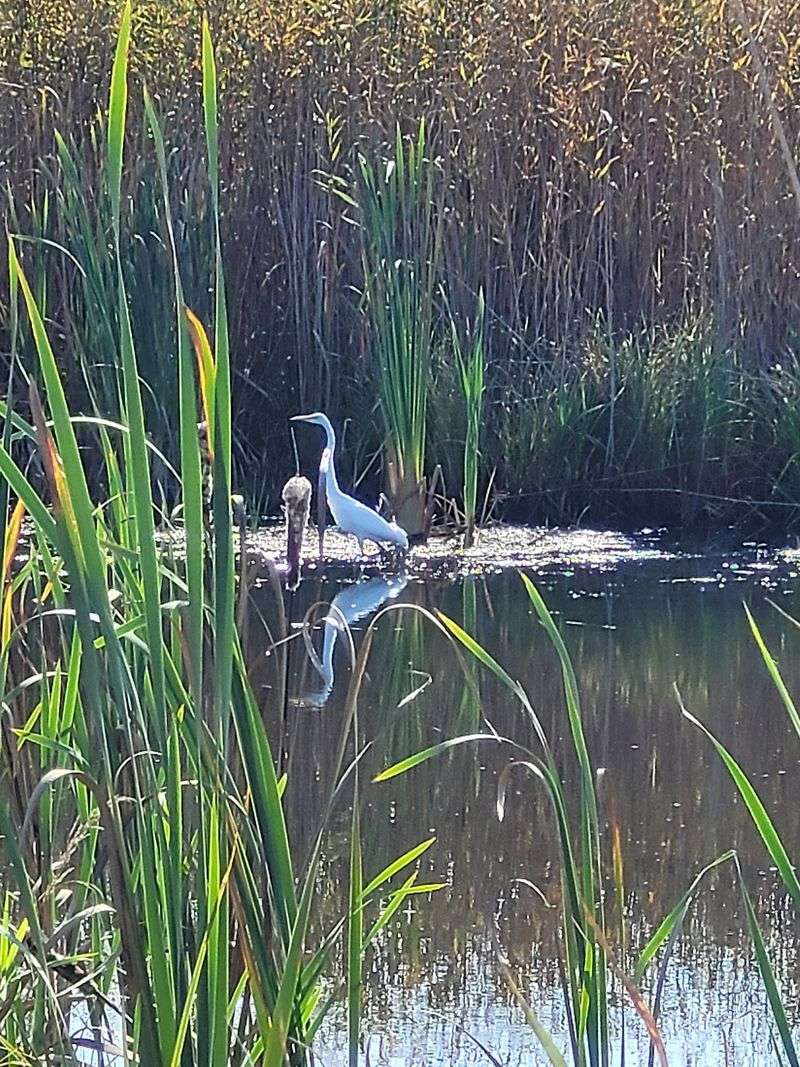
Eagles get the headlines, but the supporting cast here is enormous. Osprey hover and plunge.
Great blue herons stalk the shallows. Great egrets stand out like white flags against green cattails.
Sandhill cranes call with that rattling, prehistoric sound that carries a surprising distance. Once you hear it, you never forget it.
Listen closely to the cattails and you may catch marsh wrens chattering away, while tree swallows sweep low over open water snapping up insects.
Waterfowl variety is impressive: wood ducks, green-winged and blue-winged teal, buffleheads, hooded mergansers, lesser scaup, northern shovelers, and Canada geese all use the marsh.
Secretive birds hide here too. Bitterns, green herons, black-crowned night herons, and Virginia rails skulk through dense growth.
Lucky watchers have reported least bitterns and even a purple gallinule.
Step into the surrounding woods and the soundtrack changes. Songbirds, wild turkeys, ruffed grouse, and woodcock live in those uplands.
One visitor mentioned spotting a pair of swans with their young, plus a goldfinch and a small heron, all in a single outing.
How many species could you count in two slow hours? Bring a checklist.
This Michigan marsh has a habit of adding surprises to it.
Turtles, Otters And Neighbors
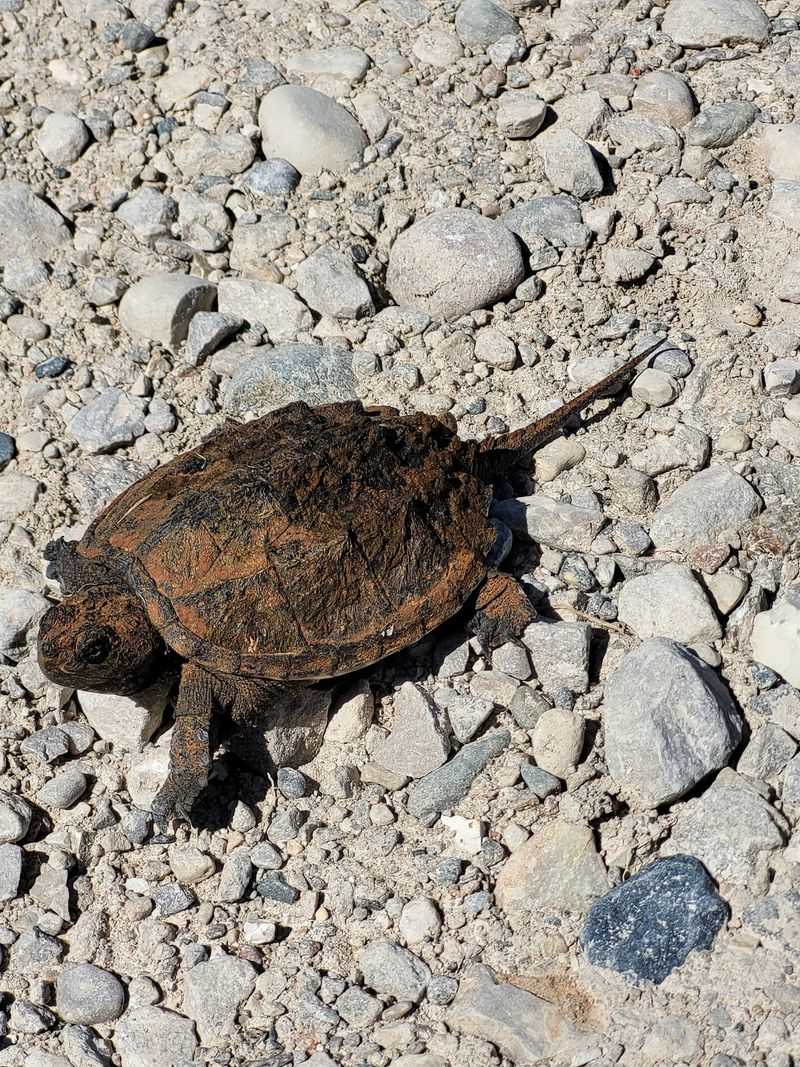
Sunny logs in this marsh come pre-loaded with turtles. Visitors mention them constantly, sometimes with a laugh, because once you start counting you cannot stop.
Muskrats paddle along with just their heads showing, leaving little V-shaped wakes. Beavers work the edges, and their handiwork shows up in gnawed stumps and dams.
Otters turn up too, and watching one roll and dive is worth every mile of gravel road. They move like they are having more fun than anyone.
Deer step out of the tree line at dawn and dusk. Foxes and coyotes cross the road.
Weasels dart past so fast you question what you saw.
One visitor reported seeing deer, coyotes, owls, otters, and even a bear over their years of trips here. That is the range of wildlife this Michigan landscape supports.
The plants deserve a mention as well. Blue fringed gentian, cardinal flower, common ladies-tresses, and Indian paintbrush grow in the area, and wildflower lovers often say the far end of the drive is the best stretch.
Which sighting would make your day, a family of otters or a buck at the water’s edge? Keep your camera ready and your voice low.
Trails, Paddles And Quiet
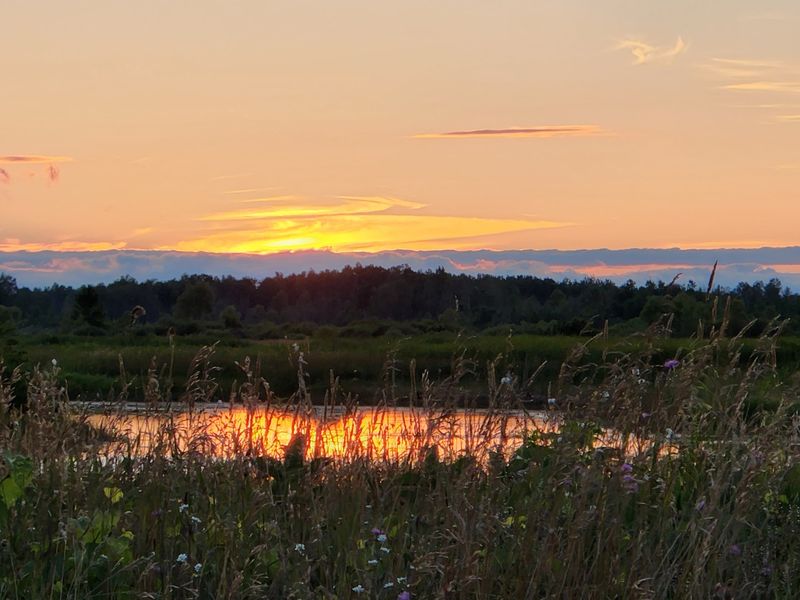
Walking is where this place really opens up. Marked trails run through wetland edges and into the woods, part of the AuSable Valley Audubon Trails network.
Fair warning from folks who have hiked them: some paths get overgrown and can be hard to spot. Sturdy boots and a little patience go a long way.
Climbing onto the berms gives you the wide view that cars simply cannot deliver. That is where the marsh stops being a glimpse and becomes a panorama.
Paddlers have options too, since canoeing is permitted in the marsh. Gliding quietly past nesting islands puts you closer to birds than any road ever will.
Photographers love early morning and late afternoon here. Soft light, active animals, and mist rising off the water make for shots worth framing.
Winter has its own appeal. When conditions cooperate, snowshoeing turns the whole area into a hushed white landscape with tracks written all over it.
Hunting is allowed during established Michigan seasons, so during autumn it helps to wear bright colors and stay aware of your surroundings.
What would you choose first, a berm hike with binoculars or a slow paddle through the channels? Both reward people who move quietly.
Pack Smart, Expect Nothing Fancy
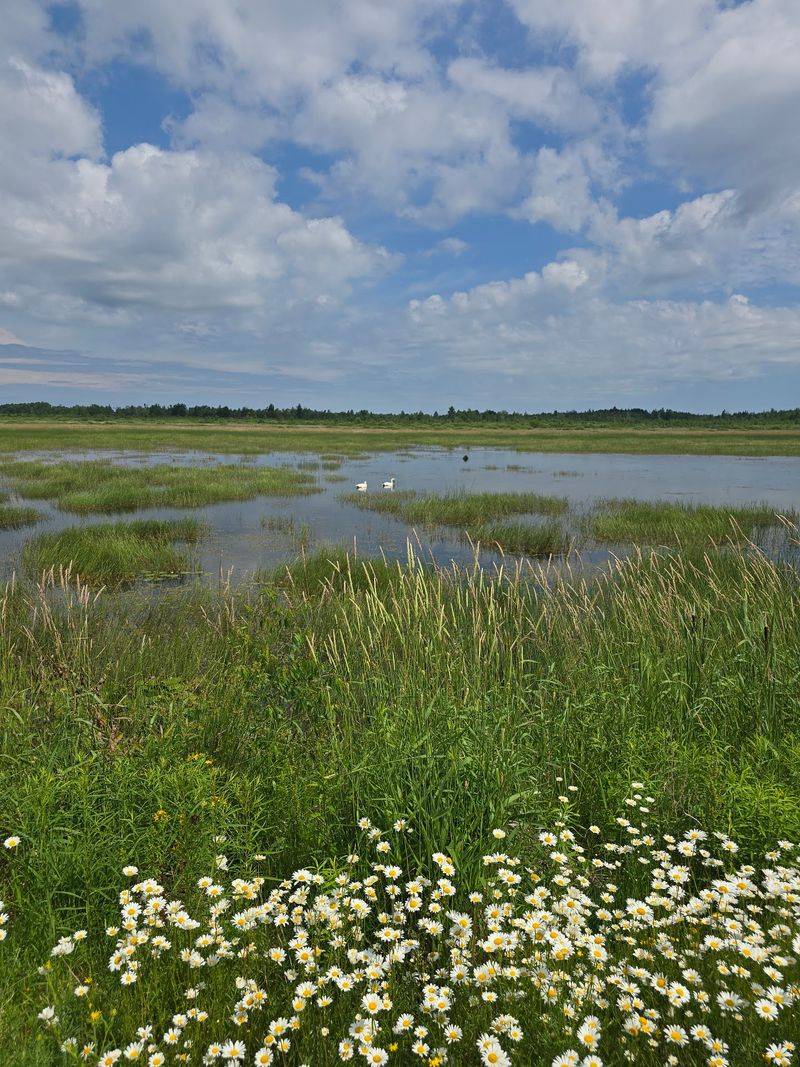
Let’s set expectations, because that is the kindest thing anyone can do before you drive out here. One visitor summed it up well: no playground, no fishing dock, no picnic tables, not even a trash can.
What that means practically is simple. No restrooms.
No drinking water. No gas station or food stop at the wildlife area itself.
Pack water, snacks, and anything else you will need for a few hours outdoors. Fill the tank in town before you head out.
Bug spray comes up again and again in visitor comments, and for good reason. Marshes and insects are a package deal, even into early fall.
Bring binoculars and a real camera if you have one. A phone works, but eagles rarely pose close enough for a good phone shot.
Since there are no trash cans, pack out everything you bring in. Leave No Trace keeps this Michigan wetland looking exactly the way you found it.
Weekdays and early mornings tend to be quietest. Some regulars say they have never seen more than a handful of cars out there at once.
What does your ideal wildlife-watching kit include? Build it before you go, because there is nowhere nearby to restock.
Finding It And Nearby Adventures
Getting here is half the fun, and it is easier than the winding directions suggest. The wildlife area address is Sherman Rd, Oscoda Township, MI 48750, with GPS coordinates near 44.37197, -83.45215.
Coming from Oscoda, take Old US-23 about five miles west to Tuttle Marsh Road, then turn onto the entrance road. A brown wooden sign marks the turn.
From Tawas, head north on Wilber Road to Sherman Road, then right on May Road, right on Brooks Road, left on Swan Road, left on Davison, and follow it to Tuttle Marsh Road.
Oscoda sits roughly five miles northeast, and Tawas about seven miles south, so both towns work well as a home base for food and fuel.
Access can change with weather and seasonal conditions, so check current road and area information before you make the drive.
Oscoda carries a Pure Michigan Trail Town designation, with hundreds of miles of trails nearby for hiking, biking, and paddling.
That makes this marsh a perfect piece of a bigger northeastern Michigan getaway rather than a one-stop trip.
So when are you setting the alarm for that 8 a.m. eagle window? Michigan mornings like this one are worth losing a little sleep over.