At first glance, the flowers inside this Massachusetts museum look freshly picked. Delicate petals curl naturally, tiny veins run through green leaves, and ripe fruit appears almost good enough to eat.
Look closer, though, and you’ll realize that these botanical wonders are crafted from glass.
Created by a father and son over five decades, this extraordinary collection was originally intended to help university students study plants in remarkable detail.
Today, it attracts visitors who marvel at the delicate craftsmanship and astonishing realism of each piece. From familiar garden flowers to intricate plant structures rarely visible to the naked eye, the exhibits offer countless fascinating details.
It’s an unexpected meeting of science and art that makes an ordinary museum visit feel extraordinary.
A Garden That Never Needs Watering
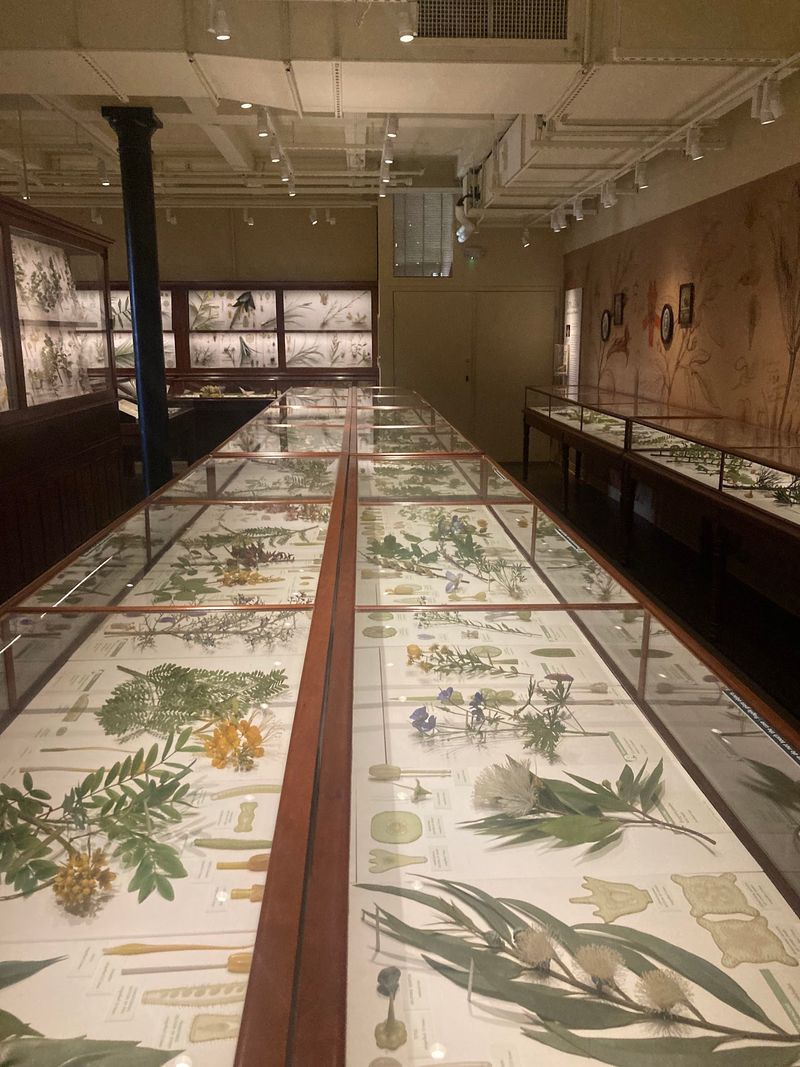
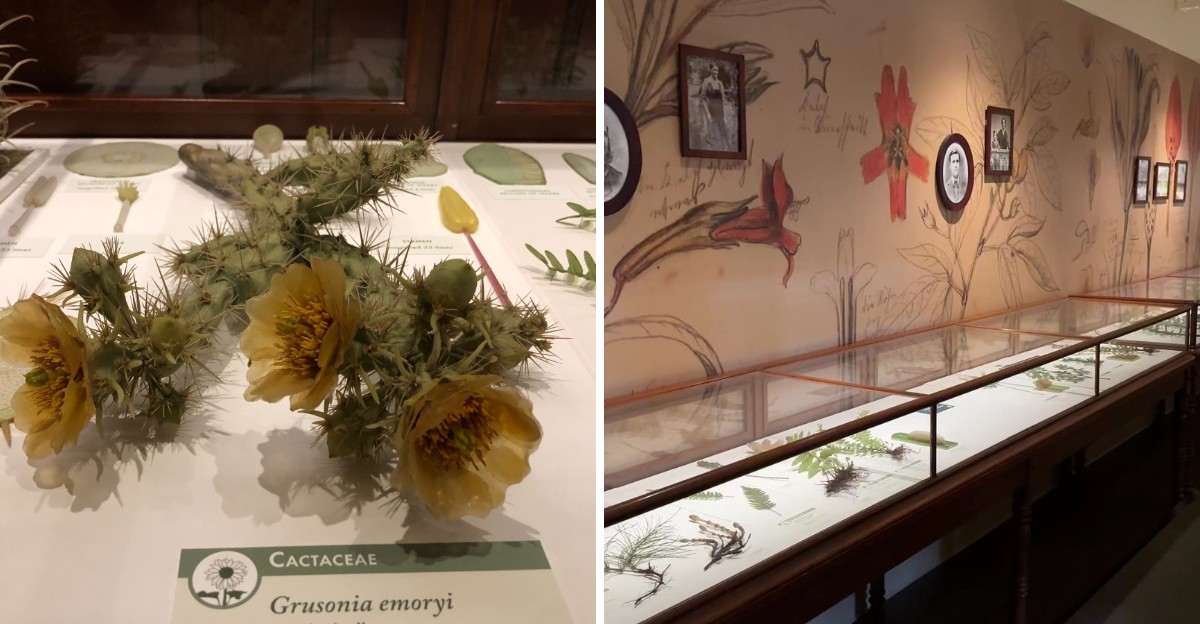
Gardeners everywhere would envy this one. The Ware Collection of Blaschka Glass Models of Plants holds about 4,300 glass models.
Together, they represent approximately 780 plant species.
Most people simply call them the Glass Flowers. The collection lives at the Harvard Museum of Natural History in Cambridge, Massachusetts.
It sits on the third floor, so plan your route through the building with that in mind.
Size alone makes the gallery impressive. Case after case holds flowers, fruits, leaves, and roots.
Some models show a whole plant, while others zoom in on a single blossom.
Nothing here grows, fades, or turns brown. The apple blossoms look freshly opened.
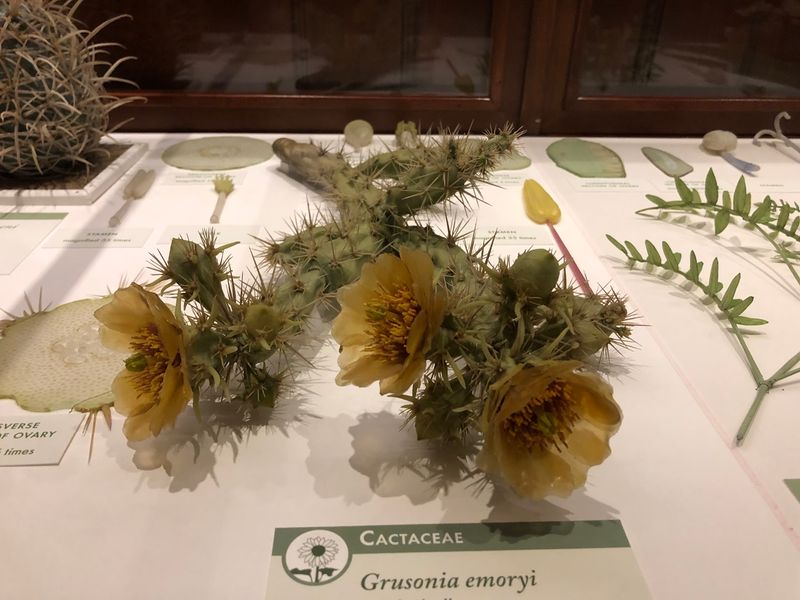
The cacti look ready to poke you, even behind glass panels.
A smart tip helps here. Walk the room once quickly to take in the full picture.
Then go back slowly and pick a few cases to study closely.
Your eyes will play tricks on you. Many people forget they are looking at glass within minutes.
That is exactly why this collection has drawn crowds for more than a century.
Bring patience and curiosity. The longer you look, the more tiny surprises you will notice, from fuzzy stems to delicate veins in each leaf.
The Father And Son Behind The Magic
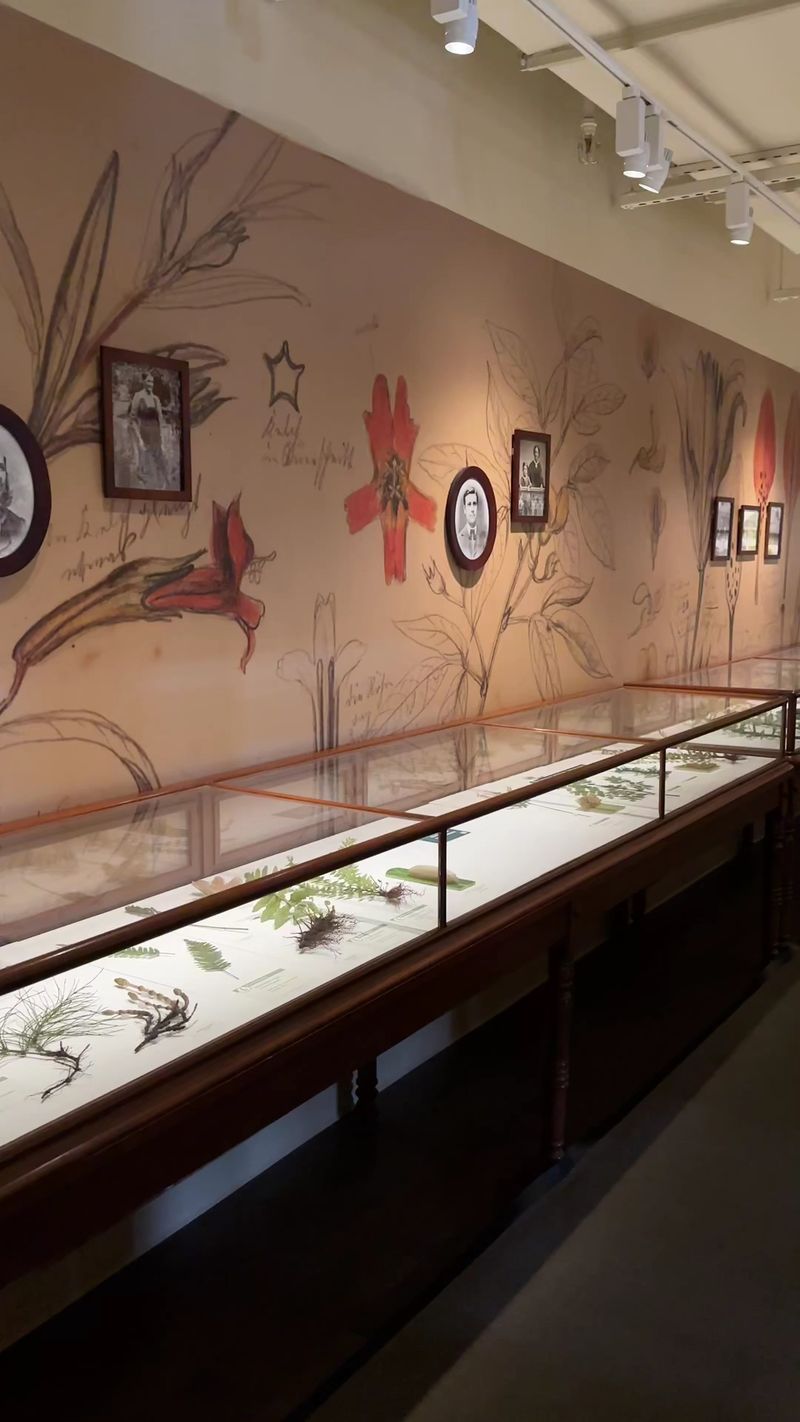
Family businesses rarely produce anything this dazzling. Leopold Blaschka and his son Rudolf were Czech glass artists.
Leopold lived from 1822 to 1895, and Rudolf from 1857 to 1939.
Their studio stood in Hosterwitz, near Dresden, Germany. From there, they shaped plants for Harvard University and no one else.
The work lasted about fifty years, from 1886 or 1887 until 1936.
Think about that timeline for a second. Rudolf kept going for decades after his father passed away in 1895.
He carried the project almost entirely on his own skill and focus.
Before the flowers, the Blaschkas were famous for glass sea creatures. Museums and universities bought their jellyfish, sea anemones, and other marine models.
A small group of those sea animals is on display at the museum too.
So the pair already knew how to make soft, living things look real in glass. Plants became their next big challenge.
They met it with remarkable patience.
Here is a fun thought to carry into the gallery. Every model you see came from just two pairs of hands.
No factory, no machines, and no shortcuts were involved.
That personal touch shows in every curling tendril. It makes the collection feel warm and human.
A Professor With A Bright Idea
Pressed flowers are lovely in a scrapbook, but they make dull teachers. Professor George Lincoln Goodale knew this well.
He was the first director of Harvard’s Botanical Museum.
Back then, students studied plants that had been dried and flattened. Those samples lost their shape and most of their color.
Learning how a flower truly worked was tricky with a flat, brown specimen.
Goodale wanted something better for his classes. He imagined models that kept their full shape and bright natural colors.
Glass, oddly enough, turned out to be the answer.
Paying for such a project took real support. Mary Lee Ware and her mother, Elizabeth C. Ware, stepped in as the benefactors. That is why the collection carries the Ware family name today.
Their gift changed how students could study plants. A learner could see a flower from every side.
They could also study its inner parts up close.
Keep this history in mind as you stroll the gallery. These pieces were made as classroom tools first.
Their beauty was a bonus that turned them into a world-famous display.
It is a neat reminder that good teaching ideas can last a very long time. This one has lasted well over a hundred years.
Fire, Glass, And Incredible Patience
Hot glass does not forgive sloppy hands. The Blaschkas used a method called lampworking.
They melted glass over a flame and shaped it with different tools.
That sounds simple until you see the results. Petals curve gently.
Thin hairs stick out from stems. Tiny seeds rest inside sliced-open fruits.
The models are not made of glass alone. Each one is a mix of materials, including paint, varnish, and adhesives.
Many also hide wire supports inside their glass stems to keep them steady.
Rudolf went a step further than most artists would. He developed his own glass and his own colorants.
He wanted every shade to match the real plant as closely as possible.
Here is a helpful way to enjoy this detail. Pick one model and trace it from root to tip with your eyes.
Notice where the color changes or the surface looks fuzzy or shiny.
You will begin to sense the hours behind each piece. Some parts are so thin they almost seem to float.
Others look heavy and ripe, like fruit ready to eat.
Craft lovers often find this the most exciting part. Science fans enjoy it too.
Everyone leaves with a new respect for glass.
Science So Sharp It Was Ahead Of Its Time
Accuracy was never optional for these artists. The models were built to teach real botany.
So the Blaschkas cared about every detail, not just pretty looks.
Many pieces show full plants. Others show enlarged cross-sections of flowers, so you can see parts hidden inside.
A few even show the life cycles of plants that do not flower, along with fungi.
Pollination gets special attention too. Some models show exactly how a flower and an insect work together.
Seeing this in three dimensions makes the process much easier to understand.
Here is the jaw-dropping part. Some models reveal remarkably accurate microscopic details of plant structures and reproductive processes.
The Blaschkas carefully documented intricate botanical features through their glass models.
That fact tells you how carefully they studied each plant. Their eyes were sharp, and their hands were steady.
They treated each model like a careful science report.
For students and curious minds, this section is gold. Bring a notebook or snap a quick photo of a label you like.
Later, look up that plant and compare the model to real photos.
You may be surprised by how closely they match. It is a fun way to turn a museum trip into a small science lesson.
A Fresh Glow After The 2016 Makeover
Even a century-old garden deserves a fresh look now and then. In 2016, the Glass Flowers gallery went through a major renovation.
The goal was to protect the models and help people see them better.
Workers rebuilt the original display cases. That kept the classic feel of the room.
At the same time, they added modern lighting and climate control systems.
Why does climate matter so much? Glass models mix many materials, like paint, glue, and wire.
Steady conditions help keep those fragile pieces safe for future generations.
The new lighting makes colors pop in a gentle way. Petals look soft, and leaves look fresh.
It is a little like seeing the collection on a clear spring morning.
Photographers should know one small thing. Bright light and glass cases can create reflections.
Try shooting at a slight angle, and turn off your flash for cleaner pictures.
Also, be kind to the cases. Avoid leaning on them or tapping the glass.
The models inside are extremely delicate.
This careful upgrade shows how much Harvard values the collection. It is one of the university’s most treasured exhibits.
The makeover helps make sure it stays that way for many more years.
A Window Into A Lost World Of Plants
Some flowers in this room may be easier to find in glass than in the wild. The collection has been called a window into a lost world of plants.
That idea gives the gallery a deeper meaning.
Over the years, nature has changed. Some species shown here are now endangered in their natural homes.
A few are even gone from the places where they once grew.
The glass models keep a record of how these plants looked. Their shapes and colors are frozen in time.
In a way, they act like a three-dimensional photo album.
This makes the gallery useful for more than art lovers. Botanists, artists, and nature fans have been inspired here for over a century.
Each group finds something different to admire.
Here is a thoughtful way to explore. Look for plants you might recognize from a backyard or a park.
Then look for ones you have never heard of before.
The contrast is eye-opening. Familiar plants feel like old friends.
Rare ones feel like little mysteries waiting to be solved.
Leaving with a fresh appreciation for real gardens is common. Many people head outside wanting to notice the plants around them a little more closely.
Planning Your Trip To 26 Oxford Street
Good planning turns a fun outing into a great one. The Harvard Museum of Natural History sits at 26 Oxford Street, Cambridge, MA 02138.
It is part of the Harvard campus in Massachusetts.
The museum generally opens daily from 9 AM to 5 PM, except on designated holidays and scheduled closure dates. Mornings tend to feel calmer, while midday often brings school groups and families.
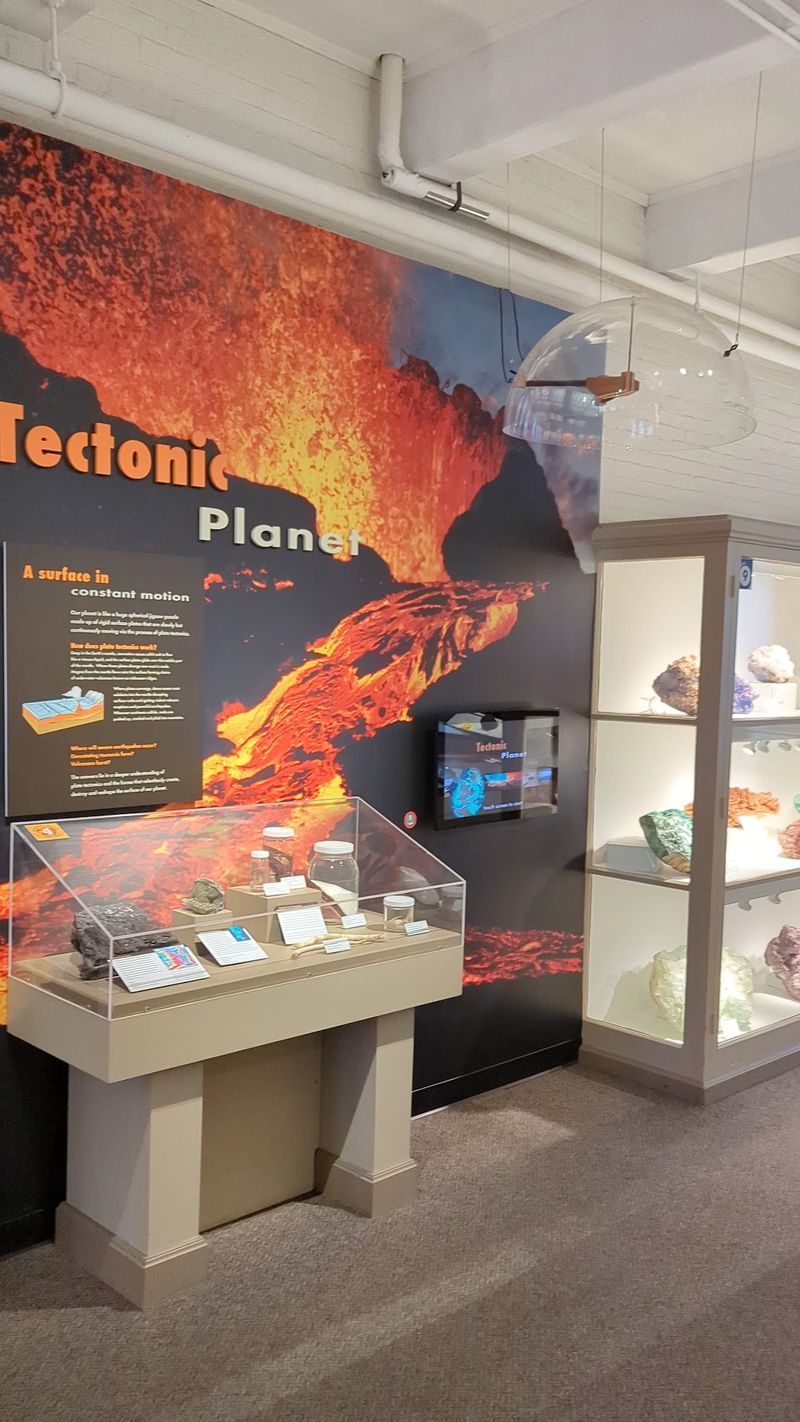
The Glass Flowers are only one part of the fun. You will also find gems, minerals, meteorites, fossils, and huge animal displays.
A whale skeleton hangs from the ceiling, which is hard to miss.
Your ticket also covers the connected Peabody Museum of Archaeology and Ethnology. That means plenty to explore under one roof.
Many people spend two to four hours here.
Parking can be tricky around campus. Street spots are limited, so public transit or a nearby paid garage helps.
Check the museum website for current parking options and ticket prices.
There is an elevator, but stairs connect many areas. Comfortable shoes are a smart choice.
The gift shop is also worth a stop for postcards and gifts.