
When Rain Cancels The Playground, This Free Illinois Conservatory Turns Into A Jungle Walk
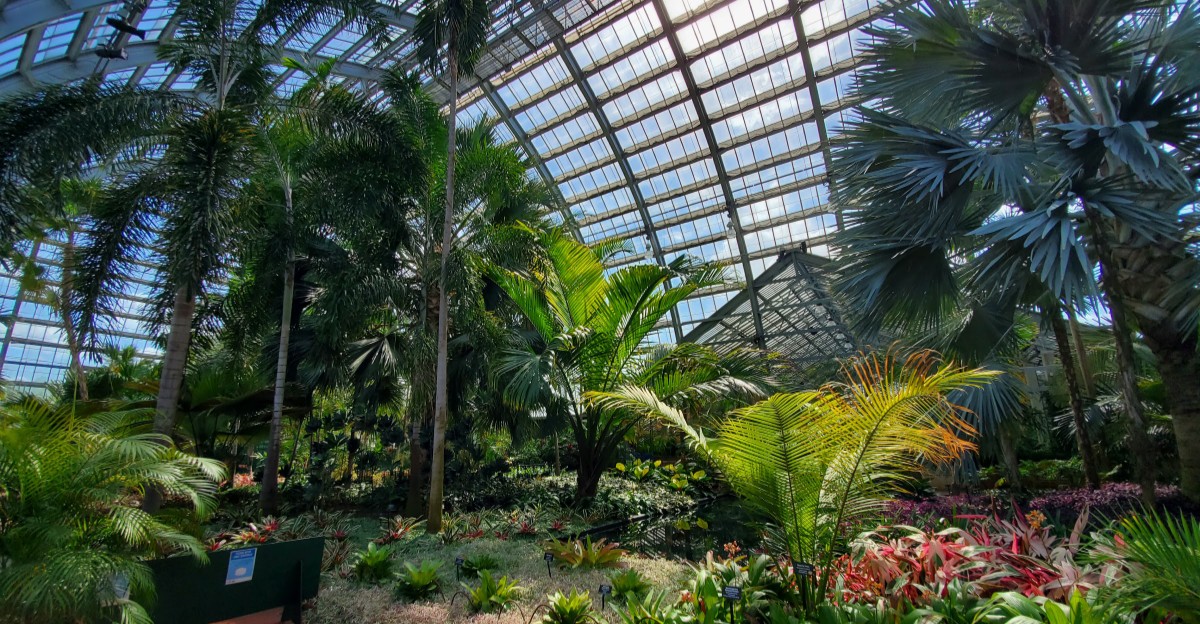
Rain has a way of ruining a Saturday plan in Illinois, especially when the kids already have their shoes on and the park is off the table. But there is a two-acre stretch of glass on the West Side where the air stays warm, the palms stretch six stories up, and koi drift past under a green canopy while storms rattle the roof overhead.
Admission is free for city residents, and everyone else pays a fee small enough that a rained-out morning suddenly feels like a lucky break. What starts as a backup plan usually turns into the part of the day everyone remembers.
A Glass Jungle On Chicago’s West Side
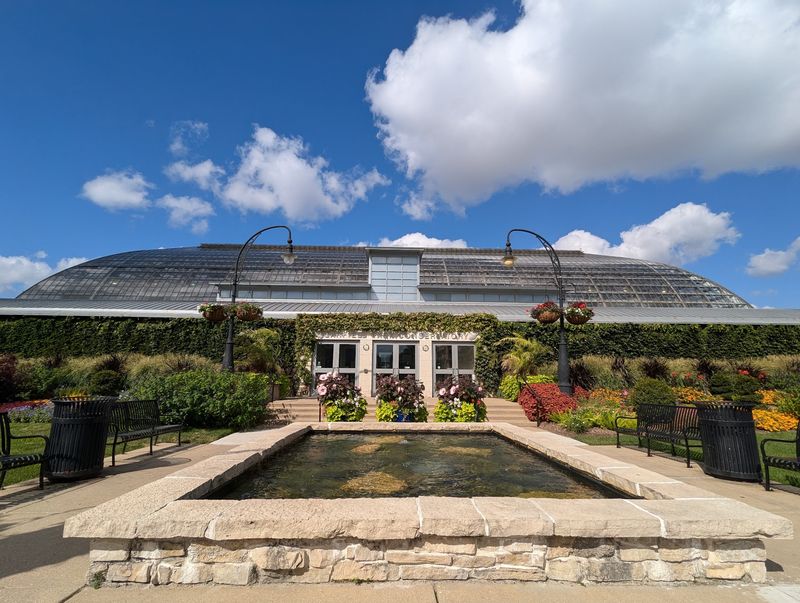
At 300 N. Central Park Ave., inside the 184-acre Garfield Park, sits one of the largest indoor botanical conservatories in the country.
Two acres of greenhouses sit under glass, surrounded by roughly 10 acres of outdoor gardens, lagoons, and demonstration plots.
People who have visited often describe the building as landscape art under glass, and the phrase fits. Eight indoor display gardens run one into the next, each holding a different climate, so a walk from one door to the next can take you from a misty fern gully to a dry desert slope in about thirty steps.
The park itself is a Chicago Park District property with athletic fields, a pool, and a fishing lagoon, but the conservatory is the piece that draws visitors from across the collar counties. It works because it does not depend on weather.
Lake-effect snow, a humid July afternoon, or a steady spring downpour makes no difference to what is growing inside.
For families on the Green Line or driving in off the Eisenhower, it lands as a rare thing: a large, warm, green indoor space that costs little or nothing to enter.
How A Public Park Ended Up With A World-Famous Greenhouse

Chicago’s West Side park system was built in an era when city planners believed working families deserved grand public spaces, and the conservatory is the surviving proof of that idea. The structure was designed to look less like a Victorian glass palace of separate rooms and more like a series of rolling landscapes covered by glass.
One visitor compared the glass structure to the Crystal Palace, and the comparison makes sense once you stand under the arched steelwork and watch rain slide down panes overhead.
Volunteers and staff on the floor tend to be the best source of history here. Guests regularly mention striking up conversations with volunteers who share stories about the building, individual specimens, and how the collection came together over the decades.
If someone offers to tell you about a plant, take the detour.
The conservatory has also grown into a neighborhood anchor rather than just a tourist stop. Same-day reservations give priority to Garfield Park and West Side neighbors, a policy that keeps the place rooted in the community that surrounds it instead of turning it into a destination only for out-of-towners.
The Palm House And Its 65-Foot Ceiling
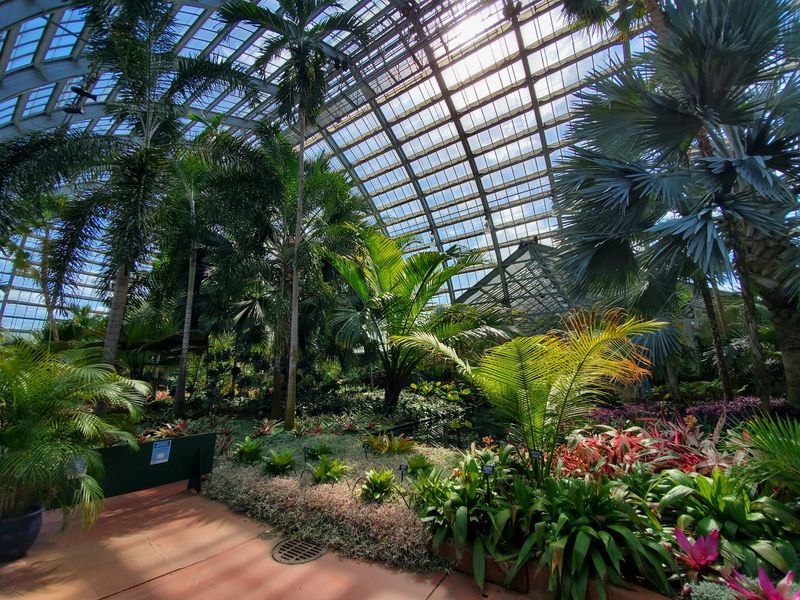
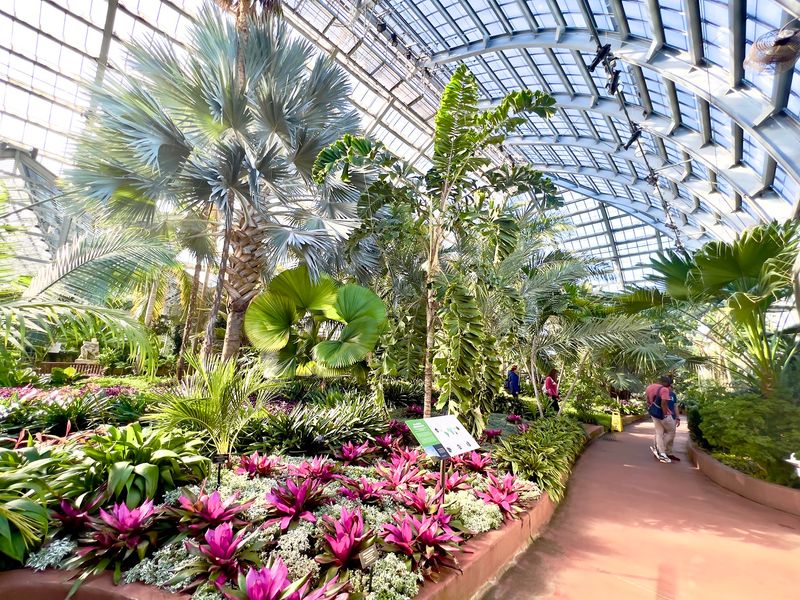
Walk in and look straight up. The Palm House ceiling rises about 65 feet, and beneath it grow more than 70 different palm species arranged as a single tropical landscape rather than a row of potted trees.
Kids react to the scale before they notice any individual plant. Fronds arch overhead, light filters down green, and the temperature shift from a chilly Chicago morning hits immediately.
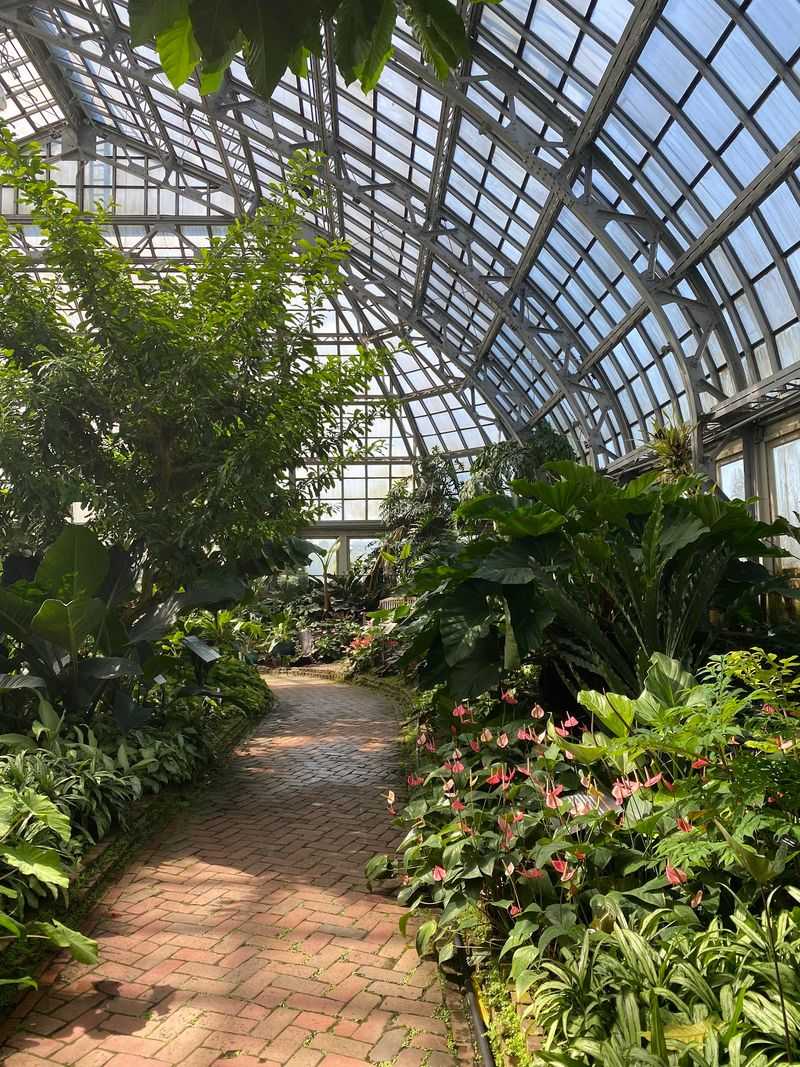
Paved paths wind through the space, which makes this the easiest room for strollers and the natural first stop if you are wrangling a toddler and a diaper bag. Benches and wide turns mean you can slow down without blocking traffic.
Visitors who read the placards say the plants from Madagascar stand out as some of the most visually distinct in the collection, with shapes that look nothing like anything growing in the Midwest. That kind of detail turns a walk-through into a scavenger hunt for older kids.
Photographers love this room too, which is worth knowing. Mid-afternoon on weekends can get busy with portrait sessions, so earlier arrivals tend to have more room to wander.
Fern Room Mist, Stepping Stones, And A Hidden-Figure Game

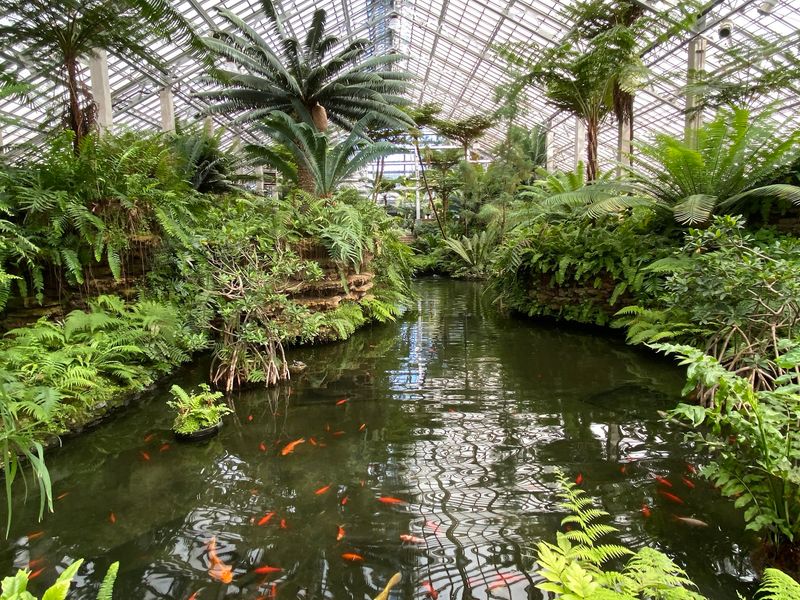
Ferns get the most mentions of any single feature from people who come here, and the Fern Room earns it. A waterfall trickles past stone ledges, the air hangs damp, and the planting was designed to suggest what the region looked like in prehistoric times.
Guests have described a strange, ancient feeling in these rooms, as though they stepped out of Chicago into another era entirely. The staghorn fern draws its own fan club.
Here is a detail worth handing to your kids before you walk in: small figures and tiny scenes are tucked into the fern plantings, and finding them is a game visitors play and share on the conservatory’s Instagram. Handing a seven-year-old a treasure hunt changes the whole tone of the visit.
One practical caution. The Fern Room includes steps and stepping stones, which makes it the least stroller-friendly and least wheelchair-friendly space in the building.
Plan to park a stroller at the entrance, carry smaller children through, or loop around and rejoin the paved route.
Footing can be damp, so steady shoes help.
Desert House Cacti That Look Almost Cartoonish
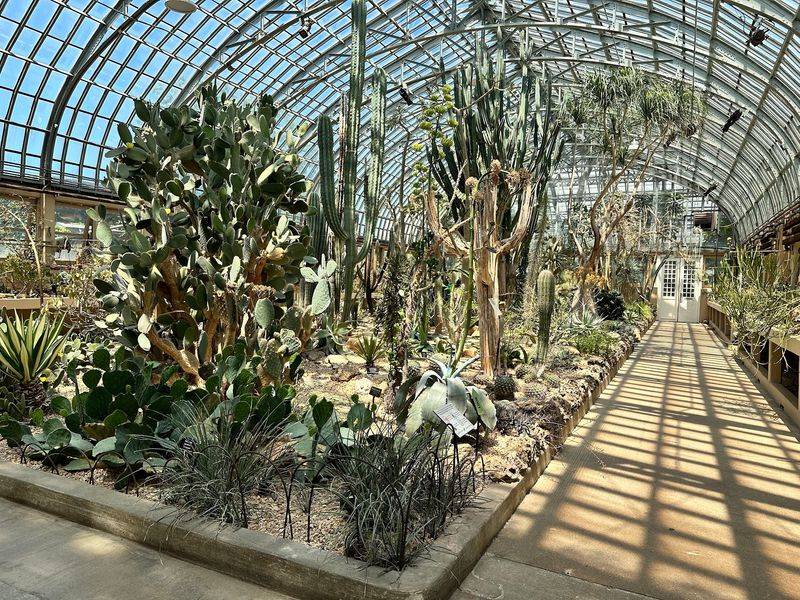
Cactus fans, this is your room. The Desert House swaps humidity for dry warmth and fills its beds with barrel cacti, spiny columns, agaves, and succulents collected from arid regions around the world.
Plenty of visitors name it their favorite stop in the whole building, and several say the plants look almost cartoonishly perfect, which is a fair description of a six-foot cactus growing in Illinois.
The contrast is the real appeal. You step out of dripping ferns into something bright and spare, and the shift registers even with young kids who could not tell a prickly pear from a philodendron.
One guest described the effect as prehistoric-desert, and that instinct is not far off.
A reminder for parents: spines are at eye level for small children in a few spots, so this is a hold-hands room rather than a running room.
Because the beds are open and low, the Desert House also photographs beautifully without much effort. If your family collects one photo per outing, this is a strong candidate for it, and the gravel-edged paths stay easy to push a stroller across.
Koi Ponds, Turtles, And The Aroid House Rainforest Feel
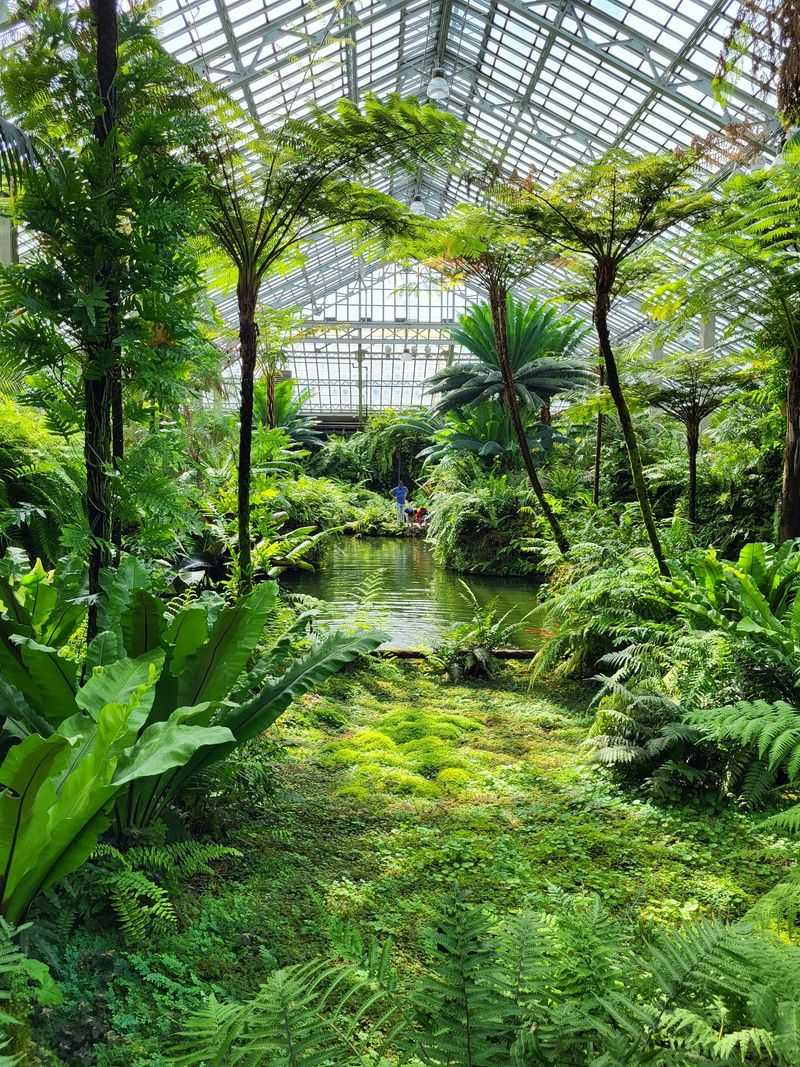
Turtles come up again and again in what visitors remember, and there is a reason. Water features run through several of the display gardens, with koi gliding under lily pads and turtles sunning themselves on rocks where kids can crouch down and stare.
The Aroid House delivers the strongest jungle-walk impression of the bunch, with broad glossy leaves, humid air, and reflections off still water.
Birds turn up in some of the rooms too, which surprises first-timers. A flash of movement in the canopy tends to stop a group mid-conversation.
Families with preschoolers often find this stretch is where the visit slows down naturally. There is no schedule, no glass barrier to press against, just fish to count and leaves bigger than a toddler.
One parent recounted a four-year-old who flatly refused to leave after making it through the misty tropical rooms, towering palms, koi ponds, and turtles.
Keep an eye on little hands near the water’s edge and let the rest unfold. Ten minutes of pond watching can do more for a rainy morning than any playground.
Free Drop-In Programs For Botanists Under Ten
Not every rainy-day outing includes a free activity table, but this one does. Budding Botanists runs Saturdays and Sundays from 11:00 a.m. to 3:00 p.m., with hands-on scientific exploration kids can drop into whenever they arrive.
Fridays are quieter and aimed younger. Morning Glories, 10:00 a.m. to 12:30 p.m., is built for ages 0 to 3 and focuses on sensory play and motor skill development, which is exactly the kind of low-pressure setup that suits a wobbly one-year-old.
Wednesday evenings bring Art After Dark, 4:00 p.m. to 7:30 p.m., for ages four and up, mixing nature with art projects while the building stays open late. Pairing that with the extended Wednesday hours makes for a genuinely different after-school outing.
Seasonal programming shows up too. Families have mentioned holiday activities like candle making during winter visits, so it can be worth checking ahead to see what is scheduled the week you plan to go.
All of these programs are offered free, which keeps the math simple for parents already covering parking, snacks, and the drive in.
Mud Pies And A Stump Course In The Nature Play Space
Rain may be the reason you came, but there is an outdoor play area waiting for the moment the clouds break. The Play and Grow Nature Play Space stays open year-round, weather permitting, and it is designed for children up to about age eight.
Loose pebbles, materials for mud pies, a stump obstacle course, and a wooden xylophone make up the equipment list. Nothing is plastic, nothing beeps, and kids figure out what to do without instructions.
Supervision is required in this garden, so it is not a spot to sit back and check your phone. Consider it a trade: you get a sensory-rich outdoor area, they get to be messy, and everyone accepts that shoes will need a rinse.
The Elizabeth Morse Genius Children’s Garden, the indoor favorite many families remember, has been closed for renovation, with reopening expected sometime in 2025. Worth confirming its status before you promise anything to a kid who has been there before.
Outdoor gardens beyond the play space include flower beds, demonstration plots, and lily ponds, all pleasant on a break between showers.
What Admission Actually Costs And Who Gets In Free
Chicago residents get in free with proof of residency, and donations are suggested rather than required. Bring an ID, because staff do ask.
Non-residents pay $10 for adults ages 18 to 64, $5 for seniors 65 and up and youth ages 7 to 17, and nothing for children 6 and under. Several visitors have noted that ten dollars buys a couple of hours indoors, which compares well with most rainy-day options in the region.
Discounts stretch wider than most people expect. Link and WIC cardholders can enter free through Museums for All, and reduced or free admission is also offered to Illinois Pre-K through 12 teachers, Illinois public school students on field trips, active-duty military and veterans through the Blue Star Program, and American Horticultural Society members.
Timed-entry reservations are required for all visitors and strongly recommended in advance to guarantee a spot. Walk-ins may be accommodated depending on capacity, with same-day priority given to Garfield Park and West Side neighbors.
Prices and policies can shift, so check ahead before you load the car.
Getting There, Parking, Hours, And Where To Eat
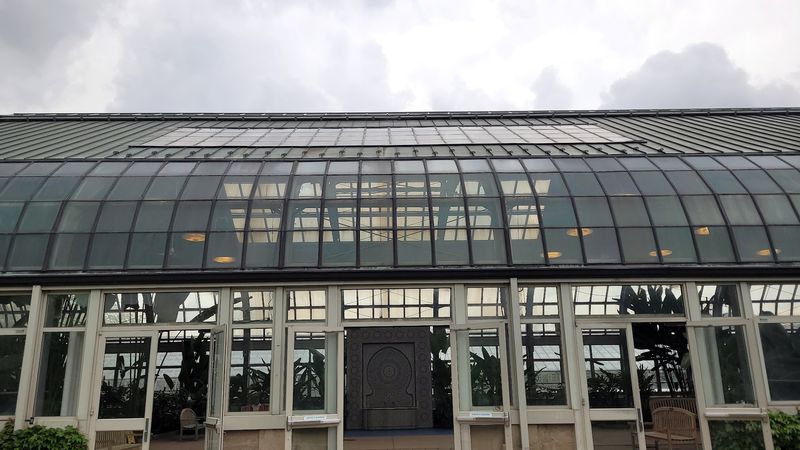
Public transit could not be simpler here. The CTA Green Line’s Conservatory-Central Park Drive stop sits about half a block south of the main entrance, a straight ride from the Loop, and there is a Divvy station plus bike corrals on site.
Driving works too. Free visitor parking sits in a lot just south of the main entrance, including accessible spaces, and free street parking is often available along Central Park Avenue and Lake Street.
Guests report finding spots out front within a few minutes.
Hours run Wednesday 10:00 a.m. to 8:00 p.m. with last entry at 7:15 p.m., and Thursday through Sunday 10:00 a.m. to 5:00 p.m. with last entry at 4:15 p.m. Mondays and Tuesdays are closed, and weekday openings shift to 9:30 a.m. for school field trips.
Holiday hours may vary, so confirm before heading out.
Food is limited. The gift shop carries snacks and drinks, a local coffee pop-up operates in Horticulture Hall, and you are welcome to bring a picnic to the tables and chairs there.
Nearby West Side restaurants fill the gap.
The Verdict On Trading A Wet Playground For A Warm Canopy
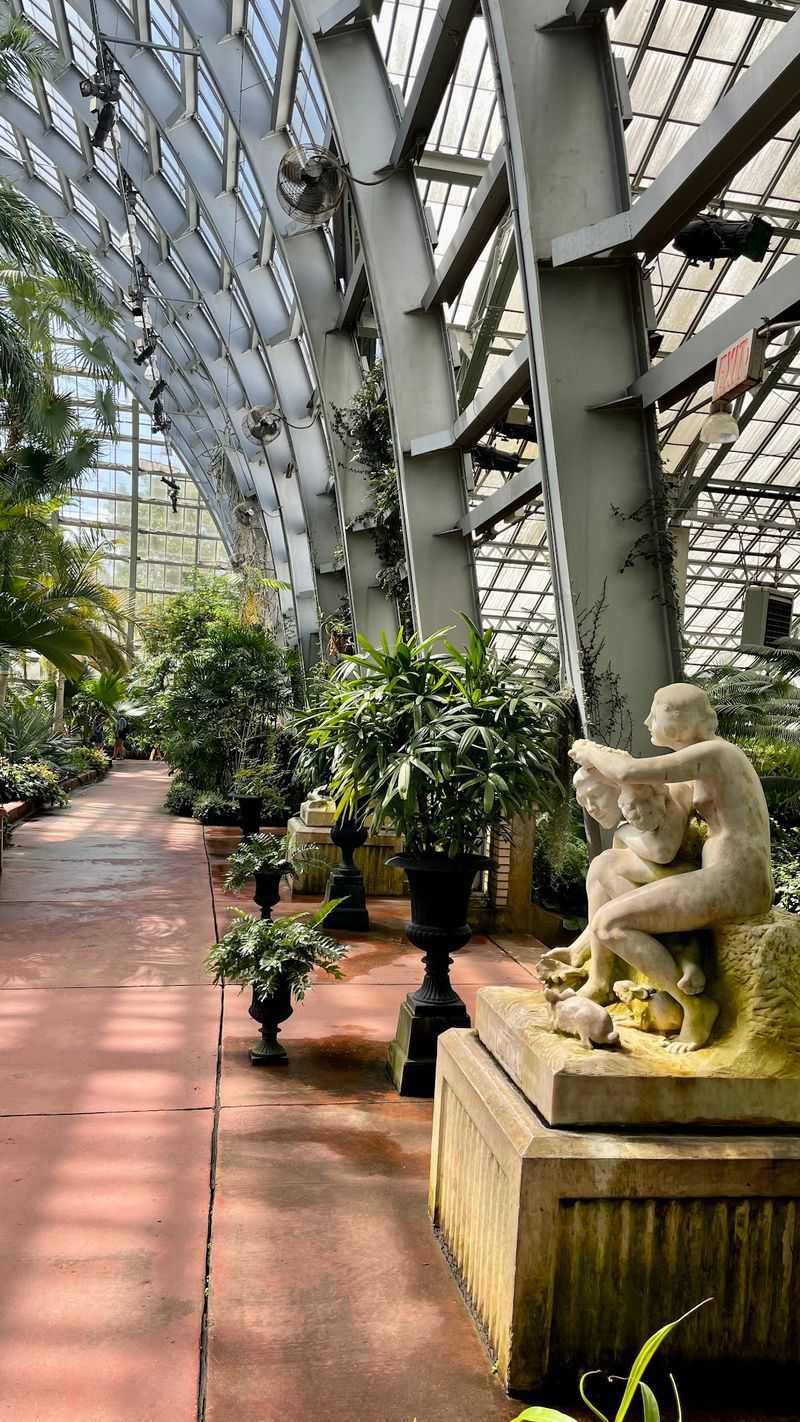
Plan on 45 minutes if you move briskly, closer to 90 minutes or two hours if anyone in your group reads placards or counts turtles. Guests report both, and either pace works.
A few honest notes before you go. There is no air conditioning, because the building exists to grow plants, so a humid July afternoon inside can feel heavy and water bottles help.
Weekend midday hours draw crowds, including photography sessions that can slow the narrow rooms, so mornings or a Wednesday evening tend to be more relaxed.
Most paths are paved and stroller-friendly, with the Fern Room as the exception. Wheelchairs are available first come, first served, and restrooms with baby changing stations sit near the main entrance.
Who does it suit? Families with kids from babies through elementary age, grandparents looking for a flat indoor walk, and anyone in the collar counties hunting for a weather-proof outing that does not involve a ticket counter and a gift shop exit maze.
When the forecast falls apart, this is the kind of backup plan that quietly outperforms the original.